Clear Sky Science · en
A global visualization analysis of research knowledge, dynamics, and trends on water, sanitation, and hygiene in the context of COVID-19
Why clean water and soap still matter after the pandemic
The COVID-19 pandemic made everyone suddenly aware of handwashing, masks, and cleaning surfaces. But behind those daily routines lies a global web of research on water, toilets, and hygiene known as WASH (water, sanitation, and hygiene). This paper takes a bird’s‑eye view of that research during COVID-19, showing which countries studied it, what questions they asked, and how this work can help protect people from future health crises.
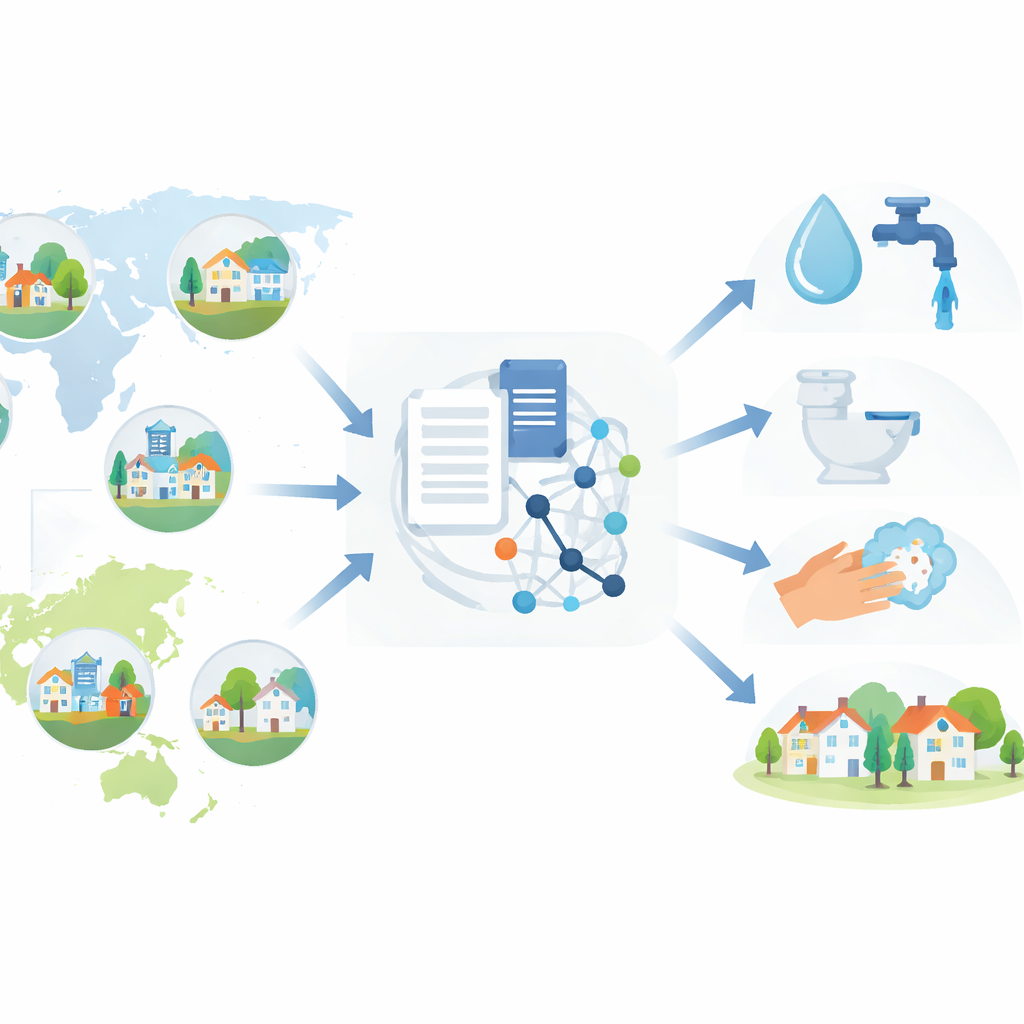
How scientists mapped the world’s WASH studies
The authors did not run lab experiments or field trials themselves. Instead, they used a massive scientific index, the Scopus database, to locate every publication that mentioned both COVID-19 and WASH up to the end of 2024. Out of more than 2300 WASH‑related papers over several decades, only 165 directly linked WASH to COVID-19. Using specialized mapping software, they treated each paper as a data point and drew networks that showed which countries worked together, which journals carried the most work, and which topics appeared most often in titles and abstracts. They also adjusted country rankings using population size, national income, and research volume to see who was “punching above their weight” in this field.
Who studied water and hygiene during COVID-19
The greatest number of papers came from the United States and the United Kingdom, followed by India and Australia. When the authors corrected for economic power and population, India and several African countries—including Ethiopia, Uganda, Tanzania, Pakistan, and Kenya—emerged as especially active. Africa overall hosted nearly half of all case studies, many examining how to provide handwashing facilities, safe toilets, and reliable water in rural villages, crowded informal settlements, and fragile humanitarian settings. Collaboration maps revealed that researchers in the United States and United Kingdom formed the core of a dense international network, often partnering with colleagues in lower‑income countries where WASH problems and COVID-19 risks were most severe.
What topics rose to the top
By scanning repeated words and phrases, the study grouped the 165 papers into several main themes. A large share focused on simple but powerful actions like handwashing, surface cleaning, and infection‑prevention routines in homes, schools, and health clinics. Another cluster examined WASH conditions in hospitals and clinics, where missing sinks, soap, or safe toilets can undermine even the best medical care. A third set of studies looked at how poor water and sanitation deepen the toll of COVID-19 on women, children, and people living in slums or refugee camps. Others explored how broken pipes, overcrowded toilets, and lack of hygiene supplies make it harder to follow public‑health advice, and how climate stress and weak governance further strain these systems.
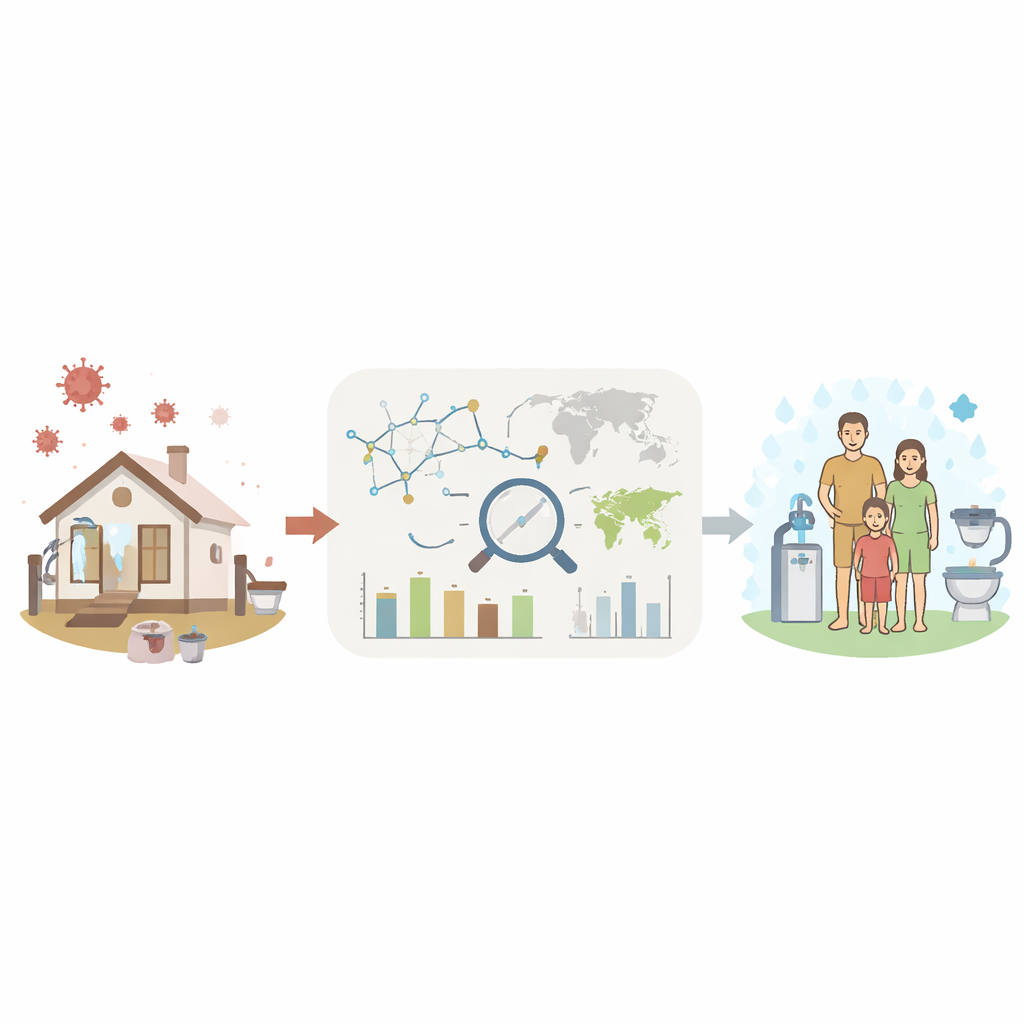
How research priorities shifted over time
The timeline of publications tells a story of changing concern. In 2020, as COVID-19 first swept the globe, research rushed to immediate questions: could people wash their hands often enough, were emergency toilets and water points in place, and how much extra water did lockdowns require? In 2021 and 2022, studies broadened to topics like long‑term water security for households, strengthening sanitation networks, and smarter monitoring of hygiene conditions. After 2022, as vaccines spread and official emergencies ended, WASH‑COVID-19 papers declined in number. At the same time, they increasingly tied WASH to bigger issues such as digital monitoring tools, climate change, and fair access to services beyond the pandemic.
What this means for everyday life and future crises
For non‑specialists, the central message is straightforward: clean water, safe toilets, and the habit of washing hands are among the most effective and affordable shields against infectious disease, including respiratory viruses like COVID-19. The paper shows that where WASH systems are weakest—crowded slums, under‑resourced schools, rural clinics, refugee camps—people face the greatest danger, especially women and children. The authors conclude that countries must treat WASH as essential health infrastructure, woven into plans for pandemics, climate threats, and urban growth. Investing in reliable taps, toilets, waste systems, and behavior‑change programs now can make communities more resilient, healthier, and better prepared for whatever outbreak comes next.
Citation: Zyoud, S., Zyoud, A.H. A global visualization analysis of research knowledge, dynamics, and trends on water, sanitation, and hygiene in the context of COVID-19. Humanit Soc Sci Commun 13, 531 (2026). https://doi.org/10.1057/s41599-026-06839-3
Keywords: water sanitation and hygiene, COVID-19, global health, pandemic preparedness, public health infrastructure