Clear Sky Science · en
New insights into the frontiers and trends of sustainable development in the global digital economy: a bibliometric analysis
Why the Digital World Matters for Our Planet
The digital economy now shapes how we shop, learn, work, and even govern our cities. Yet its rapid growth raises a basic question for everyone, not just specialists: is this new, data-driven economy helping or hurting the planet and society? This paper looks across more than two decades of research to see how scientists and policy experts have studied the digital economy, and where they think it is heading next. By tracing thousands of articles, the authors show how thinking has shifted from early excitement about the internet to today’s focus on climate, energy use, and fair, resilient growth. 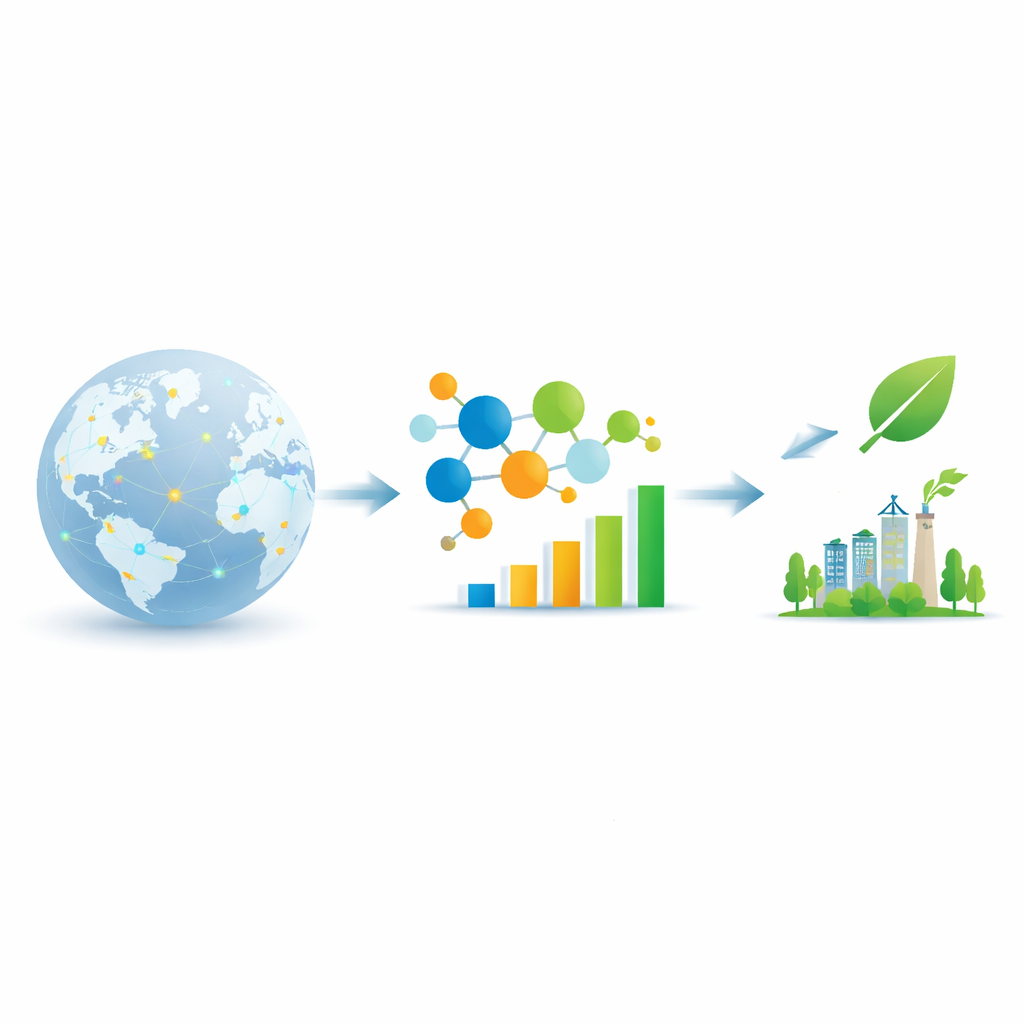
Following the Rise of a New Kind of Economy
The authors start by defining the digital economy as activity powered by data, networks, and information technologies—from online markets and social media to artificial intelligence and cloud computing. Using a large international database of scientific journals, they examined 2271 research articles published between 1998 and 2023. Specialized software allowed them to count publications, map collaborations between countries, and detect which topics appeared together most often. This approach, called bibliometrics, does not test a single hypothesis. Instead, it acts like a telescope on the research world itself, revealing which ideas have gained momentum, which have faded, and how new themes emerge over time.
Who Is Doing the Research, and on What?
The study finds that work on the digital economy has passed through three main growth stages. For nearly two decades after 1998, activity was modest but steady. Around 2016, publication rates began to climb, and since 2021 there has been a sharp surge, with 2023 producing more than a third of all papers in the field. China now publishes more than half of all articles, followed by the United States and the United Kingdom; however, US and UK work tends to be cited more often, suggesting stronger global influence per paper. Research comes from a broad mix of areas—business and economics, computer science and engineering, as well as environmental and ecological studies—showing that the digital economy is not just about technology, but also about markets, policies, and the natural world.
From Online Shopping to Green Transitions
By examining keywords, the authors trace how core interests have shifted. Early studies centered on the internet, electronic commerce, and access gaps known as the “digital divide.” Over time, attention expanded to privacy, online labor, social media, and new business models such as platforms and the sharing economy. In the last several years, a powerful new theme has emerged: how digital tools influence carbon emissions, energy consumption, and green innovation. Researchers increasingly study how big data, artificial intelligence, and digital finance can make energy systems more efficient, help companies cut emissions, and support cleaner growth—while also noting that more devices and data centers can raise total energy demand. 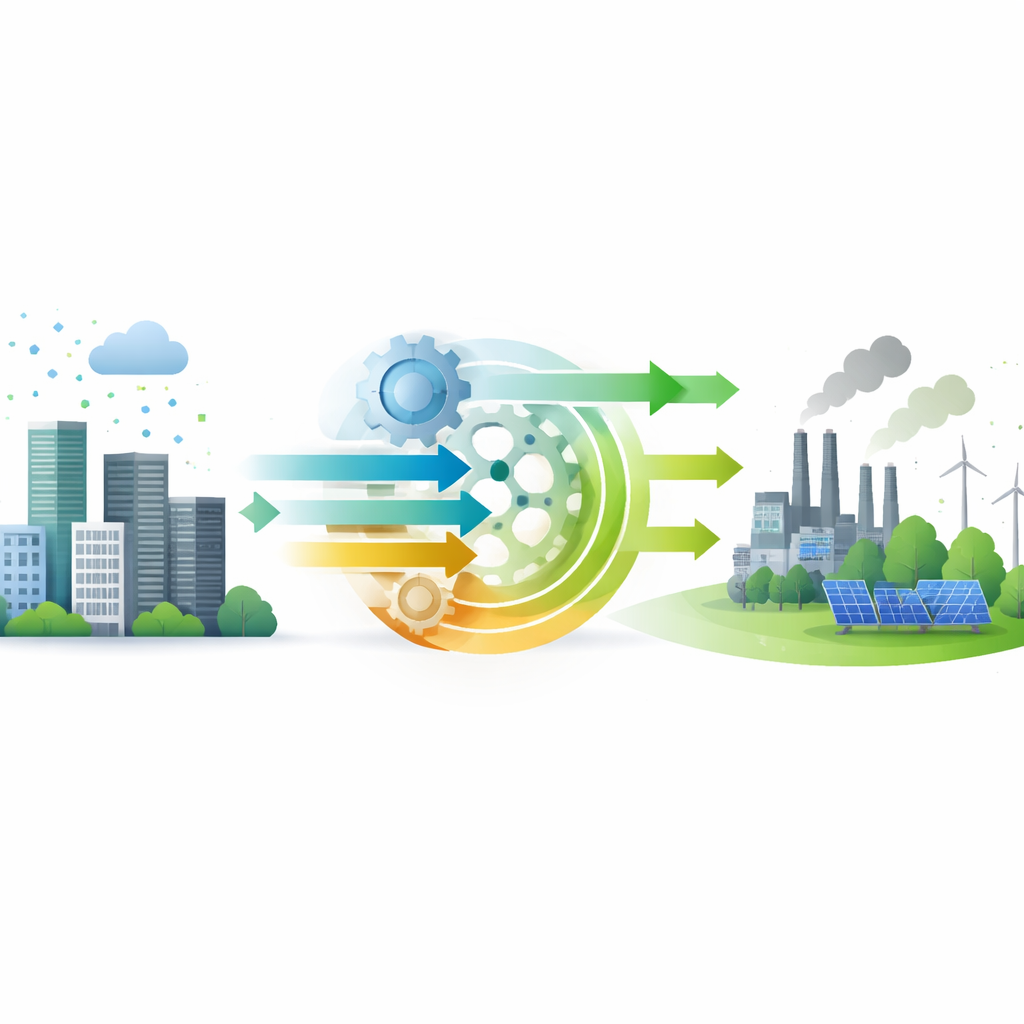
Five Phases in the Story of Digital Change
Looking across 25 years, the authors group the research into five phases. The first two phases focus on laying the technological and commercial groundwork, especially internet infrastructure, e-commerce, and knowledge management. The third phase adds concerns about security, personal data, and inequality in access and skills. The fourth phase, just before the COVID-19 pandemic, sees an explosion of diverse topics: live streaming, digital labor, blockchain, and new forms of urban and corporate innovation. The most recent phase, from 2020 onward, is dominated by two threads: digital transformation—how traditional industries, from mining to farming to banking, restructure around data—and the link between digitalization and green development, with special attention to carbon reduction and regional differences in benefits.
Where Research Is Headed Next
For non-specialists, the main takeaway is that the digital economy is no longer just a story about faster communication or online shopping. It has become deeply entangled with climate policy, energy systems, and long-term development choices. The authors expect future work to focus on three questions: how to use digital tools to support low-carbon lifestyles and cleaner production; how to combine digital systems with cutting-edge technologies like artificial intelligence and blockchain in ways that are both innovative and sustainable; and how to design resilient digital ecosystems that can withstand shocks such as pandemics or financial crises. In short, the digital economy will likely be judged less by how many apps it produces and more by how well it helps societies grow within the limits of the planet.
Citation: Mei, Y., Liu, M., Gao, Z. et al. New insights into the frontiers and trends of sustainable development in the global digital economy: a bibliometric analysis. Humanit Soc Sci Commun 13, 571 (2026). https://doi.org/10.1057/s41599-026-06780-5
Keywords: digital economy, green development, carbon emissions, digital transformation, sustainable innovation