Clear Sky Science · en
Integrating sustainability in higher education system: an indian policy review
Why this matters to everyday life
Across the world, more young people are entering college than ever before, and what they learn will shape how societies deal with climate change, inequality, and jobs of the future. This article looks at how India, home to one of the largest higher education systems on Earth, is trying to weave ideas of sustainability into the way students are taught, campuses are run, and skills are built. For readers, it offers a window into how education policies today may influence the kind of neighbors, workers, and leaders we live with tomorrow.
Teaching for a changing planet
The paper begins by explaining how higher education now carries a mission that goes beyond preparing students for careers. Universities are being called on to help people live within environmental limits while also promoting fairness and human rights. A global goal known as SDG 4.7 urges countries to ensure that by 2030, learners develop knowledge, values, and attitudes that support sustainable development and global citizenship. In this view, colleges are not just lecture halls but places where new ways of thinking about the environment, society, and the economy can take root.
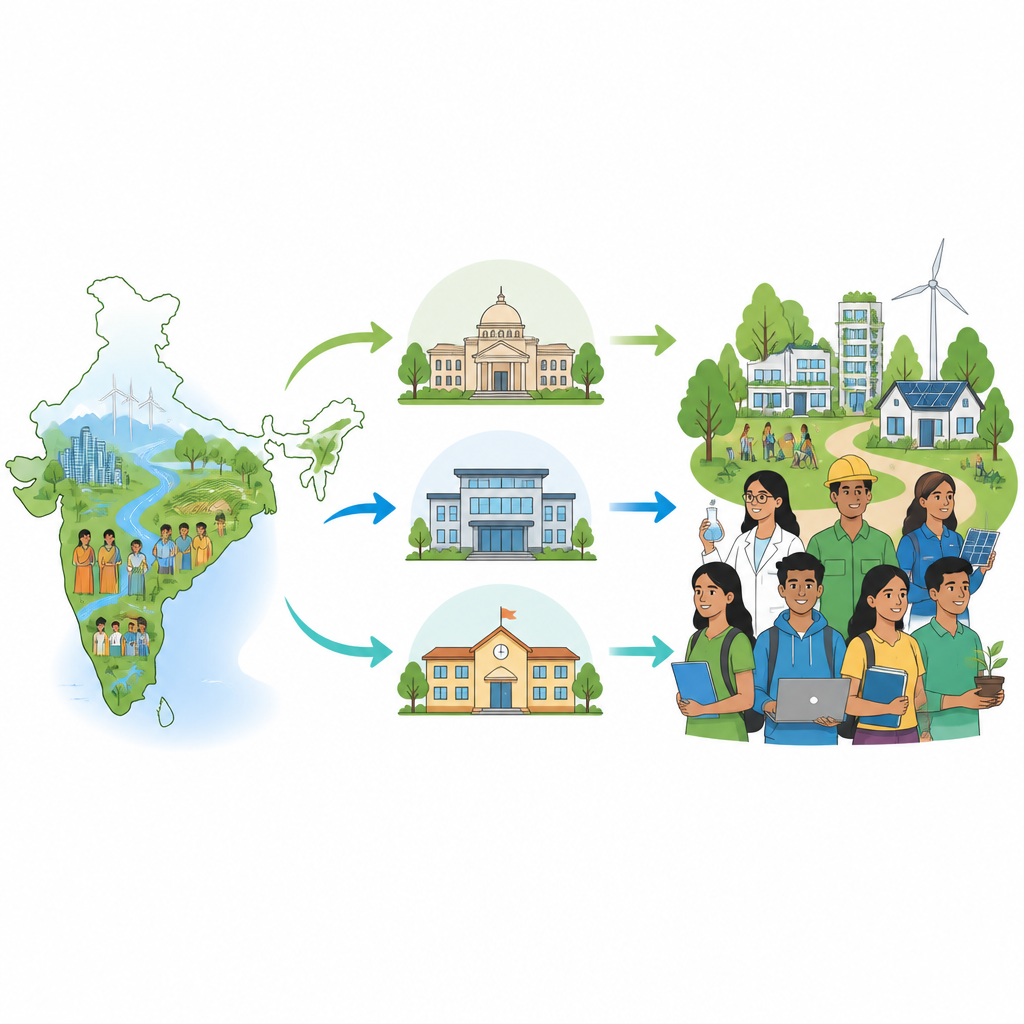
Three ways colleges can foster sustainability
The author describes three main routes for bringing sustainability into higher education. First is the classroom, where topics such as climate, poverty, and responsible consumption can be woven across subjects, and students can work together on real-world projects and research. Second is campus life itself: colleges can model low-waste, energy-efficient, and community-minded ways of operating that students can copy at home and at work. Third is the focus on core life skills. Five are highlighted as especially important for a sustainable future: critical thinking, problem solving, empathy, adaptability, and the ability to persuade others. Together, these skills help students question harmful habits, design fairer solutions, understand others’ needs, cope with rapid change, and build support for better choices.
How the study examines Indian policies
To see how India is doing, the study applies a framework based on SDG 4.7 to three major policy efforts. These are the National Education Policy of 2020, which reshapes schooling and universities, the National Skill Development Mission that concentrates on job training, and the Central Board of Secondary Education’s guide to 21st century skills in schools. Using policy documents and international reports, the author evaluates each initiative along five dimensions: how well sustainability ideas are built into learning, which skills are encouraged, what values are promoted, how institutions are governed, and whether there are systems to track progress. Each area is rated as having low, partial, or high integration of sustainability concerns.
What the findings reveal
The results show a mixed picture. The National Education Policy scores highest, because it talks clearly about multidisciplinary study, environmental awareness, ethics, and inclusion. It encourages critical thinking and creativity, and stresses respect for cultural diversity and gender equality. However, it is weak on the details of how campuses will measure and manage their own environmental impact, and how progress will be monitored over time. The National Skill Development Mission, in contrast, focuses strongly on boosting employability and technical skills but pays little direct attention to sustainability, soft skills, or ethical questions. The CBSE 21st century skills framework falls in between: it promotes creativity, collaboration, and global awareness in schools but does not consistently connect them to sustainability or to how colleges and universities are run.
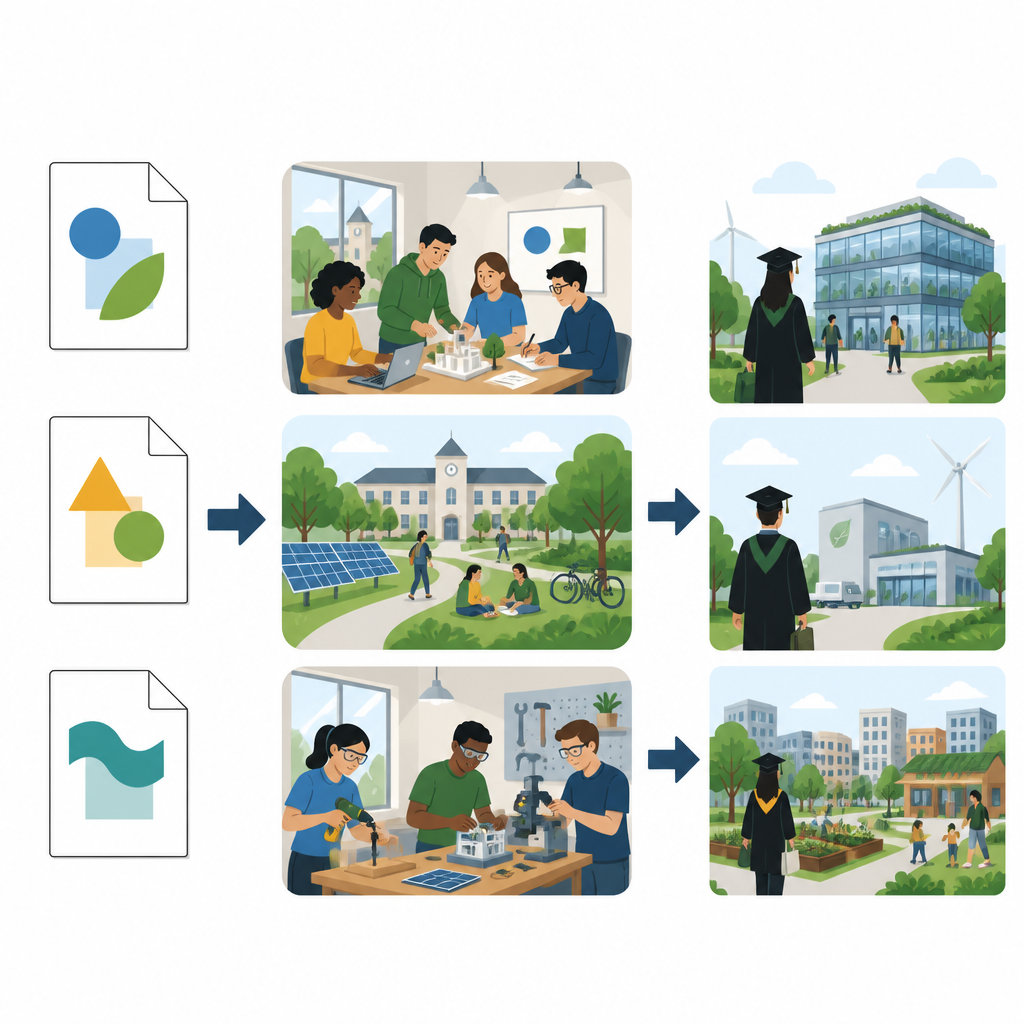
Steps needed for real-world change
In its concluding sections, the paper argues that good intentions in policy are not enough. For India to truly align higher education with sustainable development, reforms must be backed by clear funding plans, better teacher training, fair access for rural and low-income students, and stronger monitoring of what students actually learn and how campuses behave. Vocational training schemes need to embrace green jobs and resource-saving practices, while school and college systems must work together so that skills built in early years are deepened later. The author calls for closer partnerships among universities, industry, government, and communities so that learning is tied to solving local and global problems.
What this means for the future learner
For a lay reader, the article’s message is straightforward: if colleges and training centers succeed in weaving sustainability into what they teach and how they operate, they can help produce citizens who are not only employable but also thoughtful, fair-minded, and capable of caring for the planet. India has taken important first steps through its education and skill policies, yet the work of turning these words into everyday practice is still unfolding. The way this challenge is met will influence whether future generations are equipped to build societies that are both prosperous and sustainable.
Citation: Kaur, A. Integrating sustainability in higher education system: an indian policy review. Humanit Soc Sci Commun 13, 713 (2026). https://doi.org/10.1057/s41599-026-06611-7
Keywords: sustainability education, higher education policy, India, SDG 4.7, skills for future