Clear Sky Science · en
How does the digital economy affect carbon emissions in China? An analysis based on the perspective of the “space of flows”
Why the Digital World Matters for a Warming Planet
From streaming videos to mobile payments, our lives are increasingly woven into the digital world. But all those data centers, networks, and smart services run on electricity and can either help or hurt the fight against climate change. This study looks at China, the world’s largest carbon emitter, to ask a simple but crucial question: as the digital economy grows and regions become more digitally interconnected, do carbon emissions go up or down—and under what conditions?
A New Way to Look at Digital Connections
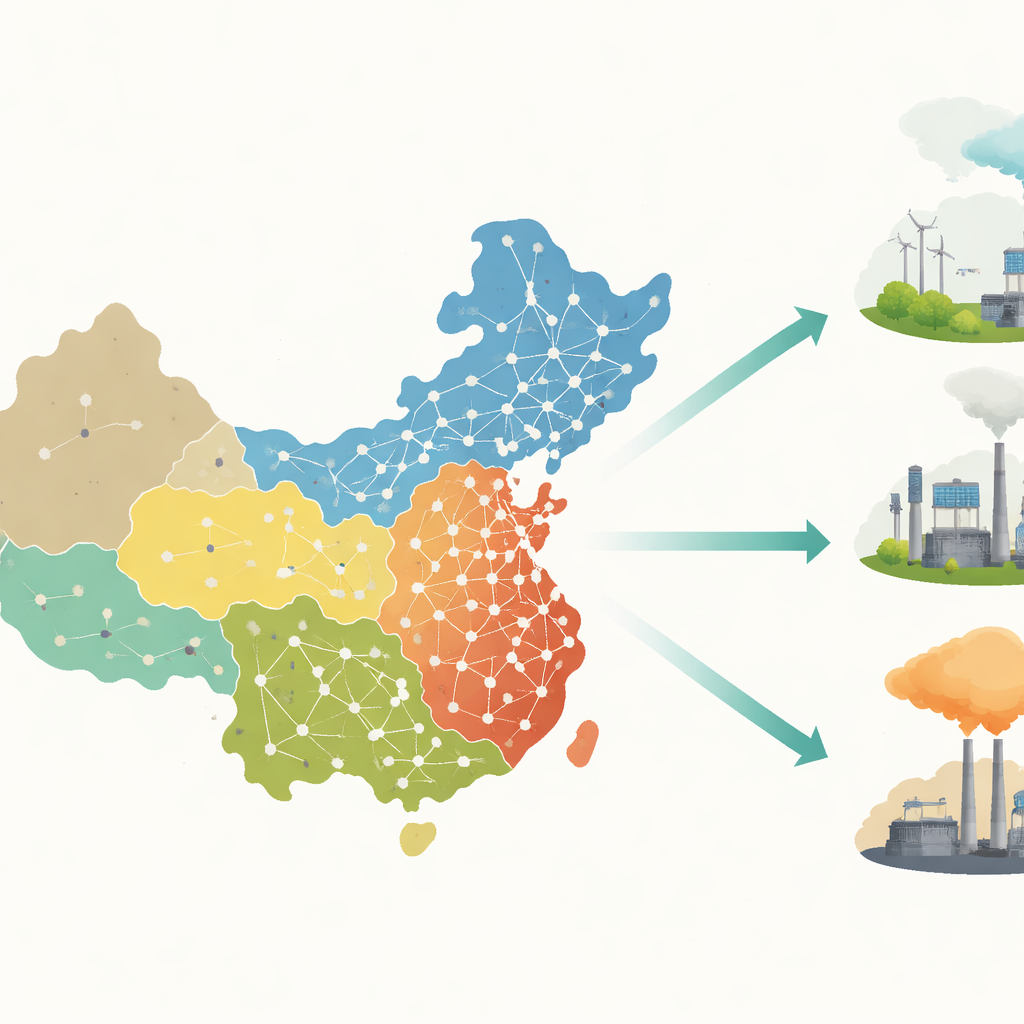
The authors move beyond the usual approach of ranking provinces by how "advanced" their digital economy is. Instead, they treat China’s digital landscape as a network of flows—of information, capital, people, and technology—moving between places. In this view, it is not just how strong a province’s own digital sector is that matters, but also how it is plugged into other regions. They build a digital economy spatial correlation network for 30 provinces between 2013 and 2020, using a modified gravity model that takes into account geography, economic size, and digital development. Then they apply social network analysis to see which regions are central hubs, which are bridges, and how the overall web of digital ties evolves over time.
How the Digital Web Has Spread Across China
Over the eight-year study period, the digital network linking Chinese provinces became denser, more complex, and more multi-threaded. At first, most of the connections were packed into the more prosperous eastern coast. As time went on, the network stretched inland, adding more links to central and western regions. Measures of network density and connectedness rose sharply as provinces increasingly exchanged digital services, data, and know-how. At the same time, the network’s hierarchy weakened: instead of a few dominant hubs controlling most flows, multiple centers emerged and the paths between regions diversified, making the system more stable but also more intricate.
Uneven Emissions and a Mixed Digital Impact
During the same period, China’s carbon emissions kept rising overall, but with large regional contrasts. Heavily industrialized northern and eastern provinces—home to steel mills, power plants, and manufacturing clusters—had the highest emissions, while smaller and less industrialized western regions emitted much less. To understand how the digital network interacts with this emissions map, the authors did not rely on a single "effect" estimate. Instead, they used a method called fuzzy set qualitative comparative analysis to identify combinations of conditions that lead to either high or relatively low emissions. These conditions included a province’s position in the digital network, its population size, energy mix, industrial structure, openness to trade, technology spending, and environmental rules.
When Going Digital Helps—or Hurts—the Climate
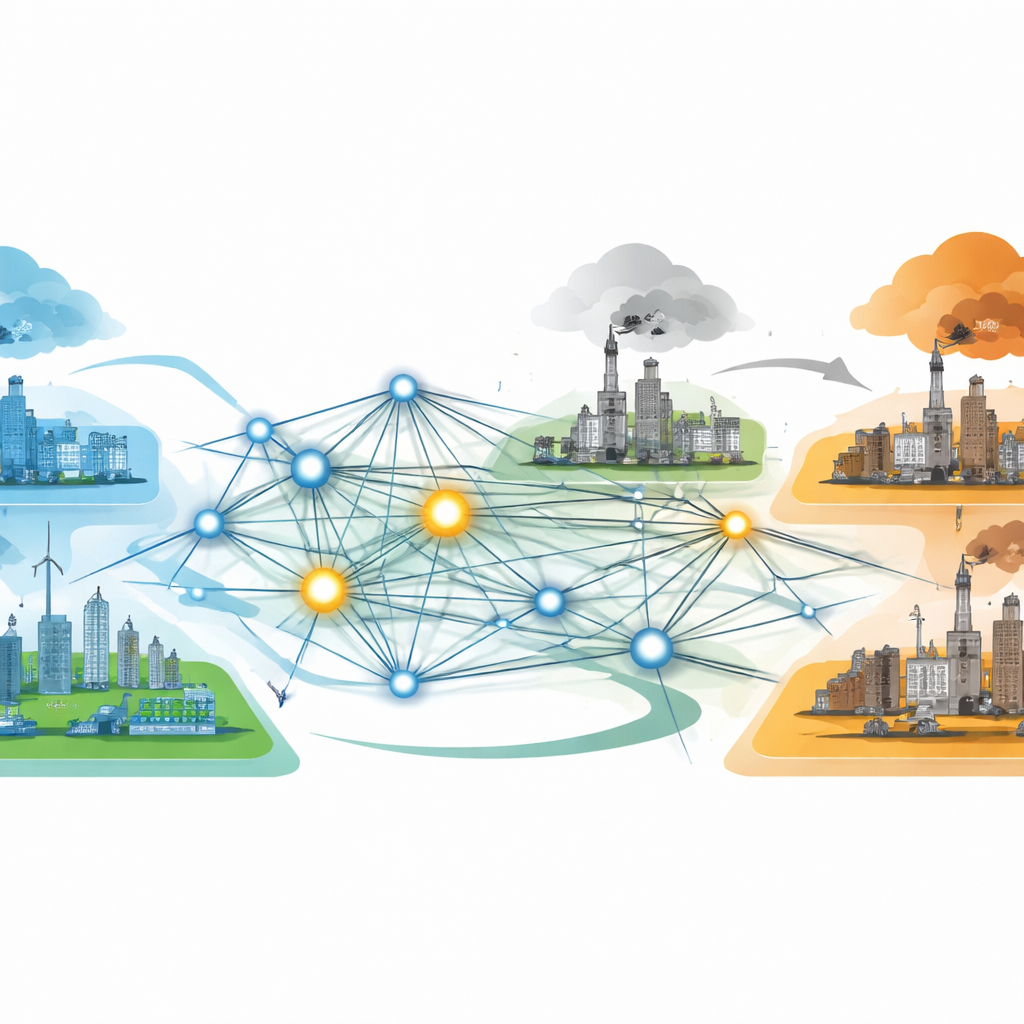
The results are nuanced. Being a central player in the digital network does significantly influence a province’s emissions, but not always in the same direction. In the early years, provinces with many digital links often saw higher emissions because digital growth went hand in hand with heavy industry and energy-hungry infrastructure like data centers powered largely by coal. Later, as the network matured and more regions joined, those acting as key bridges—facilitating flows of information and technology between others—could help reduce emissions, especially when paired with cleaner energy use, upgraded service-based industries, and manageable population pressure. Crucially, no single factor—digital centrality, technology, or regulation—was ever enough on its own; emissions outcomes depended on how several factors worked together.
What This Means for Policy and Everyday Life
For a lay observer, the takeaway is clear: the digital economy is not automatically green or dirty. Its climate impact depends on where and how it grows. Simply building more networks, platforms, and data centers can raise emissions if they rest on coal-heavy power and old-style industries. But when digital links are combined with cleaner energy, smarter industrial upgrades, sensible environmental rules, and population that fits local resources, they can become powerful tools for cutting carbon. The study suggests that China—and other countries—should design digital strategies and climate policies together, treating digital networks as part of the solution only when they are embedded in broader efforts to reshape energy use and economic structure.
Citation: Wang, S., Teng, T., Zhang, J. et al. How does the digital economy affect carbon emissions in China? An analysis based on the perspective of the “space of flows”. Humanit Soc Sci Commun 13, 388 (2026). https://doi.org/10.1057/s41599-025-06417-z
Keywords: digital economy, carbon emissions, China, regional networks, low-carbon transition