Clear Sky Science · en
Targeted profiling of the serum proteome associates increased FGF-23 levels with postoperative delirium in cardiac surgical patients
Why this matters for patients and families
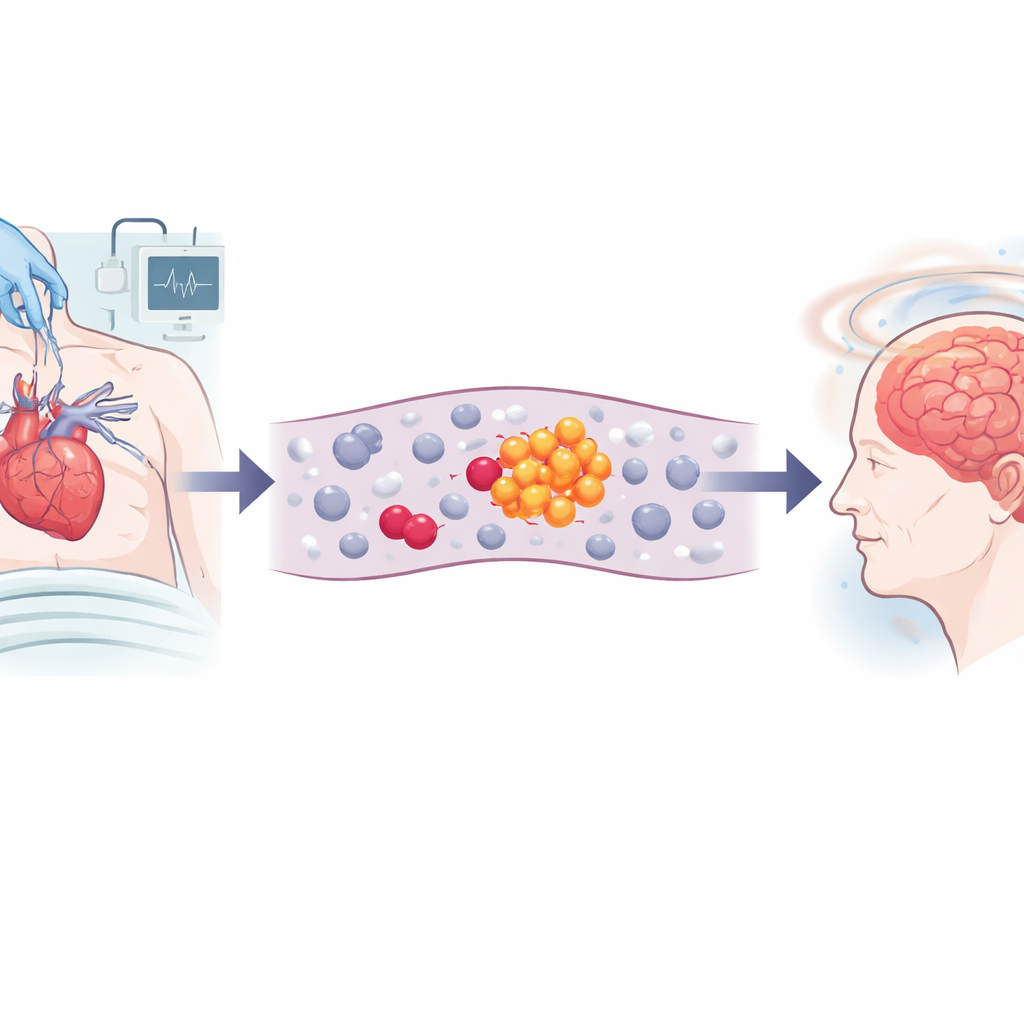
After heart surgery, many older adults experience a sudden, frightening state of confusion called delirium. Although it often fades within days, delirium is linked to longer hospital stays and a higher risk of later dementia. This study asked a simple but important question: can a blood test taken right after cardiac surgery help flag which older patients are at greatest risk for delirium, and possibly for longer-term brain problems?
A closer look at confusion after heart surgery
Delirium is a temporary but serious change in thinking and awareness. Patients may be disoriented, see things that are not there, or have trouble paying attention. Doctors know that age, the stress of surgery, and inflammation all play a role, but they still lack reliable tools to identify who will develop delirium. Recent research has linked delirium to markers of brain-cell damage in the blood, such as neurofilament light, as well as to surges in inflammatory molecules, especially after major operations. However, much less is known about how changes in the body’s metabolism and blood chemistry contribute to this vulnerable state in people having cardiac surgery.
Searching the bloodstream for warning signals
The researchers studied three groups of older adults undergoing heart surgery. All patients had blood drawn before surgery and again on the first day afterward. Using a high-throughput method that can measure many proteins at once, the team examined 183 different proteins related to heart and immune function in an initial group of 19 patients, and then checked their findings in two additional groups totaling 40 more patients. In each group, some patients developed delirium in the first three days after surgery while others did not, allowing the team to compare their blood profiles.
The standout signal: a bone hormone in the blood
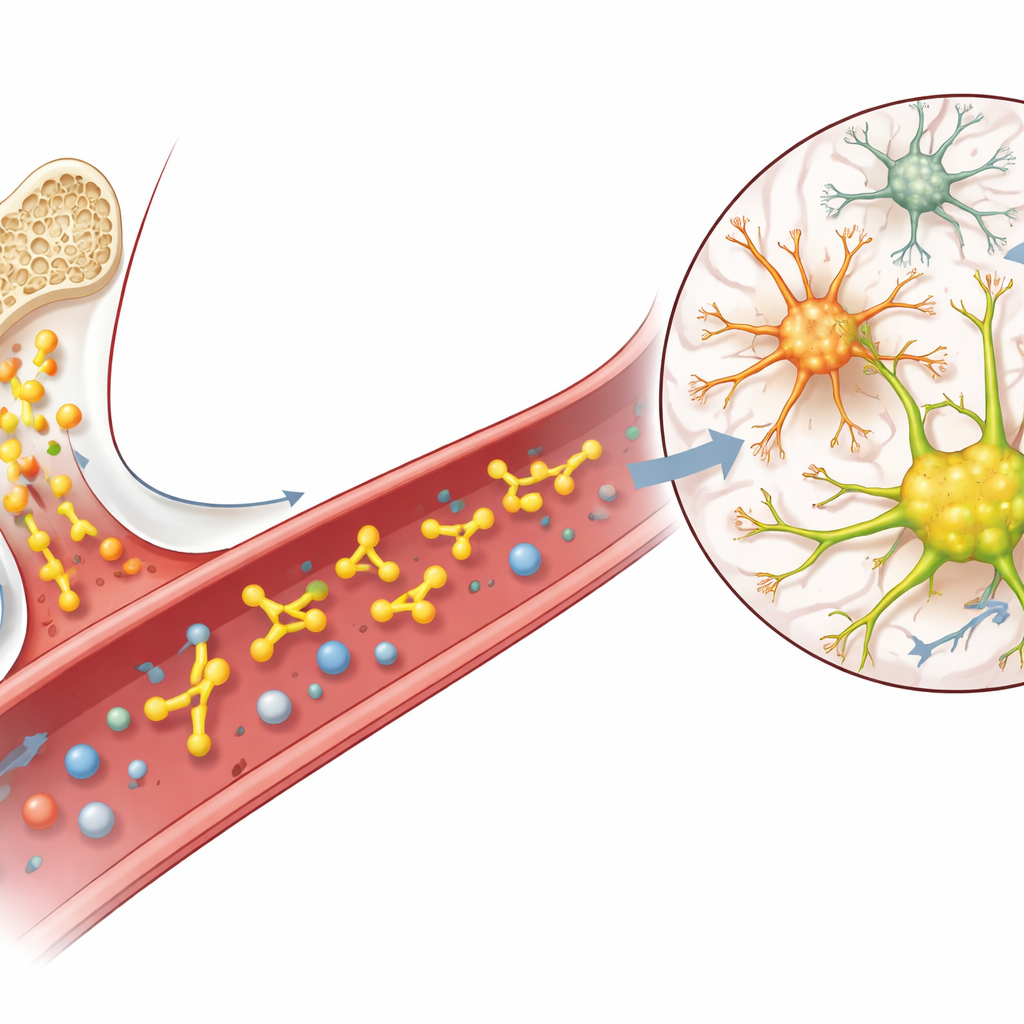
Across the board, surgery triggered strong increases in classic inflammatory markers like interleukin-6 and interleukin-10, confirming that the operations provoked a powerful immune response. But one protein in particular stood out when the researchers compared patients with and without delirium: fibroblast growth factor 23, or FGF-23. This hormone is produced mainly by bone and usually helps the body balance vitamin D and phosphate, working together with another protein called klotho. In the first cohort, patients who developed delirium had nearly four times higher FGF-23 levels after surgery than those who stayed clear-headed. Similar or even larger differences were seen in a second age- and sex-matched cohort, and a third cohort using a different laboratory method confirmed that postoperative FGF-23 levels were consistently higher in delirious patients.
Links to hidden brain and kidney stress
The team also looked for clues about what rising FGF-23 might mean. Surprisingly, vitamin D, klotho, and phosphate levels were not different between delirious and non-delirious patients, suggesting that the usual control loop for FGF-23 was not driving the change. Before surgery, FGF-23 levels tracked with interleukin-6, pointing to a background of low-grade inflammation, but this connection disappeared after surgery. Instead, postoperative FGF-23 levels lined up with neurofilament light, a marker of damage to nerve fibers in the brain. Statistical tests showed that postoperative FGF-23 distinguished delirious from non-delirious patients with relatively high sensitivity and specificity, raising the possibility that it reflects a state of combined vascular, kidney, and brain vulnerability triggered by the stress of surgery.
What this could mean for care after surgery
To a non-specialist, the key message is that a hormone usually known for managing minerals in the body may also serve as a blood-based indicator of the brain’s resilience—or lack of it—after heart surgery. Patients with higher FGF-23 levels on the first day after surgery were more likely to become confused and showed signs of brain-cell injury in their blood. The study was small and cannot prove that FGF-23 causes delirium, but it suggests that adding this protein to future multi-marker risk scores could help doctors single out older cardiac surgery patients who need closer monitoring, gentler medications, or follow-up for possible long-term memory problems. With larger studies, a simple blood draw might one day help protect both the heart and the mind in the critical days after surgery.
Citation: Simon, C., Kelly Graves, O., Williams, V.E. et al. Targeted profiling of the serum proteome associates increased FGF-23 levels with postoperative delirium in cardiac surgical patients. npj Dement. 2, 31 (2026). https://doi.org/10.1038/s44400-026-00084-w
Keywords: postoperative delirium, cardiac surgery, FGF-23, serum biomarkers, elderly patients