Clear Sky Science · en
How disasters and crises reshape economic vulnerability among small-scale fishers in Brazil
Storms That Hit People, Not Just Coasts
When disasters strike the ocean, we often picture damaged beaches and oily seabirds. But for small-scale fishers, the real shock shows up in empty wallets and dinner plates. This study follows hundreds of fishing families in northeastern Brazil to see how two very different crises—a huge oil spill and the COVID-19 pandemic—changed their incomes and futures. It reveals that who you are, where you live, and what you fish matters as much as the disaster itself.
Two Back-to-Back Blows
Brazilian fishing communities were still reeling from a massive 2019 oil spill—the largest ever in the South Atlantic—when COVID-19 hit. Researchers surveyed 402 fishers across three coastal states to track their weekly earnings before the crises, during the oil spill, during the pandemic, and afterward. They combined these income records with questions about how people adapted and how strongly they felt each event had harmed their work and communities. By looking at both the numbers and personal experiences, the team could see not only how much money was lost, but also who felt pushed to the edge.
Why Women Were Hit Harder by the Oil Spill
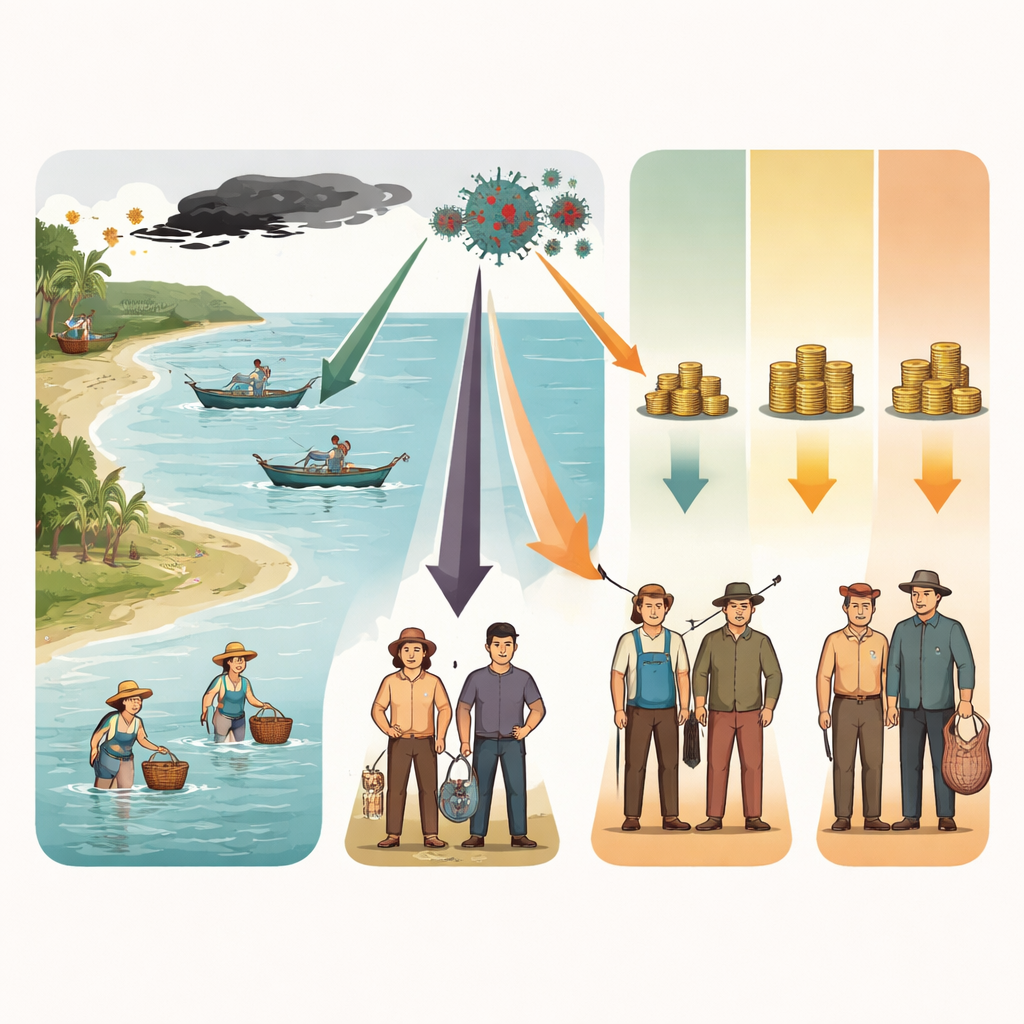
During the oil spill, gender made a huge difference. Women in these communities mainly harvest shellfish and other bottom-dwelling species in shallow coastal waters—exactly the places and animals most easily contaminated by oil. Men more often fish offshore for higher-value species that were less exposed. Before any crisis, men already earned about three times more than women. When oil washed ashore, incomes fell for everyone, but women’s earnings dropped much more, and they were far more likely to land in the “very high income loss” group. Many women reported interrupted work, damaged seafood sales, and a sense that they were less able to adapt than others around them. The spill amplified old inequalities: women were concentrated in low-paid, high-risk parts of the fishery and had fewer options when those jobs collapsed.
How Age Shaped the Pandemic’s Toll
The pandemic told a different story. Instead of gender, age became the key dividing line. Lockdowns, market closures, and falling demand for fish slashed incomes for both younger and older fishers, nearly cutting weekly earnings in half. Yet younger fishers more often found side jobs or shifted how they worked, using new strategies to cope. Older fishers, already earning less on average, struggled to change course. Health risks, limited mobility, and likely lower access to digital tools for online sales all made it harder for them to adapt. Many older fishers remained trapped in low incomes with few realistic alternatives, even as restrictions eased.
Where You Live Can Make or Break You
Place mattered just as much as gender or age. Fishers in Bahia reported the highest losses during the oil spill, matching the fact that this state saw the greatest number of oil-contaminated beaches and a long-lasting presence of oil along the coast. By contrast, fishers in Rio Grande do Norte generally fared better in both crises. They faced less direct oil contamination, and their heavier reliance on middlemen—intermediaries who buy and distribute fish—may have helped keep products moving when travel was restricted. Meanwhile, in Alagoas, where shellfish harvesting by women is especially common and fish sell for lower prices, many fishers reported very high losses during the pandemic, reflecting how local economies and job types shape vulnerability.
What This Means for Fair Recovery
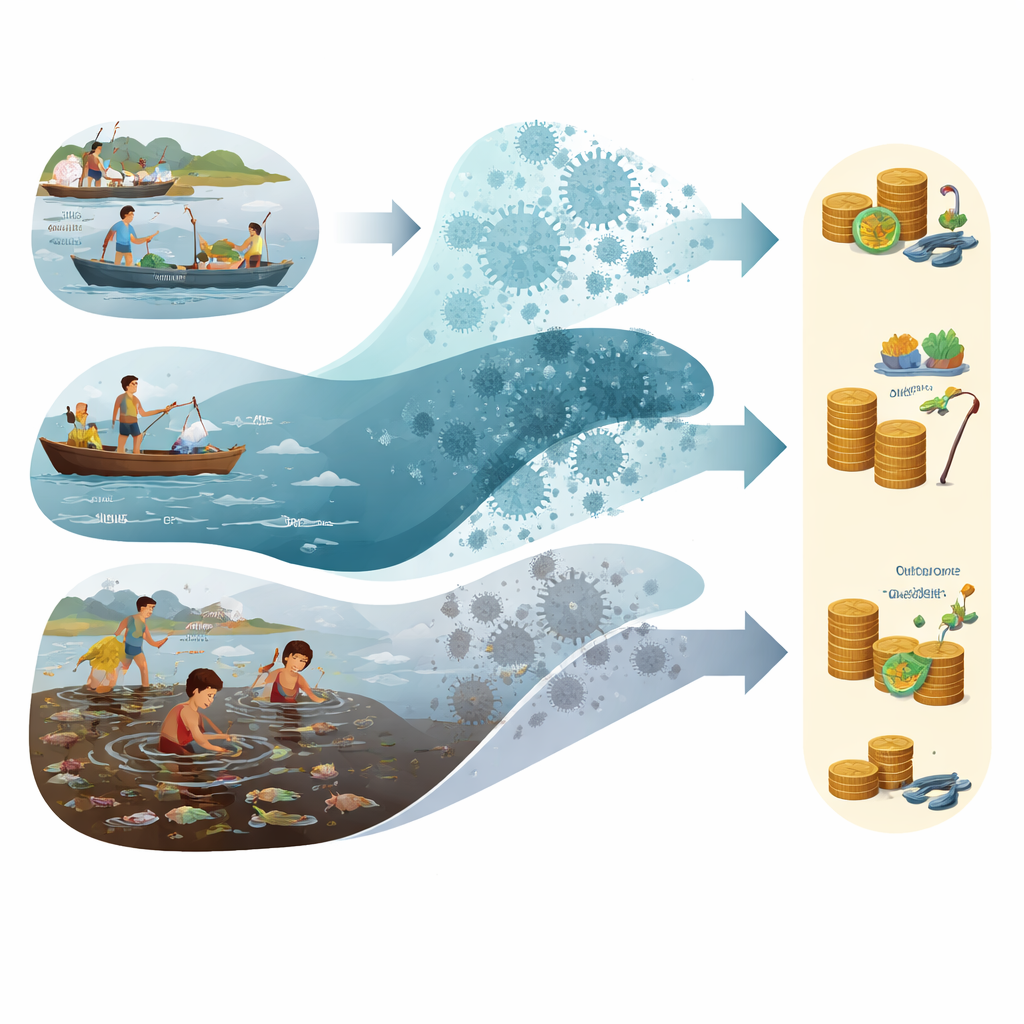
Putting all these pieces together, the study shows that there is no single “typical” fisher in a crisis. Oil spills and pandemics follow different paths through the same communities, exposing weak spots created by long-standing social and economic gaps. Women who depend on polluted nearshore resources and older fishers with limited room to maneuver face the steepest climbs back to stability. The authors argue that future disaster responses must be tailored: for example, oil-spill aid should directly recognize and support women’s coastal work, while health crises should include tools that help older fishers adapt safely and access markets. Without such targeted policies, each new shock risks deepening the hardship of those who are already on the margins.
Citation: Silva, M.R.O., Andrade, L.C.A., Barbosa, J.C. et al. How disasters and crises reshape economic vulnerability among small-scale fishers in Brazil. npj Ocean Sustain 5, 19 (2026). https://doi.org/10.1038/s44183-026-00183-4
Keywords: small-scale fisheries, economic vulnerability, oil spill, COVID-19, Brazilian coastal communities