Clear Sky Science · en
Inequalities and determinants of unmet need for SARS-CoV-2 testing in Ghana, Burkina Faso and Madagascar (2020 – 2021)
Why this matters for everyday health
The COVID-19 pandemic revealed how much our safety depends on finding infections quickly. This study looks at three African countries to ask a simple but powerful question: when people likely needed a COVID-19 test, did they actually get one? The answer sheds light on how well health systems are prepared for future outbreaks and who is most likely to be left behind when tests are scarce.
Who was studied and what was measured
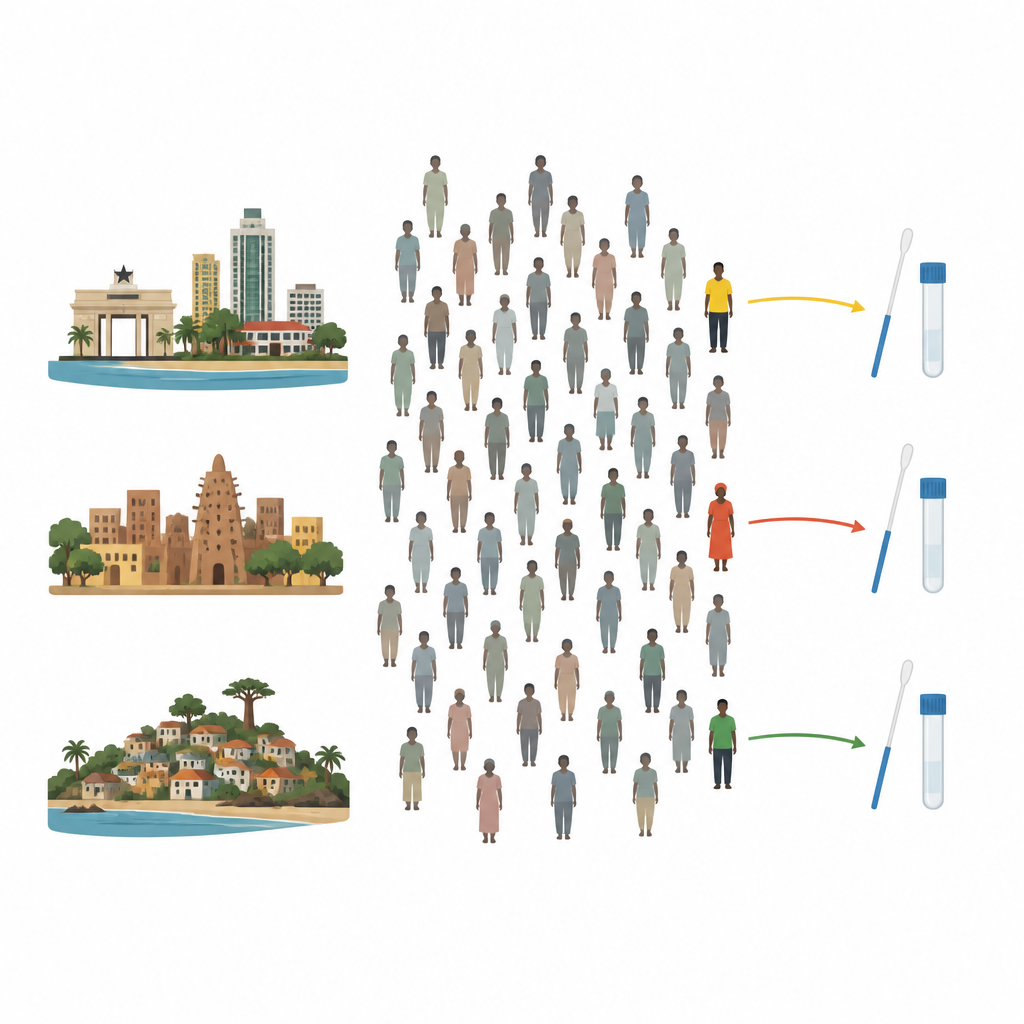
Researchers visited 3,058 households in cities in Ghana, Burkina Faso, and Madagascar during early 2021, when COVID-19 was still spreading widely. They focused on urban neighborhoods because that is where most official cases were recorded and where laboratories for testing were located. From each household, one person aged ten or older took part in an interview and provided a blood sample. The team asked about recent COVID-19 symptoms, whether the person had ever been in contact with someone sick, their travel history, and whether they had ever received a swab test for an active infection. Blood samples were used to detect antibodies, which reveal whether someone had been infected in the past.
How the study defined a “missed test”
Instead of simply counting how many people were tested, the researchers focused on “unmet need for testing.” This means looking at people who, according to World Health Organization guidance, should have been tested but were not. They created three ways to spot such missed tests: people whose blood showed past infection but who never had a swab test; people who lived with someone with a fever or had contact with a confirmed case but were never tested; and people who had COVID-like symptoms over the previous year but did not receive a test. In each case, the gap between those who needed a test and those who actually got one shows how well the system responded to real demand.
What the data revealed about access to tests
The results were striking. Across all three countries, more than 90 percent of people who met at least one of the need definitions had never been tested for an active infection. Overall, only about 4 percent of participants had ever received a COVID-19 test, with slightly higher rates in Ghana and lower rates in Madagascar. At the same time, around four in ten participants had antibodies, indicating that many infections had gone undetected by official test counts. This mismatch suggests that the true spread of the virus was far greater than the case numbers on record and that testing services were far from keeping up.
Who was most likely to be left out
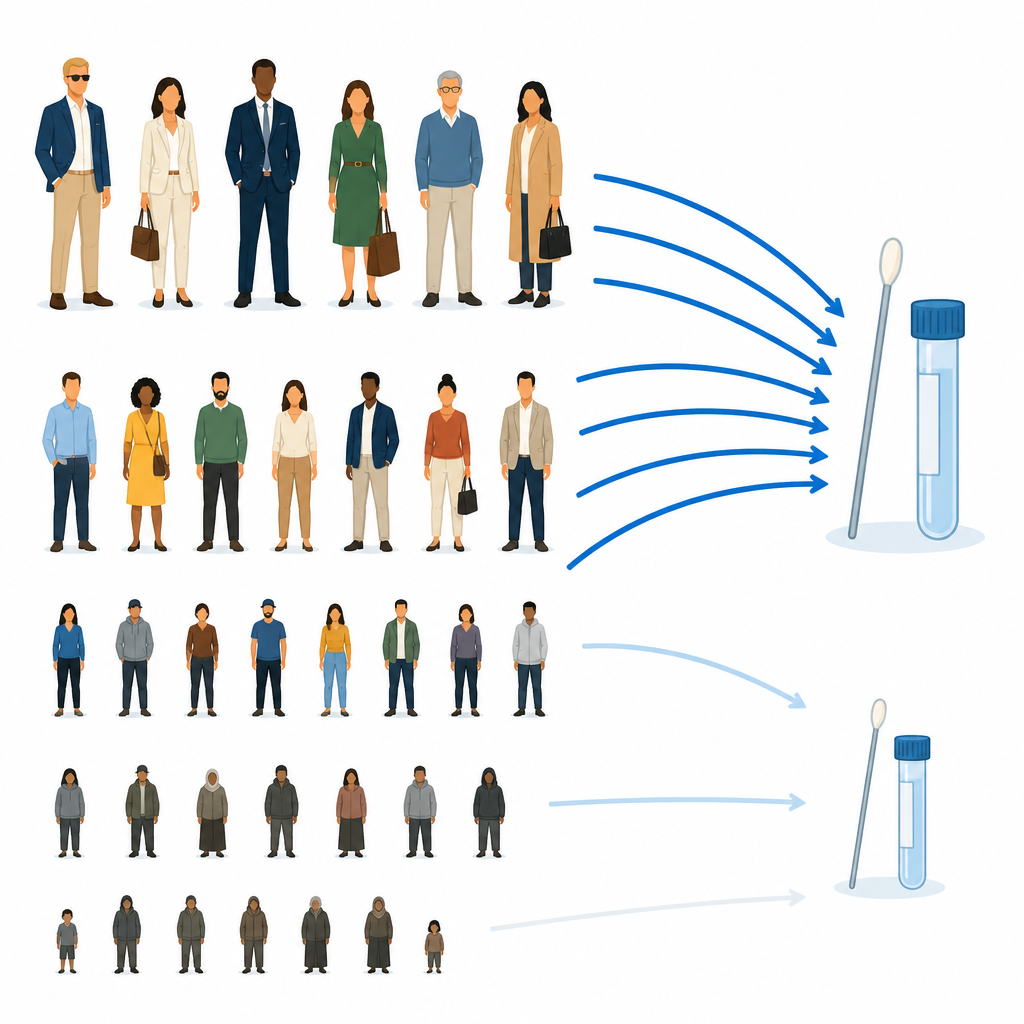
The study also asked whether certain groups were more likely to miss out on testing. By comparing people across five wealth levels, the researchers found that those from the richest households were far more likely to have been tested and less likely to have unmet need. Poorer households carried most of the unfilled demand for testing. People who had traveled outside their city and those who felt they were at high risk of severe COVID-19 were more likely to get tested and less likely to have unmet need. Women generally had higher unmet need than men. Together, these patterns show that money, mobility, and risk awareness all shape who can turn a suspected infection into a confirmed diagnosis.
What this means for future outbreaks
For a layperson, the take-home message is clear: in these cities, COVID-19 tests reached only a small fraction of the people who likely needed them, and the poorest residents were the most overlooked. The authors argue that strengthening health systems is not just about buying more test kits. It also means building laboratory networks, reducing travel and user fees, and designing services that are easy for all communities to use. Without such changes, future epidemics may again spread largely unseen among those with the fewest resources, putting everyone at greater risk.
Citation: Novignon, J., Amuasi, J.H., Lorenz, E. et al. Inequalities and determinants of unmet need for SARS-CoV-2 testing in Ghana, Burkina Faso and Madagascar (2020 – 2021). Commun Med 6, 282 (2026). https://doi.org/10.1038/s43856-026-01637-z
Keywords: COVID-19 testing, health inequalities, sub-Saharan Africa, health system preparedness, diagnostic access