Clear Sky Science · en
Imbalances in climate outcomes in net-zero pathways with fossil fuel CO2 emissions and reforestation-based CO2 removals
Why Planting Trees Is Not a Simple Climate Fix
Planting trees is often promoted as a win–win solution for the climate: forests soak up carbon dioxide while supporting wildlife and local communities. This study asks a deceptively simple question with big implications for climate policy: if we keep burning fossil fuels but fully "offset" those emissions by planting trees, do we end up in the same place as if we had simply avoided those emissions in the first place? Using a climate–carbon model, the authors show that the answer is no—tree-based offsets and emissions cuts are not interchangeable, and relying too heavily on forests can leave the planet warmer than expected.
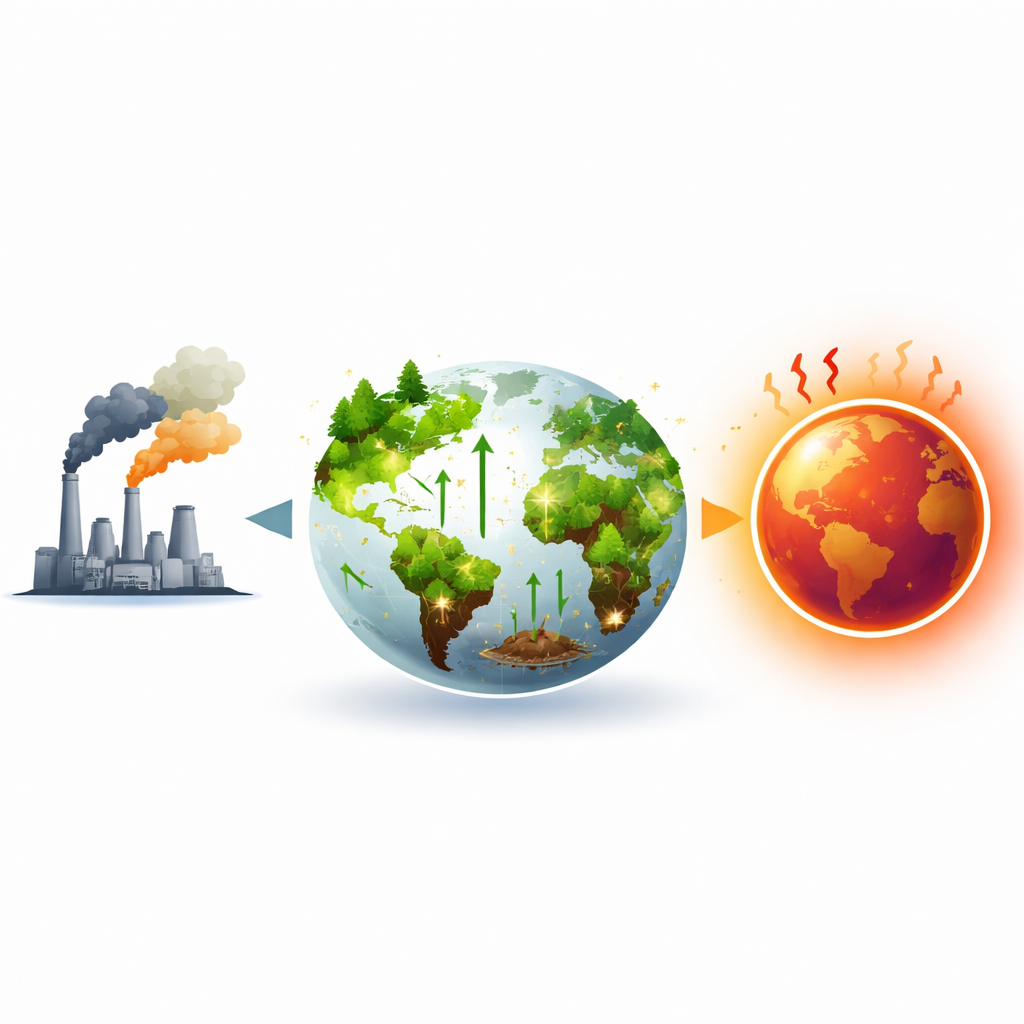
Two Different Roads to a Cooler Planet
The researchers compare a reference future in which fossil fuel carbon dioxide emissions fall quickly to zero by 2050, with no further changes in land use, against so‑called net‑zero pathways. In these net‑zero futures, societies emit extra fossil CO2 beyond the reference case but attempt to cancel it out by converting farmland back to forest, either on a very large global scale or in a more limited, food‑conscious way. All scenarios are run in an Earth system model that tracks how carbon moves between the air, land, and ocean, and how those shifts affect global temperature. This setup allows the team to ask not just whether the books balance in terms of emissions and removals, but whether the climate itself responds in the same way.
What Really Happens When Forests Offset Emissions
In the simulations that include reforestation alone, new forests do take up large amounts of carbon, adding hundreds of billions of tons of CO2 to land stores over the century. However, that is only part of the story. Planting trees changes how the land surface reflects sunlight and trades heat and moisture with the air. Darker forest canopies absorb more solar energy than croplands or grasslands, and in many regions this added energy leads to warmer surface air temperatures, not cooler ones, even though the atmospheric CO2 level is held fixed in the model. The warming also boosts processes like soil respiration, which release additional CO2 to the atmosphere from non‑reforested areas, reducing the net benefit of tree planting when viewed at the global scale.
Net Zero by Trees and Net Zero by Cuts Are Not Equal
When the authors construct net‑zero pathways—adding fossil fuel emissions equal to the carbon taken up by the new forests within reforested areas—they find that the atmosphere still ends up with more CO2 than in the reference case where those fossil emissions never occurred. Because warming and carbon feedbacks outside the replanted zones cause some regions to emit extra CO2, the global land sink is smaller than it appears if one only counts the forest plots themselves. As a result, atmospheric CO2 in these net‑zero scenarios is several parts per million higher by 2100, and global average surface air temperatures are about 0.04 to 0.12 °C warmer, even though the accounting on paper treats them as fully balanced. Removing the direct physical effects of changing land cover from the model shrinks, but does not erase, this warming gap.
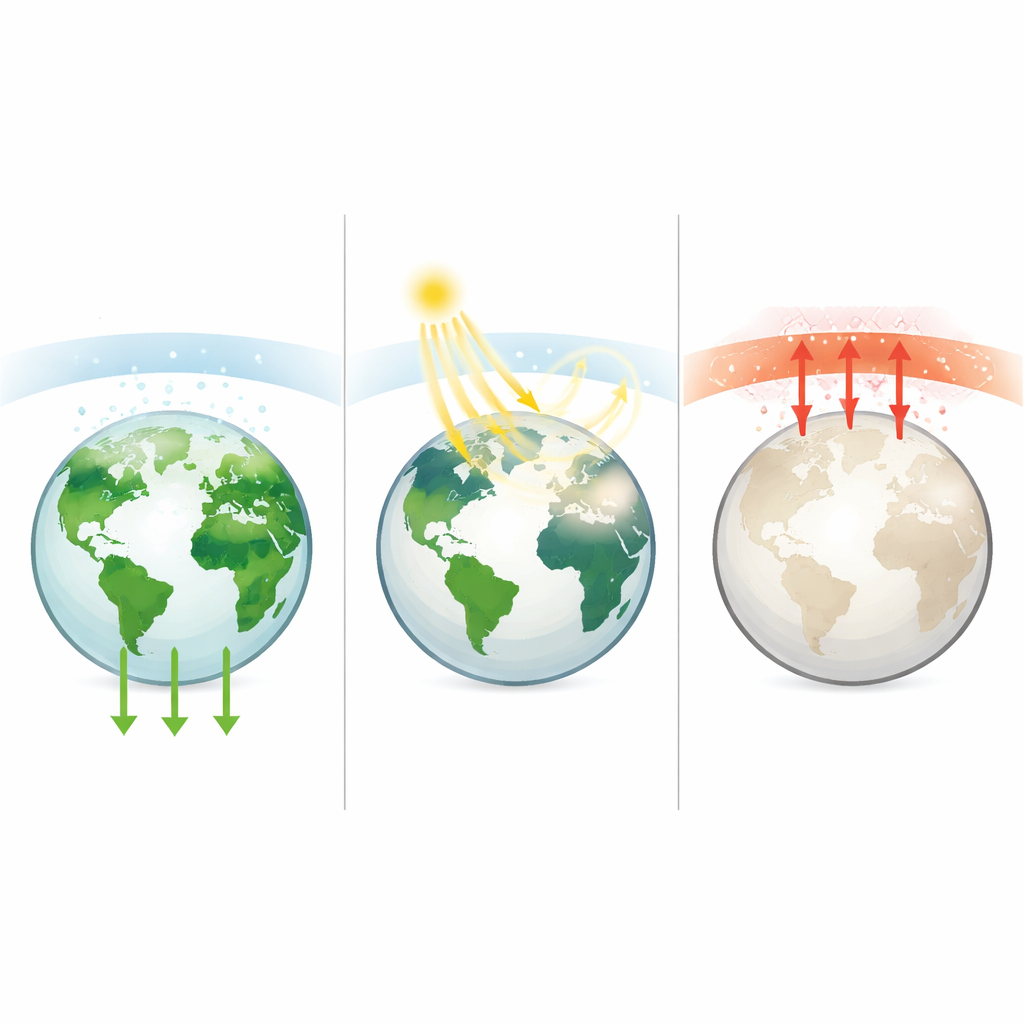
When Forests Lose Their Stored Carbon
The team also explores what happens if some of the captured forest carbon is later lost to disturbances like fires, pests, or renewed clearing—events that are expected to intensify as the climate warms. They simulate random, stand‑replacing losses of tree cover, which send some of the previously stored carbon back into the air. This raises atmospheric CO2 further, but in the model the shift from dark forest back to lighter, more reflective land partly compensates by cooling the surface. Even so, the combined effect still adds a small extra warming compared with net‑zero pathways that assume permanent storage, and it underscores how fragile tree‑based carbon stocks can be over time.
What This Means for Climate Promises
For a non‑specialist, the key message is that not all forms of net zero are created equal. In the model used here, relying on reforestation to counterbalance continued fossil fuel burning leads to a measurably warmer world than one in which those fossil emissions are simply avoided. This difference arises because forests interact with climate through light, heat, water, and feedbacks in the global carbon cycle—not just through the carbon they store on site—and because that stored carbon is vulnerable to future disturbances. The study suggests that climate plans and carbon markets which treat tree planting as a one‑for‑one substitute for emissions cuts are likely overstating its ability to stabilize temperatures. To minimize climate risks, the authors argue, societies should prioritize driving fossil fuel emissions as close to zero as possible, using reforestation and other nature‑based options as a supplement rather than a replacement for deep emissions reductions.
Citation: MacIsaac, A.J., Zickfeld, K., Banville, P.E. et al. Imbalances in climate outcomes in net-zero pathways with fossil fuel CO2 emissions and reforestation-based CO2 removals. Commun Earth Environ 7, 313 (2026). https://doi.org/10.1038/s43247-026-03329-x
Keywords: net zero, reforestation, carbon dioxide removal, climate feedbacks, fossil fuel emissions