Clear Sky Science · en
Ozone pollution reduction partially offsets the negative impact of climate change mitigation efforts on global hunger
Why Cleaner Air Matters for Dinner Plates
When we talk about fighting climate change, we usually think about smokestacks, solar panels and electric cars—not what ends up on our plates. Yet the same actions that clean up the air and cool the planet can also change how much food the world can grow and how many people go hungry. This study asks a timely question: as countries push to limit global warming, could some climate policies unintentionally worsen hunger, and can cleaner air, especially less ozone pollution, help balance the scales?
Climate Action’s Hidden Cost for Food
Scientists already know that a hotter world makes farming harder by stressing crops, workers and animals. But strong climate policies can create a different kind of pressure: they can push countries to grow more plants for energy or to plant more forests, leaving less land for food. Earlier work suggested that this land squeeze, together with higher production costs from carbon taxes, might raise food prices and put more people at risk of chronic undernourishment, even compared with a future with more warming but weaker climate action. Those studies, however, largely ignored a key side effect of cutting emissions—the air itself gets cleaner.
Ozone: The Unseen Crop Killer
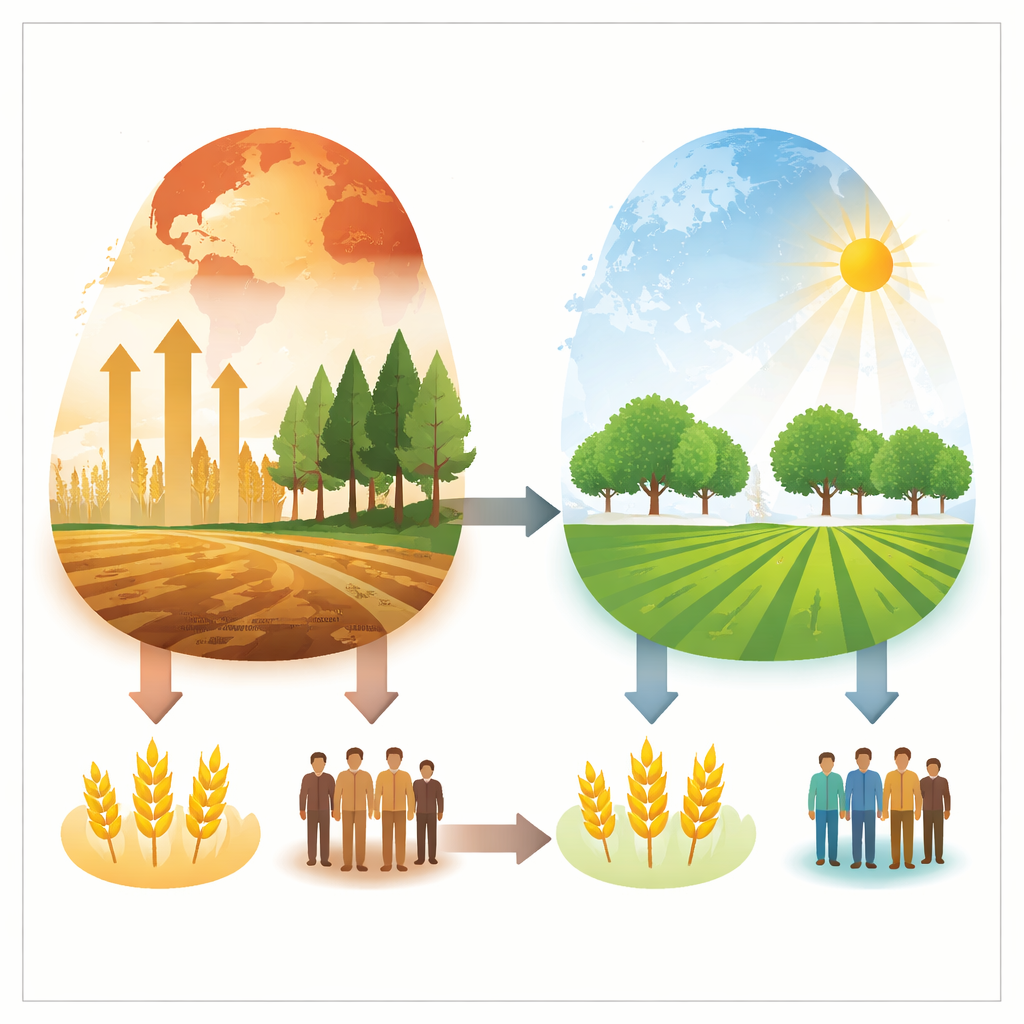
Near the ground, ozone is not the protective layer we hear about in the upper atmosphere; it is a toxic gas formed when sunlight cooks a mix of pollutants such as methane and nitrogen oxides from vehicles, power plants and farms. This ground-level ozone damages plant leaves and quietly cuts crop yields around the world, especially for staples like wheat and rice. The team behind this paper used a chain of models—from atmospheric chemistry to crop growth to global agricultural economics—to follow what happens when climate policies reduce those ozone-forming pollutants. By comparing several future pathways, they could separate the influences of warming, mitigation policies and ozone changes on food production, prices and hunger.
Testing Futures with Six Global Models
The researchers ran six different agro-economic models, each representing global agriculture, land use and trade in its own way. They explored a "middle-of-the-road" world for population and income growth up to 2050, then layered on two climate futures: one with strong action to keep warming near 1.5 °C and another with high emissions and little extra policy effort. For each case, they fed in projected changes in crop yields from both climate and ozone levels, including how heat affects livestock and farm labor. The models then calculated how much food is produced, how prices change and how many calories people in different regions are likely to consume, allowing the team to estimate the population at risk of long-term hunger.
Cleaner Air Softens, But Does Not Erase, the Trade-Off
Without extra climate policies, rising temperatures and worsening ozone pollution slightly increase global hunger by 2050 compared with a world where today’s climate and air quality simply continue. Under ambitious mitigation, the story is more mixed. On the one hand, limiting warming helps crop yields; on the other, carbon prices and competition for land with forests and bioenergy push up food costs and reduce calorie intake, raising the number of people facing hunger. When ozone reduction from cleaner energy and lower methane and nitrogen oxide emissions is included, some of this damage is undone. The study finds that by 2050, lower ozone concentrations could cut the additional hunger caused by strong climate policy by about 15 percent worldwide—a meaningful yet partial relief.
Big Regional Differences in Who Benefits
The gains from cleaner air are not spread evenly. Sub-Saharan Africa and India stand out both as hunger hotspots and as major beneficiaries of ozone reduction. Together they account for more than half of the global reduction in hunger due to lower ozone under strong climate action. In India, healthier wheat crops are especially important, boosting calorie intake enough to offset a large share of the negative effects of higher food prices. Other Asian regions, including China, also see modest benefits, while ozone-related yield gains are smaller for key crops in sub-Saharan Africa, limiting how much hunger falls there despite improvements. Sensitivity tests using alternative economic futures and higher pollution levels suggest that, across a range of assumptions, ozone reduction consistently eases—but does not reverse—the food security risks posed by climate mitigation.
What This Means for the Fight Against Hunger
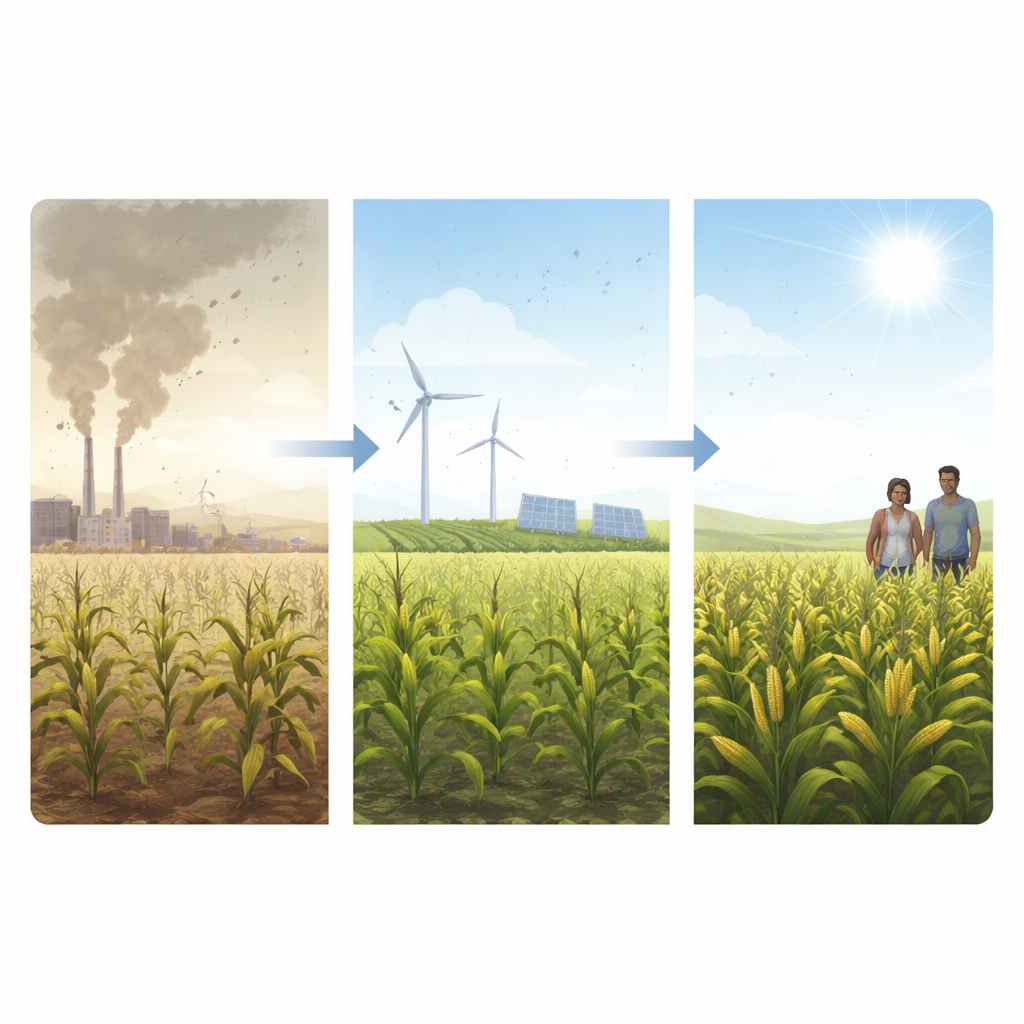
The central message is straightforward: cleaning up the air by cutting the pollutants that form ozone makes it easier to feed the world, but it cannot by itself cancel out all the food security challenges created by ambitious climate policies. To move toward a world with both a stable climate and less hunger, climate strategies must be designed with farms and dinner tables in mind. That includes boosting agricultural productivity, using land more efficiently, shifting diets toward less land-intensive foods and reducing food waste. When such measures are combined with strong climate action, the benefits of cooler temperatures and cleaner air can work together instead of at odds with the global goal of zero hunger.
Citation: Xia, S., Hasegawa, T., Jansakoo, T. et al. Ozone pollution reduction partially offsets the negative impact of climate change mitigation efforts on global hunger. Nat Food 7, 356–368 (2026). https://doi.org/10.1038/s43016-026-01322-3
Keywords: ozone pollution, food security, climate mitigation, crop yields, global hunger