Clear Sky Science · en
Thermal inequities in public parks and open spaces in Los Angeles determined by remote sensing
Why Some Parks Feel Hotter Than Others
On a blazing summer day in Los Angeles, a park should be a safe, shady escape. But for many residents of South Los Angeles, setting foot on a schoolyard or neighborhood field can literally hurt. This study shows that not all parks cool people equally: depending on where you live, your local “green space” may be built from heat-trapping materials that turn play areas into burn hazards instead of havens.
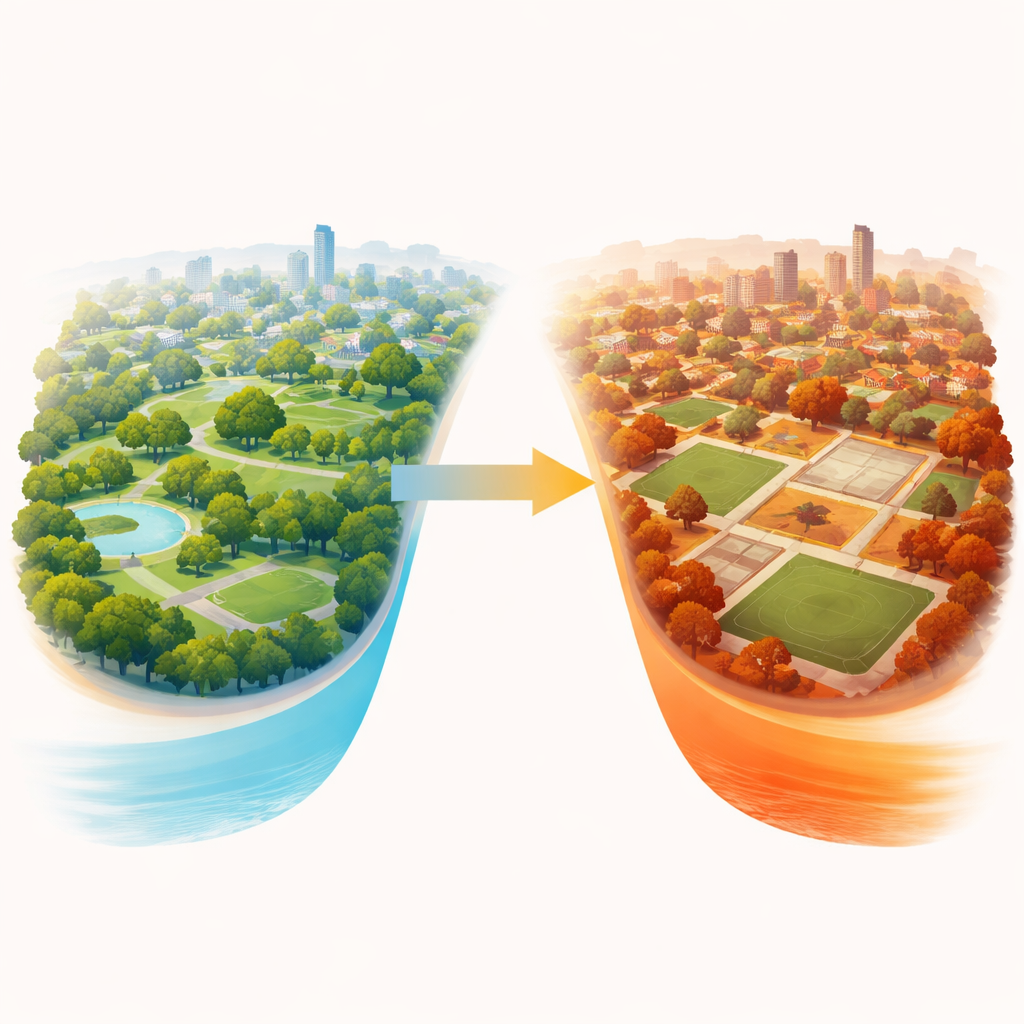
Two Neighborhoods, Two Very Different Park Systems
The researchers compared public parks and open spaces in two neighboring regions: South Los Angeles, home to mostly Hispanic and Black, lower-income communities, and West Los Angeles, a wealthier, largely white area. Using satellite data, detailed maps, and community input, they looked at how much parkland each region has, what those parks are made of (grass, concrete, artificial turf, sand, woodchips, rubber), and how hot their surfaces get during summer days. They found that West Los Angeles has far more recreational space overall and far more green, natural areas, while South Los Angeles has fewer parks and smaller spaces.
Measuring Heat From Space
To understand how hot park surfaces really get, the team used a NASA instrument called ECOSTRESS, mounted on the International Space Station. ECOSTRESS measures land surface temperature—how hot the ground itself becomes—at different times of day. The scientists then used advanced “downscaling” methods to sharpen these satellite readings from city-block scale down to about the size of a small house lot. This allowed them to see temperature differences between, say, a grassy soccer field and an adjacent patch of concrete or artificial turf within the same park.
What the Ground Is Made Of Matters
Across the county, parks were cooler than the surrounding city, but there was a catch: in South Los Angeles, parks cooled the air much less than in West Los Angeles. A key reason was surface materials. West Los Angeles parks were dominated by natural turf—almost all grass and vegetation—while South Los Angeles parks had a much higher share of concrete, artificial turf, rubber, and other hard surfaces. Even after adjusting for park size and special cases like golf courses and large natural reserves, South Los Angeles still had far less natural turf and far more heat-retaining materials. In both regions, the coolest spaces were large grassy areas; the hottest were schoolyards and playfields covered in concrete and artificial turf.
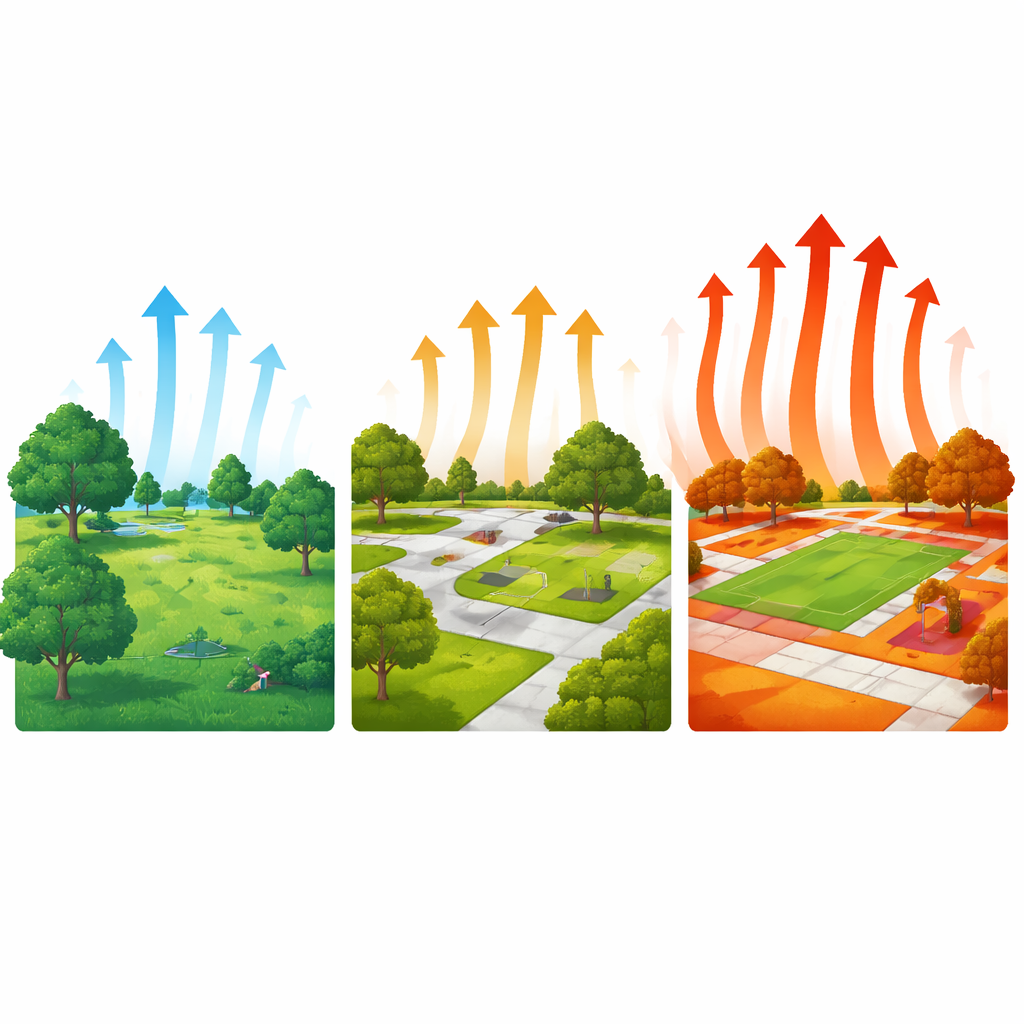
Heat That Crosses the Line From Uncomfortable to Dangerous
These material differences translated into stark temperature gaps. On average summer afternoons, park surfaces in South Los Angeles were dramatically hotter than those in West Los Angeles, even when made of the same material. Natural grass, concrete, and artificial turf all ran several degrees warmer in South Los Angeles. Many South Los Angeles parks came close to or exceeded the temperature at which skin feels pain and can begin to burn on contact. About 36 percent of public parks and schoolyards there reached or surpassed the pain threshold, while none in West Los Angeles did. Community members had already reported burned feet on artificial turf and concrete, as well as heat exhaustion during school sports—experiences that the satellite measurements confirmed as widespread risks, not isolated incidents.
What This Means for Fairness, Health, and Climate
This work shows that “thermal inequity” is not just about cities being hotter than the countryside—it is also about which neighborhoods get real cooling from their parks. In South Los Angeles, residents bear a double burden: they have less access to parkland overall, and the parks they do have are built with materials that trap heat and reduce the cooling benefit. As heat waves become more frequent and intense with climate change, these built-in disadvantages will worsen risks of heat stroke, heart problems, and other health issues, particularly for children, older adults, and people with existing illnesses. The authors argue that simply adding more parks is not enough. To truly protect residents and advance environmental justice, cities must also transform existing parks by replacing hot, artificial surfaces with trees, grass, and other nature-based features that can safely cool the neighborhoods that need relief the most.
Citation: Agatep, A., Fisher, J.B., Tacazon, K. et al. Thermal inequities in public parks and open spaces in Los Angeles determined by remote sensing. npj Urban Sustain 6, 61 (2026). https://doi.org/10.1038/s42949-026-00366-5
Keywords: urban heat, park equity, Los Angeles, environmental justice, extreme heat health