Clear Sky Science · en
Personalised health plan development using agentic AI in Singapore’s national preventive care programme: a pilot study
Why a Smart Health Coach Matters Now
As people live longer, many countries are struggling to care for growing numbers of older adults with long-term illnesses like diabetes and heart disease. Singapore is no exception. Its Healthier SG programme aims to help residents stay healthy before serious disease develops, but doctors and nurses have limited time to craft detailed lifestyle advice for every person. This study tests whether an advanced form of artificial intelligence (AI) can act as a personalised digital coach, turning a doctor’s broad advice into concrete daily plans for diet and exercise that people actually want to follow.
A Digital Helper for Everyday Choices
The researchers built a system called HealthGuide@Home, a conversational digital assistant powered by what they call an “agentic” large language model. Instead of simply answering one-off questions, this AI works through a structured process: it asks residents about their goals, health conditions, food preferences, and exercise habits; combines that with official national guidelines for chronic diseases; and then produces a “base plan” for meals and physical activity. Residents can then refine this plan through back-and-forth interaction, asking for alternatives, adjustments for cultural preferences, or easier options. Behind the scenes, the system uses a routing mechanism that decides whether to focus on gathering preferences, personalising details, suggesting new options, or collecting feedback. 
How the AI Engine Works Under the Hood
To power HealthGuide@Home, the team compared two state-of-the-art language models and several multi-agent frameworks. They selected a model that scored better on following instructions, using tools, and generating flexible, coherent responses, and paired it with a graph-based agent framework that can break complex tasks into smaller steps. The assistant draws on trusted sources: official Singapore Ministry of Health and Health Promotion Board materials, as well as vetted open resources on muscle groups and exercise types. When a user asks for an exercise routine, for example, the system first checks health conditions and safety rules, retrieves relevant moves from these knowledge bases, and then assembles a weekly plan that can be further customised. 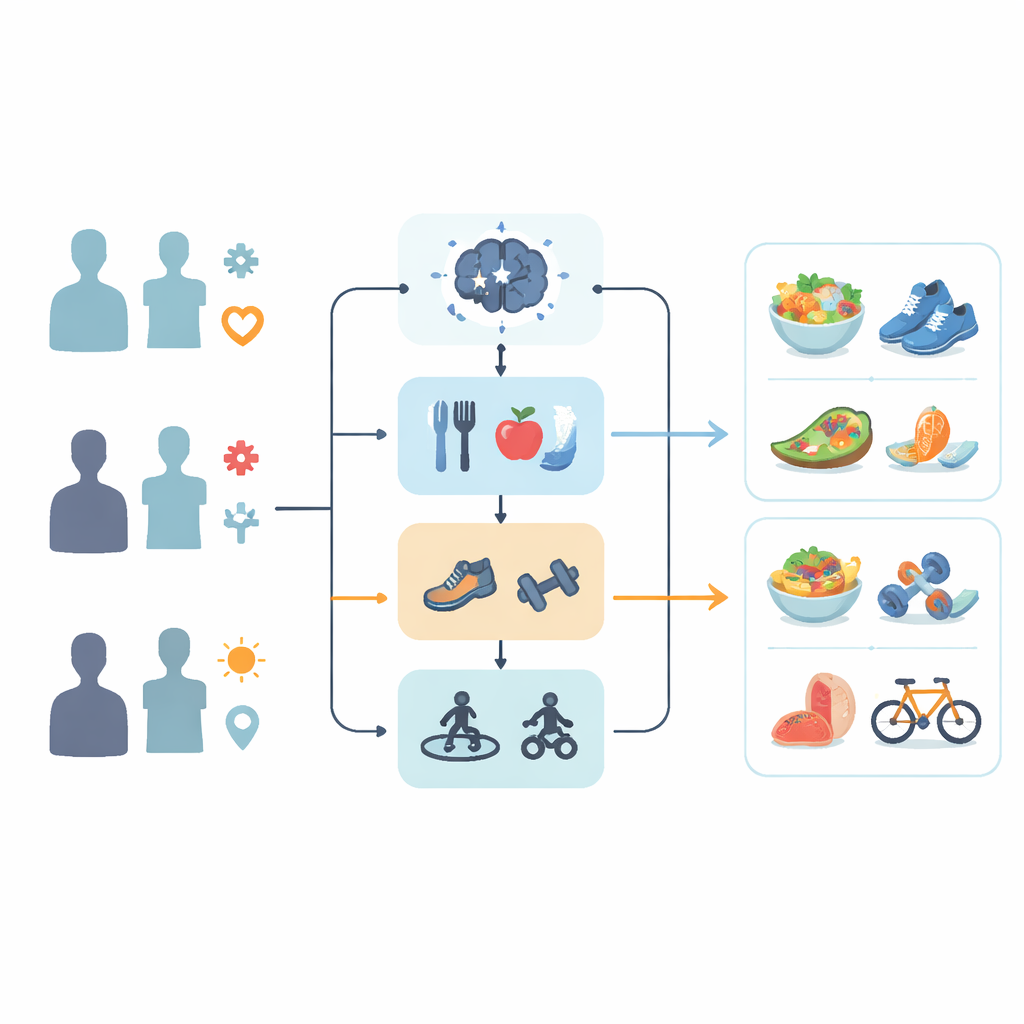
What Residents and Clinicians Thought
The pilot involved 20 Singapore residents aged 40–59 and seven clinicians, including primary care doctors and policy experts. Participants rated the assistant on how appropriate, useful, actionable, and personalised its plans were, using a five-point scale where the middle value meant “neutral.” Both residents and clinicians scored the system significantly above this neutral level on most measures. Residents’ median scores were 4.0 for appropriateness, 3.75 for usefulness, 4.0 for actionability, and 4.0 for personalisation. They especially liked having clear, step-by-step suggestions, recipe-style meal guidance, and links to exercise demonstrations. Clinicians appreciated the “safety first” orientation and saw the tool as a practical add-on to their own advice, particularly for people with well-managed chronic conditions.
Personal Touch, Detailed Guidance, Few Trust Worries
Beyond raw scores, the team analysed residents’ written comments. Most remarks supported the idea that people want highly tailored diet and exercise plans and appreciate detailed guidance; residents frequently asked for even more customisation, visual aids, and specific ideas for dining out. However, the expectation that many would be uneasy about AI advice did not hold up. Only a quarter of residents raised major concerns about following AI-generated plans, and their questions focused more on how the recommendations were produced than on rejecting them outright. Sentiment analysis of the feedback showed especially positive reactions to exercise guidance and to the overall plans once residents had refined them through interaction with the assistant. People with existing but well-controlled conditions tended to respond particularly well, suggesting that they may be both motivated and in need of this level of support.
Promise and Next Steps for Everyday Health
To a lay reader, the bottom line is that an AI-powered assistant can feasibly turn general medical advice into specific, day-by-day actions that many people find relevant, practical, and encouraging. This early study is small and does not yet prove long-term health benefits, but it shows that residents and clinicians in a national preventive care programme are willing to work with such a tool and often value its detailed, personalised guidance. If future research confirms that these digital plans lead to lasting habit change and are kept safe, up to date, and fair, systems like HealthGuide@Home could help ease pressure on healthcare workers while giving individuals a clearer roadmap to healthier living.
Citation: Goh, H.L., Sancenon, V., Chu, B.M.X. et al. Personalised health plan development using agentic AI in Singapore’s national preventive care programme: a pilot study. npj Digit. Med. 9, 332 (2026). https://doi.org/10.1038/s41746-026-02514-8
Keywords: preventive healthcare, personalised health plans, AI health assistants, lifestyle coaching, Singapore Healthier SG