Clear Sky Science · en
Music-integrated strength–proprioceptive training improves lower-limb performance and postural balance in adolescents with visual impairment: a randomized controlled trial
Why music and movement matter together
For many teenagers, moving freely, playing sports, or just climbing stairs feels routine. For adolescents with visual impairment, however, everyday movements can be harder, affecting confidence and independence. This study explores a simple idea that many people can relate to: can adding upbeat music to a well-designed exercise program help these young people build stronger legs and better balance, making daily life safer and more active?
Challenges faced by teens with low vision
Adolescents with visual impairment often have lower physical fitness than their sighted peers. They may have weaker leg muscles, poorer balance, and less flexible trunks, which can limit how independently they move. Because seeing the environment is harder, they tend to be less physically active, spending more time sitting and less time in sports or play. Over time, this can create a cycle in which low activity leads to weaker bodies, which then makes movement feel even more difficult and risky, increasing the chances of falls and injuries.
A new kind of training plan
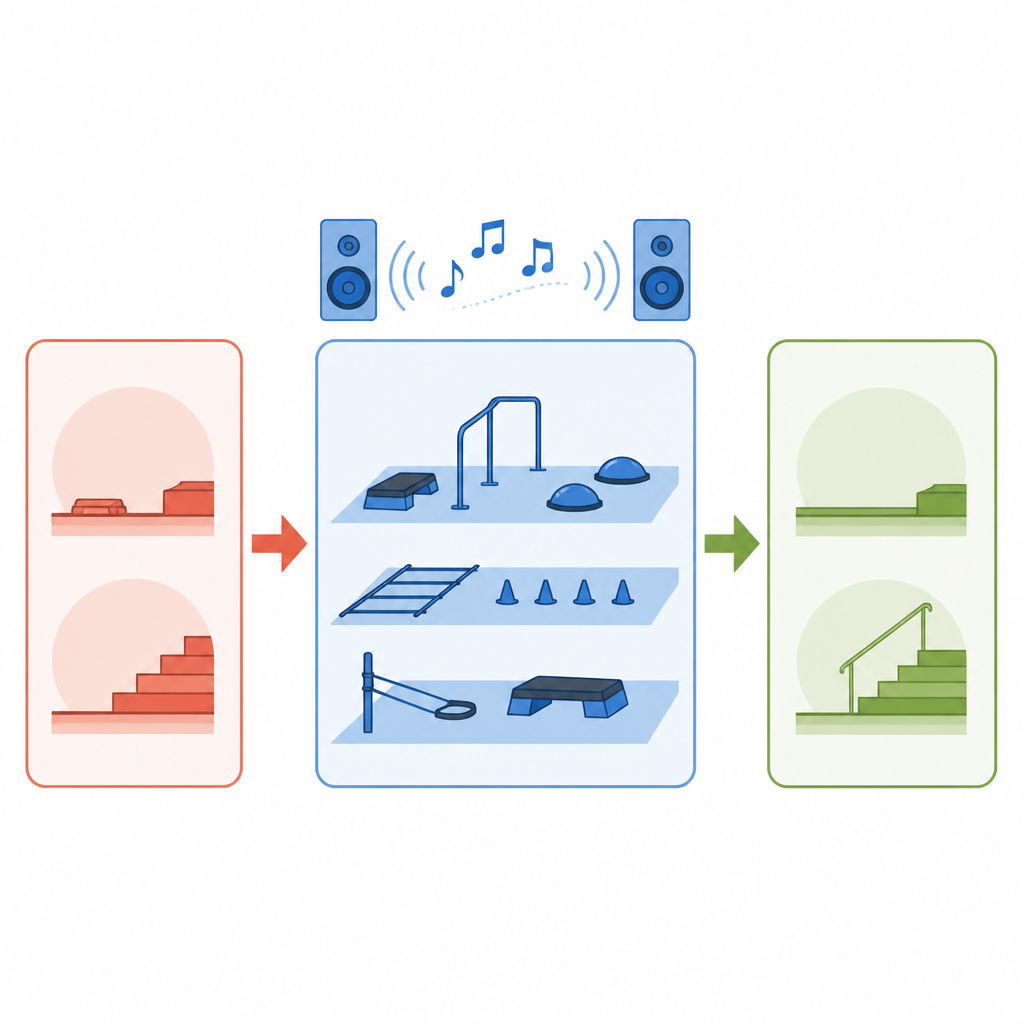
To break this cycle, the researchers designed an eight week program that blended strength exercises with balance and body awareness work, known as proprioceptive training. Fifty nine teenagers with severe visual impairment were randomly split into three groups. One group did the exercise program without music. A second group did the same exercises while listening to fast tempo popular music chosen from songs they already liked. The third group continued their usual routines without any special training and served as a comparison.
How the program worked
Training sessions took place twice a week in a school gym, lasting 45 to 60 minutes. Each session began with a warm up, followed by six main exercises and a cool down. The movements focused on the legs and core and were done on both firm and unstable surfaces like foam pads or cushions to challenge balance. Examples included squats, jumps, standing on one leg, and sit ups. The number of sets and repetitions increased over the weeks so that the difficulty rose gradually. Effort was kept at a moderate to vigorous level, and the same experienced trainer supervised all sessions to ensure clear instructions and safety.
What the researchers measured
Before and after the eight week period, all participants took four simple tests. A sit to stand test counted how many times they could rise from and sit back down on a chair in one minute, reflecting leg strength and power. The Killy test, where participants held a sitting position against a wall, measured leg endurance. A functional reach test gauged how far they could lean forward without losing balance, while a single leg stance test assessed how long they could stand on one leg. These tests are practical, easy to perform in schools, and give a clear picture of everyday physical abilities.
Stronger legs and steadier posture
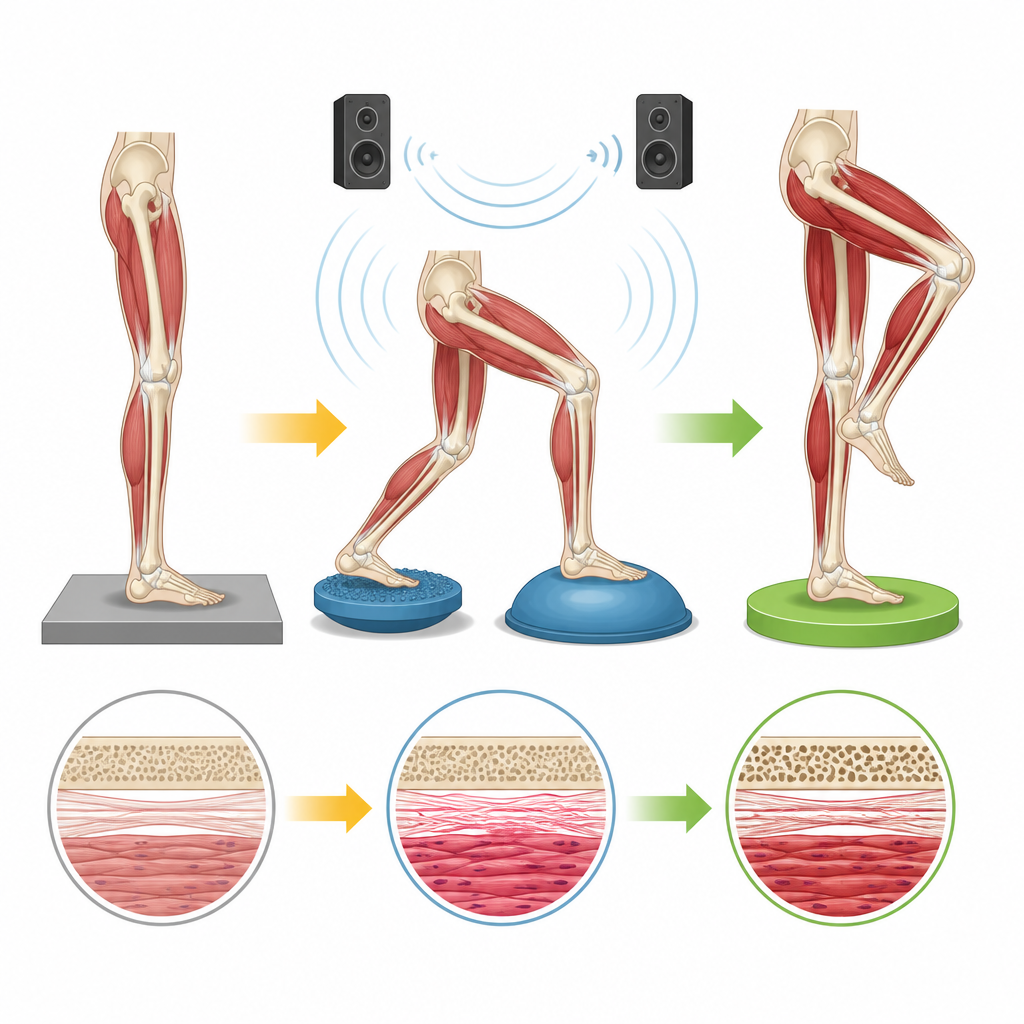
Both exercise groups improved on all four tests compared with the control group, which showed no meaningful changes. This means that simply doing the combined strength and balance program helped teenagers with visual impairment build stronger legs and better balance. However, the group that exercised with music showed even larger gains in several areas. They completed more sit to stand repetitions, held the wall sitting position longer, and stood on one leg for more time than those who trained without music. For the forward reach test, both training groups improved similarly, suggesting that music provided extra help mainly for strength, endurance, and steady one legged balance rather than every aspect of movement.
What this means for daily life
In plain terms, the study suggests that well planned exercise can make teenagers with visual impairment stronger and steadier on their feet, and that playing lively, familiar music during training can give an extra boost for certain abilities. While music did not enhance every measure, it was linked with better leg performance and static balance, skills that are vital for climbing stairs, standing on buses, and avoiding falls. Because the program uses simple equipment and background music, it can be easily added to school physical education or rehabilitation sessions, offering a low cost way to help young people with low vision move with more confidence and independence.
Citation: Baccouch, R., Maatoug, H., Borji, R. et al. Music-integrated strength–proprioceptive training improves lower-limb performance and postural balance in adolescents with visual impairment: a randomized controlled trial. Sci Rep 16, 15984 (2026). https://doi.org/10.1038/s41598-026-53232-w
Keywords: visual impairment, adolescent exercise, music and movement, balance training, leg strength