Clear Sky Science · en
Dietary plant extracts reduce methane emission and modulate rumen microbial functionality in Merino lambs
Plants Helping Sheep and the Planet
Raising cattle and sheep feeds millions of people but also releases methane, a powerful greenhouse gas, from the animals’ stomachs. This gas not only affects the climate but also represents lost energy that animals could have used to grow. In this study, researchers tested whether everyday medicinal plants could be added to lamb diets to cut methane, make better use of feed, and keep growth the same. Their findings point to simple plant-based supplements that could help farmers produce meat more efficiently while easing pressure on the environment.
Why Sheep Belch Matters
Methane from the stomachs of cows and sheep is a major source of greenhouse gases from farming, and it is produced by tiny microbes that live in a special part of the gut called the rumen. When these microbes break down feed, they release gases and help provide energy to the animal. If farmers want to keep feeding a growing world without simply raising more animals, they need ways to get more meat and milk from the same feed while releasing less gas. One promising route is to subtly steer the rumen microbes so they waste less energy as methane and use more of it for growth.
Testing Three Common Medicinal Plants
The team worked with forty young Merino lambs in South Africa and fed them all the same complete diet. In addition, three groups received extracts from Moringa oleifera, Jatropha curcas, or Aloe vera, while a fourth group got only water. The plant leaves were collected, extracted in methanol, dried, and then given to the lambs twice a day at a dose equal to 50 milligrams of extract per kilogram of feed. Over several weeks, the researchers tracked how much the lambs ate, how fast they grew, how well they digested nutrients, how much methane they released in special chambers, and what was happening inside their rumen microbes using DNA sequencing. 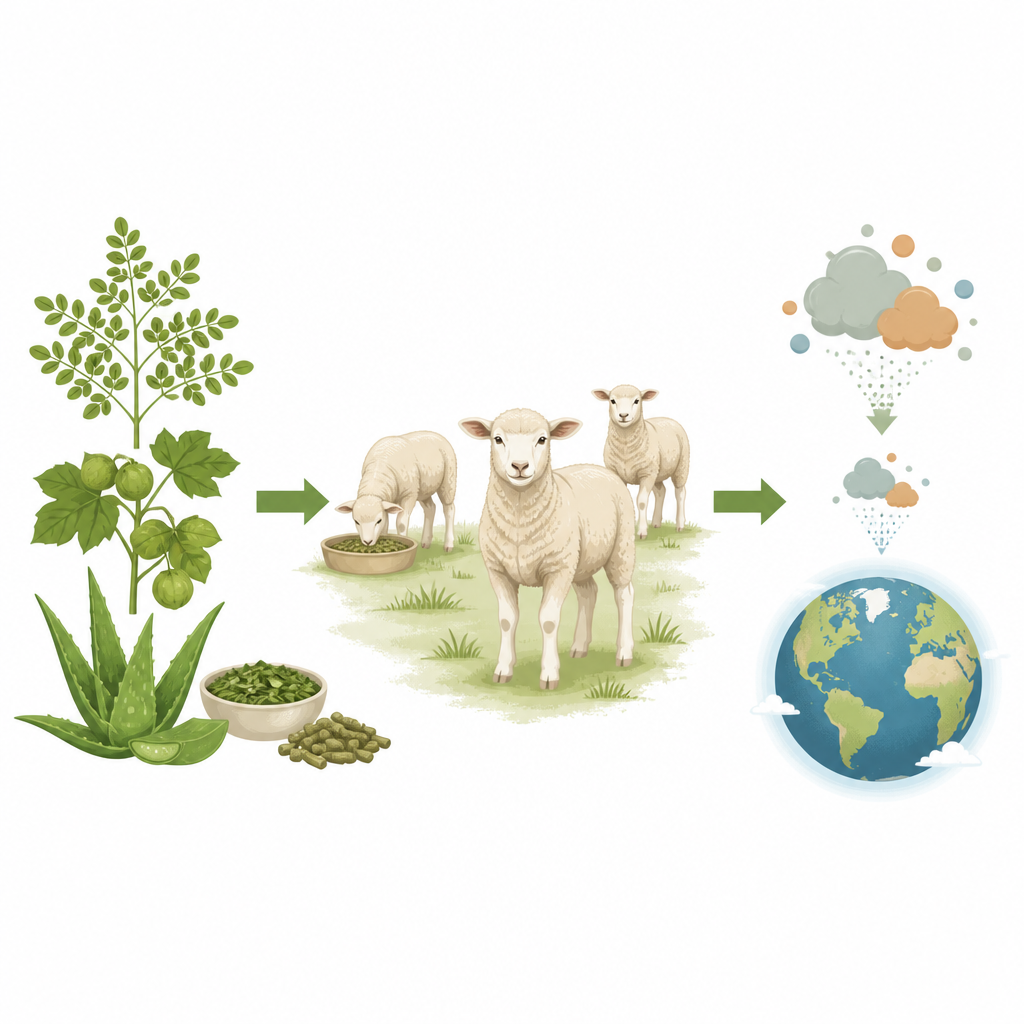
Less Methane, Better Use of Protein
All three plant extracts lowered methane emissions compared with control lambs. Jatropha gave the largest drop at about 17 percent, followed by Aloe at 12 percent and Moringa at 9 percent. These cuts remained clear even after adjusting for how much the lambs ate or how big they were. At the same time, lambs that received Moringa and Jatropha digested more of the dry matter and protein in their feed, meaning fewer nutrients passed through unused. Levels of ammonia in the rumen fluid, which signal wasted protein, were lower in all supplemented groups, especially with Moringa and Aloe. Despite these changes inside the animals, overall feed intake, daily weight gain, and carcass quality stayed similar across all groups, showing that the plant additives did not harm growth.
What Changed Inside the Lambs’ Guts
To understand why methane dropped, the researchers examined the rumen microbiome using shotgun metagenomics, a method that reads many DNA fragments at once. The overall mix of major microbial groups looked similar in all lambs, with Bacteroidetes and Firmicutes dominating as expected for a high-roughage diet. However, there were hints of higher microbial diversity in lambs given Moringa and Jatropha, and certain genes tied to protein building and carbohydrate breakdown were more common in these groups. At the same time, genes linked to microbial stress defences, such as those involved in dealing with toxic metals, were less abundant with plant extracts, especially in Aloe-fed lambs. Together, these shifts suggest the plants nudged the rumen microbes toward using feed more efficiently and away from pathways that favor methane. 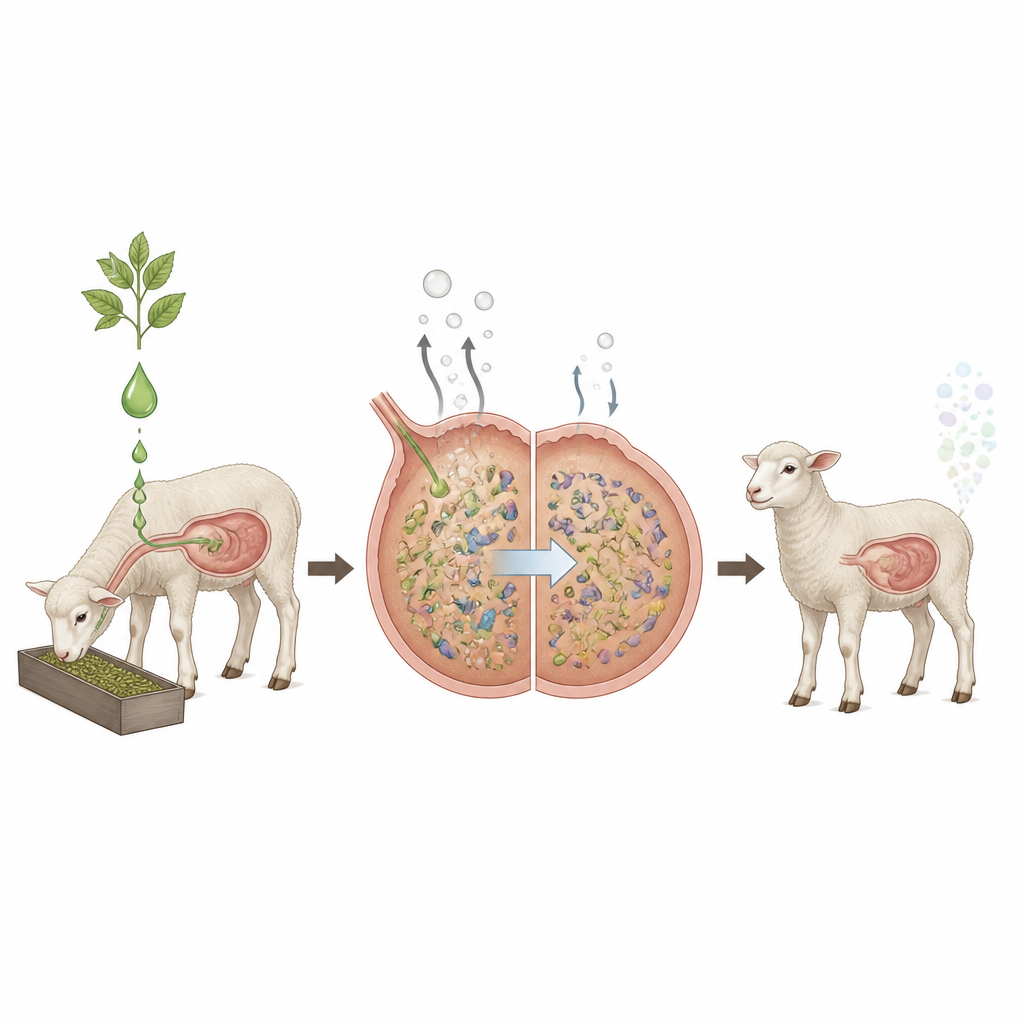
What This Means for Farmers and Climate
In simple terms, adding small amounts of Moringa, Jatropha, or Aloe extracts to lamb diets helped the animals capture more value from their feed while quietly shrinking the invisible plume of methane around each animal. The study shows that such plant-based supplements can cut methane emissions by around 10 to 20 percent without sacrificing growth or meat yield. While the exact microscopic steps are complex and still need further study, the message is straightforward: carefully chosen plant extracts could become practical tools for farmers aiming to raise animals in a way that is friendlier to both their bottom line and the climate.
Citation: Akanmu, A.M., Hassen, A., van Marle-Köster, E. et al. Dietary plant extracts reduce methane emission and modulate rumen microbial functionality in Merino lambs. Sci Rep 16, 15776 (2026). https://doi.org/10.1038/s41598-026-46933-9
Keywords: rumen methane, medicinal plant extracts, Merino lambs, rumen microbiome, sustainable livestock