Clear Sky Science · en
A tendency coefficient–driven Pythagorean fuzzy distance approach for selection problems in higher education and medical waste management
Making Tough Choices Clear
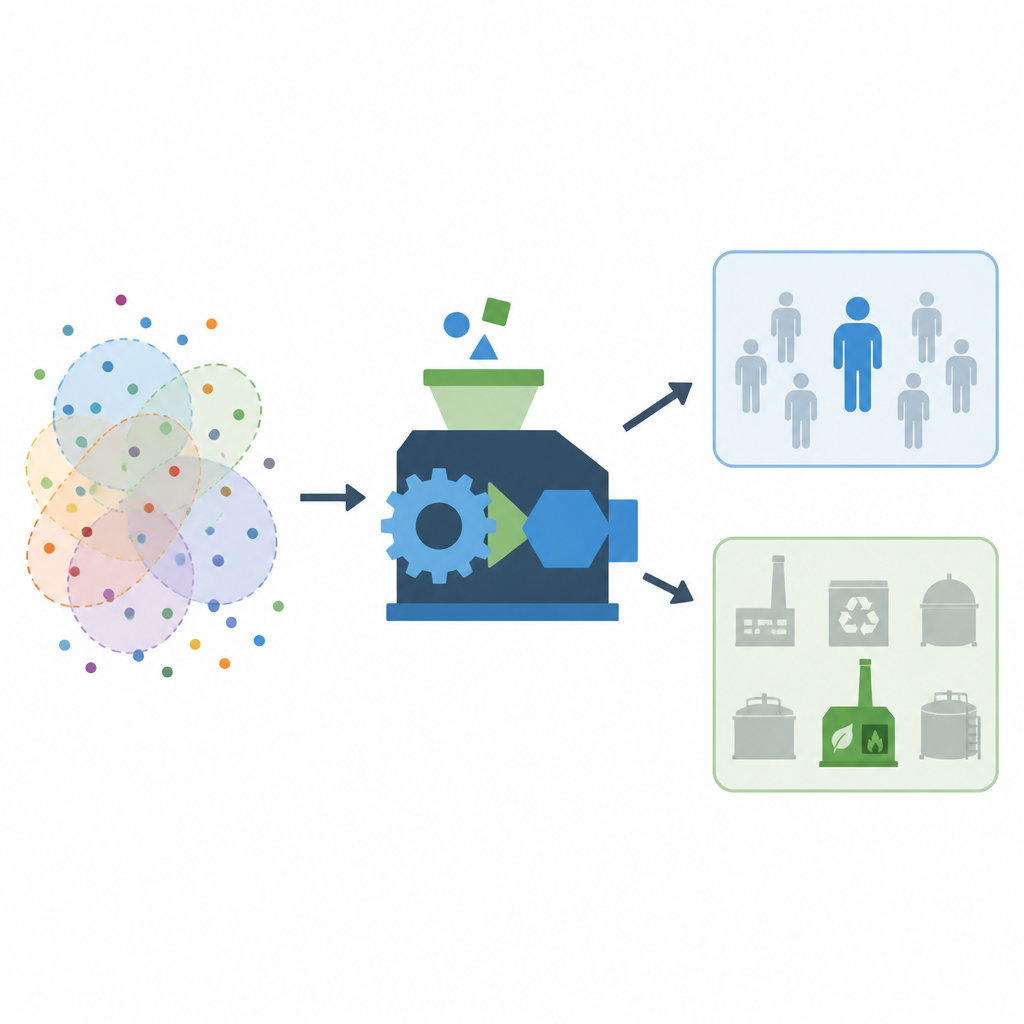
University admissions and hospital waste disposal may seem unrelated, but both involve high stakes and messy information. Universities must rank thousands of applicants based on imperfect exam scores, while hospitals must choose safe ways to handle dangerous medical waste under uncertain conditions. This study introduces a mathematical tool designed to make such complex choices more transparent, consistent, and fair for people who rely on their outcomes.
Why Ordinary Numbers Are Not Enough
Entrance exams and expert opinions look precise on paper, but in practice they contain a lot of fuzziness. Scores can be affected by technical glitches, misaligned curricula, or unclear marking schemes. In Nigeria’s university entrance test, for example, applicants and parents often question results, and officials struggle with incomplete feedback. Similarly, deciding how to treat medical waste involves many conflicting concerns, from cost and capacity to health risks and environmental impact. Traditional “crisp” methods treat each piece of information as certain, which can hide hesitation and lead to choices that feel arbitrary or unstable.
A Richer Way to Describe Uncertain Judgements
To cope with vagueness, researchers have developed “fuzzy” models that allow something to partly belong and partly not belong to a category. Later work introduced the idea that people may also be unsure, adding a separate degree of hesitation. Pythagorean fuzzy sets go one step further by giving extra freedom to represent how strongly something supports a choice, how strongly it counts against it, and how much is simply unknown. These three pieces together better reflect real human judgement, whether it concerns a student’s suitability for a degree or the safety of a waste treatment method.
Measuring Closeness with Tendency Coefficients
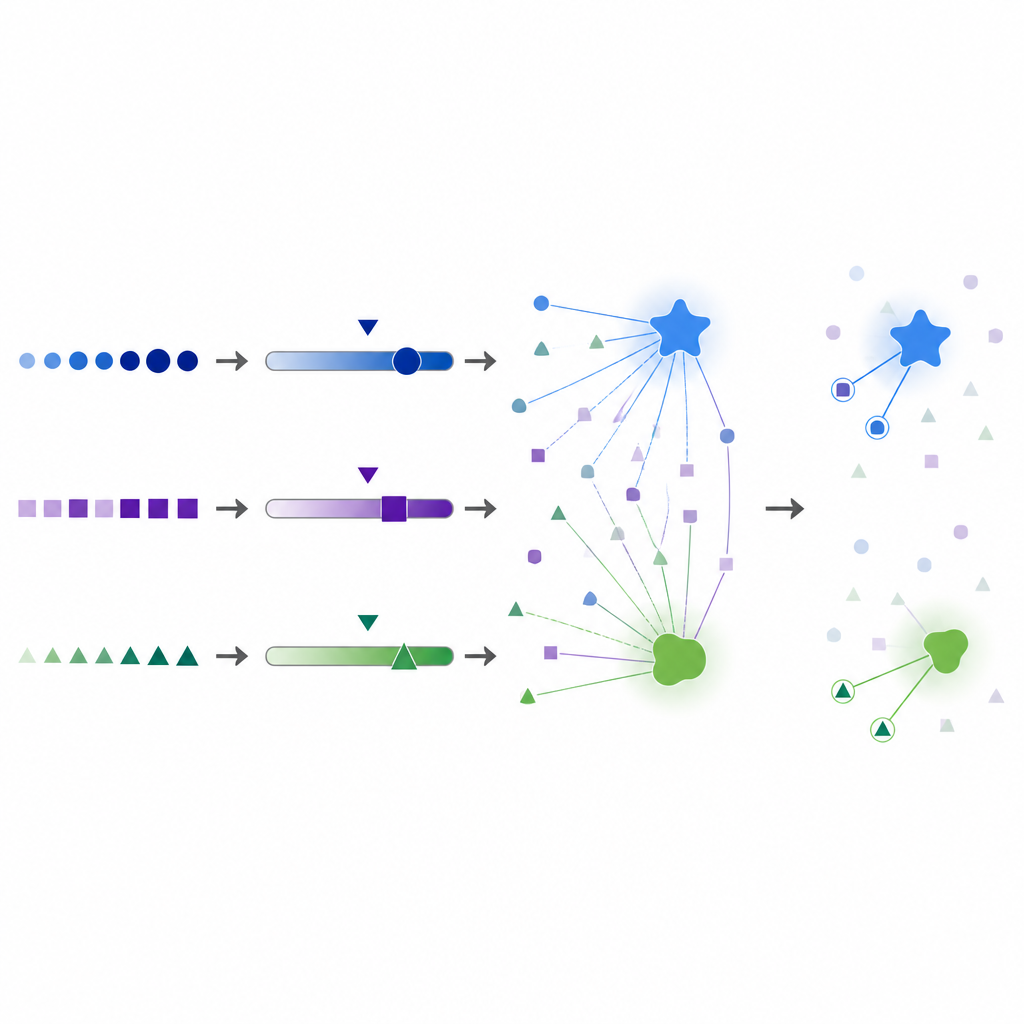
Once information is stored in this richer form, decision makers still need a way to compare options: which student is closest to the ideal applicant, or which waste system is closest to the ideal balance of safety, cost, and practicality. The core of this paper is a new way to measure “distance” between options within the Pythagorean fuzzy framework. The key innovation is the use of tendency coefficients, numbers that capture how much weight the supportive, opposing, and hesitant parts of the information should carry. Instead of assuming these weights, the method derives them from the data itself. This reduces bias and improves the method’s ability to tell apart alternatives that look similar at first glance.
Testing the Method on Students and Waste Systems
The authors apply their distance measure to two practical problems. First, they reanalyse exam results for ten applicants seeking admission to a veterinary medicine program. By treating each subject score as a Pythagorean fuzzy value and then measuring how close each applicant is to a “perfect” profile, the method identifies the most suitable candidate with a clear numerical margin and a high degree of confidence. Second, they study five medical waste treatment options, such as incineration, microwaving, and chemical disinfection, judged against eight criteria including health risks, operating costs, and treatment efficiency. Experts provide linguistic ratings like “highly significant” or “low significance,” which are converted into Pythagorean fuzzy data. Using a standard ranking framework known as TOPSIS along with the new distance, the analysis selects microwaving as the most appropriate option among those considered.
How It Compares and Why It Matters
To see whether the new approach is truly helpful, the authors compare it with several existing fuzzy distance measures. Across both the admissions and waste management examples, their method consistently produces smaller and more discriminating distance values, while still agreeing with other methods on which options are best and worst. This suggests that the new measure is both stable and more finely tuned to small differences. Sensitivity checks also show that explicitly including tendency coefficients improves accuracy without changing the overall ordering of choices, strengthening trust in the results.
Clearer Decisions in Uncertain Worlds
For a layperson, the takeaway is that this work offers a more faithful way to turn messy, hesitant judgements into clear rankings. By carefully modeling not just what is known but also what is doubtful or undecided, and by letting the data itself indicate how strongly each part should count, the method helps universities choose applicants and hospitals choose waste systems with greater confidence. While the study focuses on exam scores and medical waste, the same ideas could be extended to many other areas where important decisions must be made under uncertainty.
Citation: Ejegwa, P.A., Anum, M.T., Kausar, N. et al. A tendency coefficient–driven Pythagorean fuzzy distance approach for selection problems in higher education and medical waste management. Sci Rep 16, 14751 (2026). https://doi.org/10.1038/s41598-026-46844-9
Keywords: Pythagorean fuzzy sets, decision making, university admissions, medical waste management, TOPSIS