Clear Sky Science · en
Sex differences in psychological distress and its risk factors among US adult Black and White immigrants, NHIS 2005–2018
Why this study matters
Migrating to a new country can be exciting and stressful at the same time. This study asks a simple but important question: among Black and White immigrants in the United States, how do men and women differ in their experiences of emotional strain, and which everyday factors like work, income, health, and habits are linked to that strain?
Looking at stress in a large immigrant population
The researchers analyzed data from more than 46,000 Black and White adults who were born outside the United States and took part in national health surveys between 2005 and 2018. They focused on “psychological distress,” a mix of feelings such as sadness, anxiety, restlessness, and hopelessness measured with a brief questionnaire. People whose scores suggested moderate to severe distress were compared with those reporting little or no distress. The team then examined how age, education, income, work, body weight, smoking, drinking, and chronic illnesses related to distress for men and women separately.
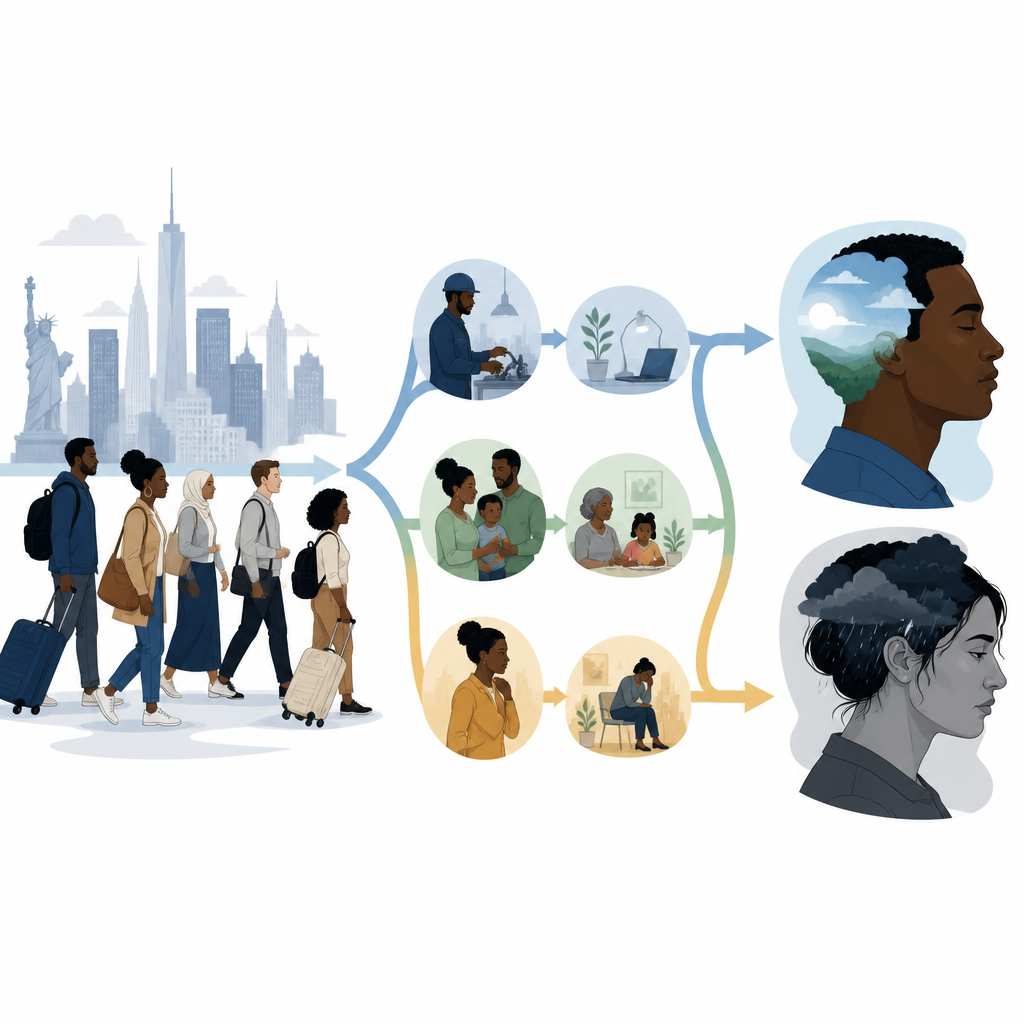
Women carry more emotional strain
The study found that immigrant women were more likely than immigrant men to report troubling levels of psychological distress. About one in five women met the threshold, compared with roughly one in six men. For both sexes, being married or living with a partner, and living at or above the poverty line, were linked with lower odds of distress. However, some influences played out differently by sex. Unemployment was tied to emotional strain in both groups, but it was especially powerful for men, who showed more than double the odds of distress when out of work. Region also mattered: men living in the North Central and Midwest areas had higher odds of distress than those in the Northeast, while women in the South had slightly lower odds.
Body weight and age tell different stories for men and women
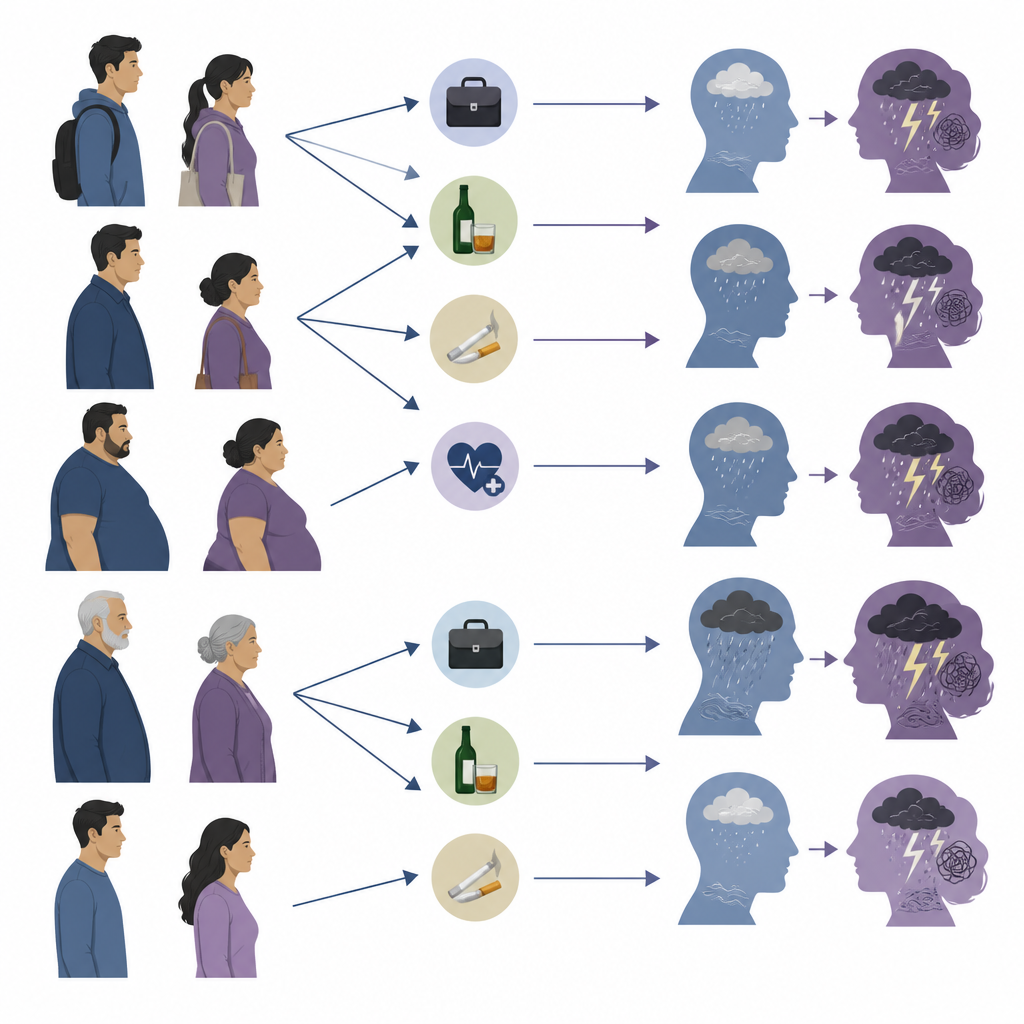
Age and body weight showed strikingly different patterns by sex. Older age, especially 65 and above, was linked with lower odds of distress for both men and women, with a stronger protective effect for men. When it came to body weight, men who were overweight had slightly lower odds of distress compared with men of lower weight. For women, the pattern was reversed: those who were overweight or obese had higher odds of distress than women of lower weight. Women who were underweight or obese also had the highest predicted chance of distress in the study’s models, pointing to the emotional burden of weight and body image for many immigrant women.
Habits, chronic illness, and health gaps
Everyday habits and health conditions were also important. Former and current smokers and drinkers in both sexes had higher odds of psychological distress than people who never smoked or drank, with smoking effects stronger in women and drinking effects stronger in men. The number of chronic diseases, such as heart disease or arthritis, showed a clear stepwise pattern: more conditions meant a higher chance of distress. This was true for both men and women but again was more pronounced for women, especially those living with three or more chronic illnesses. Interestingly, physical activity and health insurance coverage did not show strong links with distress once other factors were taken into account.
What this means for care and policy
To a lay reader, the message is that emotional health among immigrants is shaped by more than just the move to a new country. Work, money, relationships, body weight, smoking and drinking, and long term illnesses all play a role, and they do not affect men and women in the same way. Immigrant women in this study were more likely to report distress, and certain burdens such as obesity, heavy illness, and smoking weighed on them more than on men. The authors suggest that mental health screening and support for immigrants should be designed with these sex specific patterns in mind, and should be integrated into general medical care and workplace programs so that both men and women can receive help that reflects their particular risks and life situations.
Citation: Adzrago, D., Elhabashy, M. & Williams, F. Sex differences in psychological distress and its risk factors among US adult Black and White immigrants, NHIS 2005–2018. Sci Rep 16, 14920 (2026). https://doi.org/10.1038/s41598-026-45360-0
Keywords: immigrant mental health, psychological distress, sex differences, chronic disease, smoking and alcohol