Clear Sky Science · en
Development and validation of an AI use scale for sport and exercise science students
Why this matters for students and sport fans
Artificial intelligence is quietly reshaping how athletes train, recover, and are taught in university programs. Yet while AI tools are racing ahead, sport and exercise science courses are only starting to catch up. This study asks a simple but important question: do future coaches, trainers, and PE teachers actually understand AI, use it wisely, and know the rules around it? To find out, the authors designed a short survey that can reveal where students are confident, where they are guessing, and where teaching needs to improve.
Taking the pulse of AI in the training hall
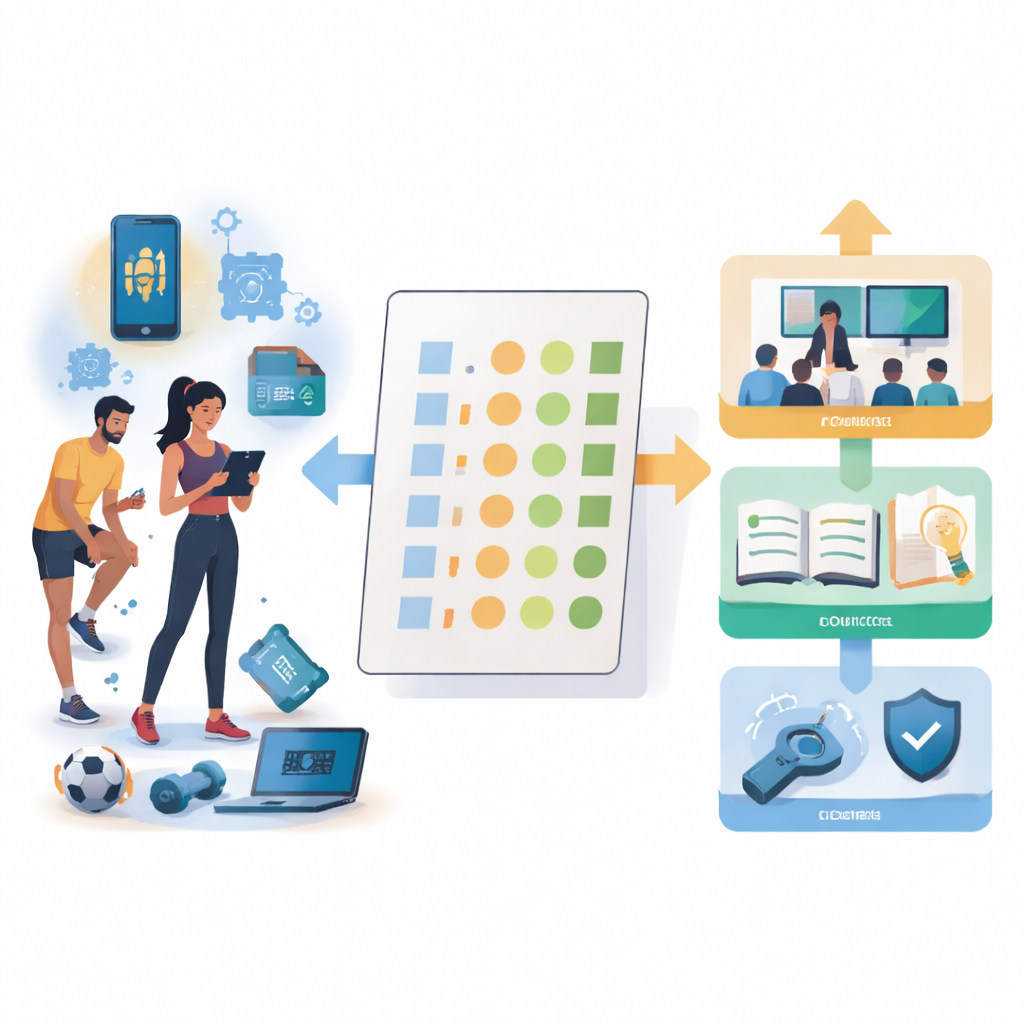
AI already helps crunch huge volumes of match statistics, predict injuries, personalize training plans, and even grade movement quality using video and wearables. For sport and exercise science students, this means their future jobs will likely involve working with AI-powered tools as routinely as stopwatches and heart-rate monitors. However, most existing questionnaires about AI are aimed at general college populations, or focus on abstract technical knowledge. They do not ask how students use AI to, for example, analyze training loads, plan rehab sessions, or complete coursework in sport programs. The authors set out to build a tool that speaks the language of sport education and highlights real classroom and training-ground situations.
Designing a tool that fits real student life
The team followed a step-by-step process to create the questionnaire. They began with a broad review of research on AI literacy and student use of tools like chatbots and data-analysis software. From this, they drafted an initial pool of statements that students would rate on a five-point agreement scale. Experts in sport science, education, and AI then checked each item for clarity, cultural fit, and relevance to common sport scenarios such as athlete monitoring, coaching workflows, and rehabilitation planning. After pilot testing with a small group of students and refining the wording, the final survey was delivered online to 1,000 sport and exercise science undergraduates at a university in northern China; 864 completed it.
Four key areas of AI readiness
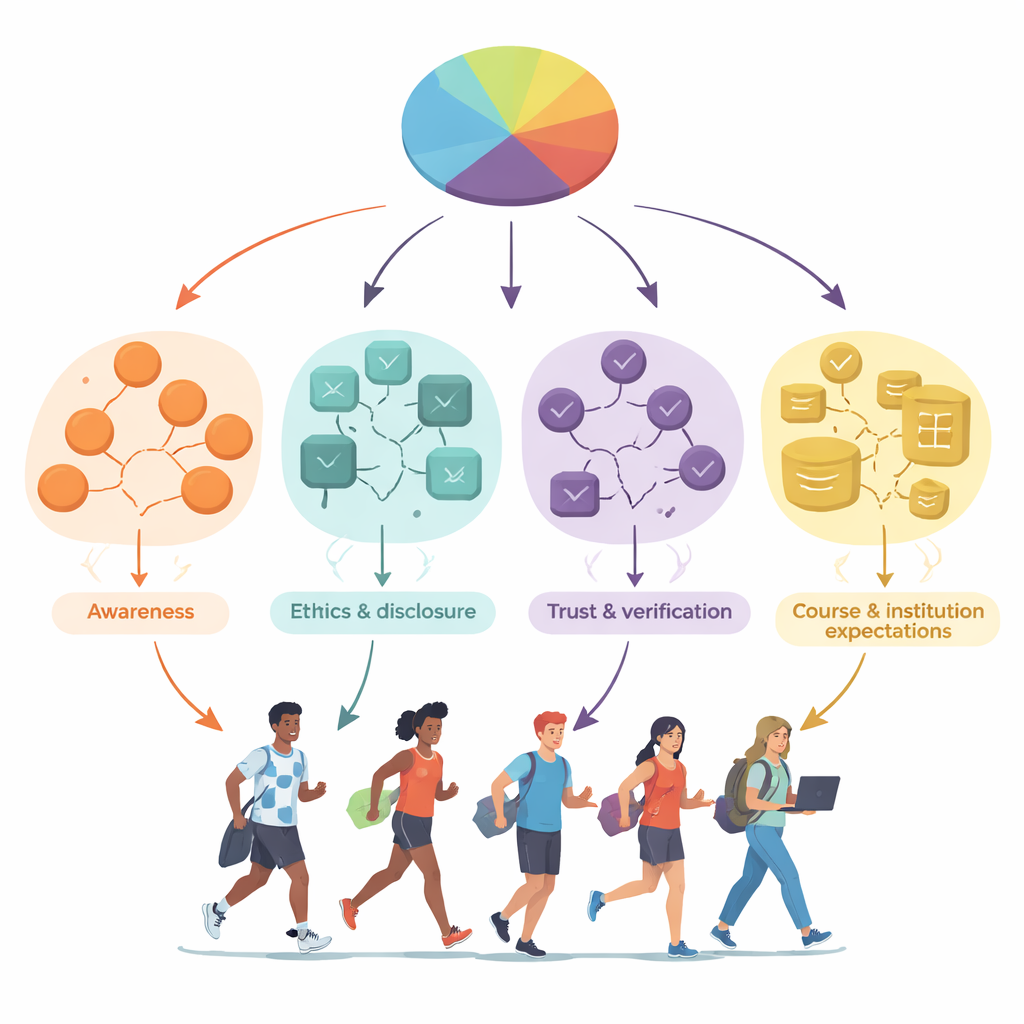
Using statistical techniques that look for patterns in how answers cluster together, the authors found that 14 of the items formed a stable, four-part structure. The first area, "AI Awareness," captures students’ basic understanding of what AI can and cannot do, especially in sport contexts. The second, "Ethics & Disclosure," focuses on whether students feel responsible for openly stating when they use AI in assignments or projects. The third, "Trust & Verification," reflects how carefully they double-check AI-generated information, look for bias, and avoid over-reliance on automated outputs. The fourth, "Course & Institution Expectations," gauges how clearly students feel their classes and university spell out what types of AI use are allowed, how to learn these tools, and when disclosure is required.
Putting the scale to the test
To check that the questionnaire was both reliable and meaningful, the researchers split the student responses into a training group and a test group. In the first group, they explored how items grouped together; in the second, they confirmed that the same four-part pattern held up. The results showed that the scale worked very well: items in each area were strongly linked to one another, but the four areas still measured different aspects of AI use. Students’ answers also suggested that most had at least some experience with AI tools, especially for writing coursework and searching for information, though their habits around ethics, checking results, and understanding rules varied.
What this means for future coaches and teachers
For educators, this new scale offers a practical way to see how prepared sport and exercise science students are for an AI-rich professional world. By highlighting strengths and gaps in awareness, ethics, critical thinking, and understanding of institutional rules, the tool can guide course updates, workshops, and policy making. In plain terms, it helps universities move beyond guesswork and design training that not only teaches students how to use AI, but also how to do so responsibly and transparently in the gym, on the field, and in the classroom.
Citation: He, Z., Han, X., Ruizhu, Y. et al. Development and validation of an AI use scale for sport and exercise science students. Sci Rep 16, 14467 (2026). https://doi.org/10.1038/s41598-026-45316-4
Keywords: AI in sports education, student AI literacy, ethical AI use, sport science curriculum, questionnaire development