Clear Sky Science · en
First records of Ganoderma suae and Pleurotus tuber regium in Vietnam
Hidden Treasures in the Forest
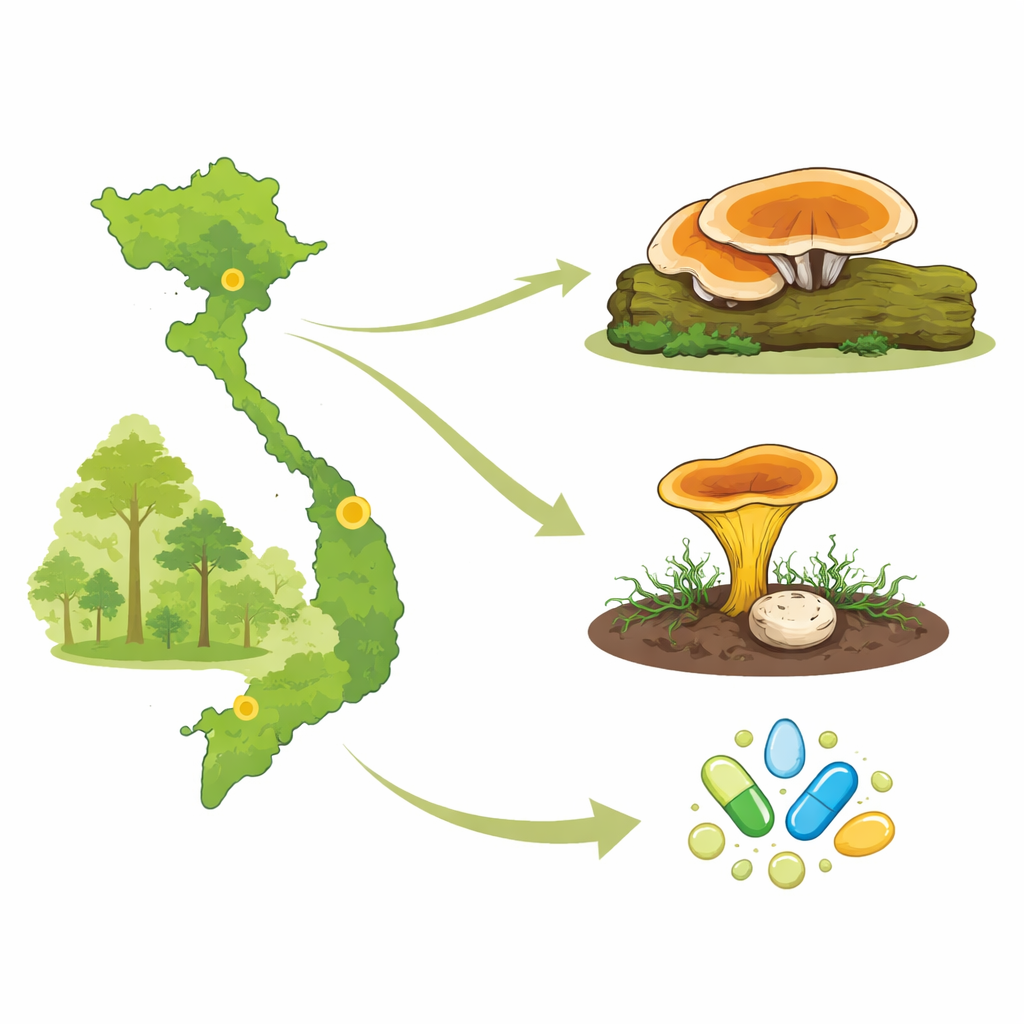
Deep in Vietnam’s forests, scientists have uncovered two little-known mushroom species that could hold new promise for food and medicine. One is a tough, varnished bracket fungus that clings to wood; the other is a fleshy, funnel-shaped mushroom grown from an underground “tuber” that people in other countries already eat and use as a remedy. By confirming that both species live in Vietnam’s varied landscapes, the study opens the door to exploring their health benefits, cultivation potential, and role in the country’s rich but still underexplored fungal world.
Mushrooms that Heal and Recycle
The first part of the study focuses on Ganoderma suae, a close relative of the famous “lingzhi” or “reishi” mushrooms widely used in traditional medicine. Species in this group form hard, glossy shelves on living or dead trees and help break down wood, returning nutrients to the forest. Until now, Ganoderma suae was known only from subtropical forests in China. Vietnam, with its warm, humid climate and diverse forests, was an obvious place to search, but this particular species had never been formally recorded there.
Meeting Ganoderma suae in Vietnam
Researchers collected a distinctive, reddish-brown shelf fungus from a mountainous forest in northern Vietnam. They carefully documented its shape, color, pore surface, and internal texture, then studied thin slices under the microscope to examine its tissue structure and spores. To avoid confusion with look‑alike species, they also extracted DNA and sequenced a standard genetic “barcode” region. When they compared this sequence with global databases and built evolutionary trees, the Vietnamese fungus grouped tightly with Ganoderma suae from China, confirming that it is the same species and expanding its known range into northern Indochina.
The Underground Tuber Mushroom
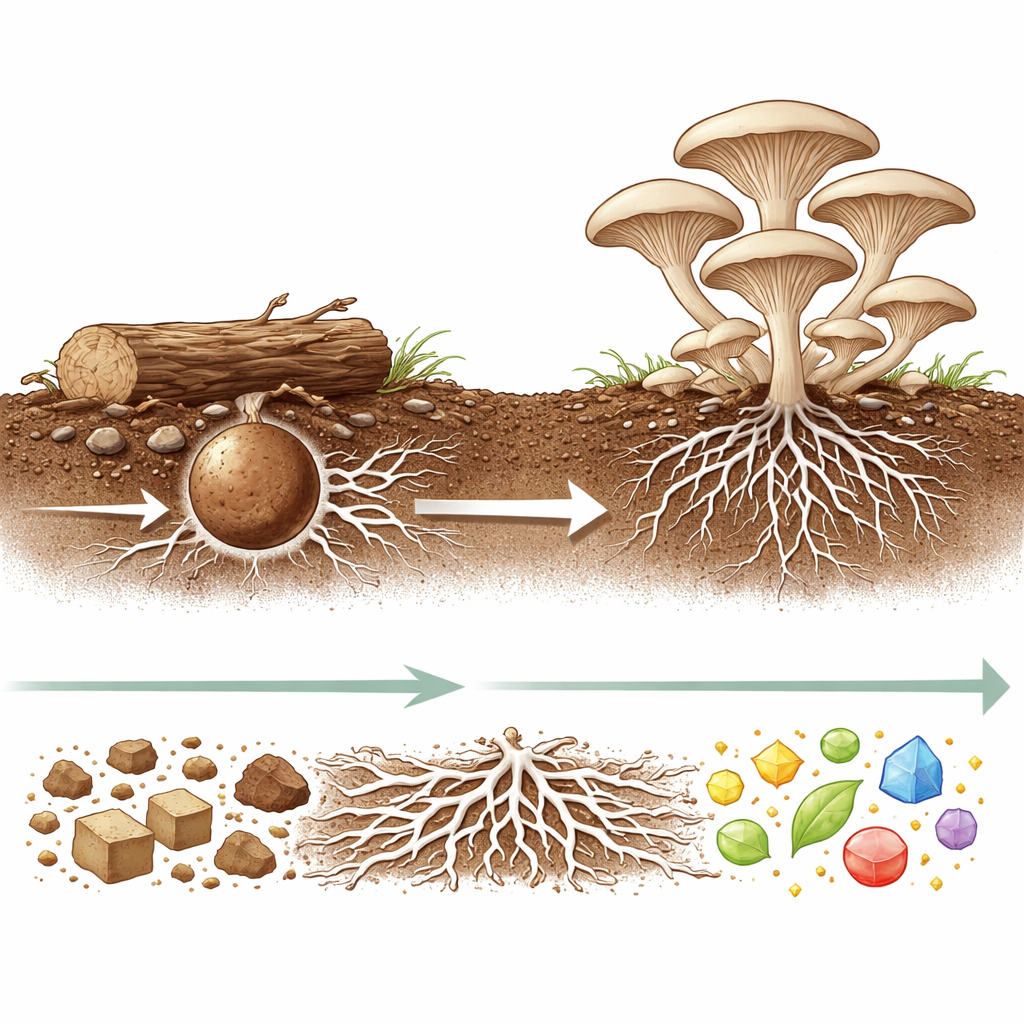
The second main character is Pleurotus tuber-regium, sometimes called the sclerotium-forming oyster mushroom. Unlike typical oyster mushrooms, this species develops a large, round underground storage body, similar to a tuber, from which edible caps emerge. In parts of Africa and Asia, both the tuber and the above‑ground mushrooms are eaten and valued for supporting immunity, protecting the liver, and acting as antioxidants. Although Vietnam has a long history of growing and using oyster mushrooms, this particular tuber-forming species had never been confirmed there.
Tracing Family Lines with DNA
The team found Pleurotus tuber-regium in two very different Vietnamese settings: a warm, coastal area in the central region and a cooler, highland site in the north. They described the mushrooms’ funnel-shaped caps, pale gills, and tall stems, and noted the underground storage bodies hidden in soil and decaying wood. To be sure of their identity, the scientists sequenced the same DNA barcode used for many fungi and compared it with reference sequences from other countries. All three Vietnamese samples fell squarely within the Pleurotus tuber-regium group, with essentially no genetic distance from known strains. This shows that the species is truly present in Vietnam and can tolerate a wider range of temperatures than previously appreciated.
Why These Finds Matter
By documenting Ganoderma suae and Pleurotus tuber-regium in Vietnam for the first time, the study strengthens the picture of the country as a hotspot for useful mushrooms. One species is a newly recognized wood‑decaying bracket fungus closely related to established medicinal Ganoderma; the other is an edible tuber-forming oyster mushroom linked to a wide range of reported health benefits. Confirming their presence with both careful observation and genetic evidence gives researchers a solid foundation to explore how to grow them locally, test their bioactive compounds, and develop new foods or natural remedies. In short, this work turns two previously overlooked forest residents into promising candidates for future nutrition, medicine, and sustainable biotechnology.
Citation: Pieau, L., Tram, T.B., Phan, X.B.M. et al. First records of Ganoderma suae and Pleurotus tuber regium in Vietnam. Sci Rep 16, 10770 (2026). https://doi.org/10.1038/s41598-026-45075-2
Keywords: medicinal mushrooms, Ganoderma suae, Pleurotus tuber-regium, Vietnam biodiversity, fungal taxonomy