Clear Sky Science · en
Honey bee genetic resistance outperforms a cold-storage induced halt in brood production to control mites and viruses
Why Bee Health Matters To Everyone
Honey bees are tiny workers that prop up much of our food system, pollinating crops from almonds to berries. Yet their colonies are under siege from a parasitic mite called Varroa destructor, which spreads debilitating viruses and helps drive hive losses around the world. This study asks a practical question with big consequences for farmers, beekeepers, and consumers alike: is it better to pause brood rearing with an artificial “winter” to help kill mites, or to rely on bee strains that are naturally more resistant to mites and the viruses they carry?
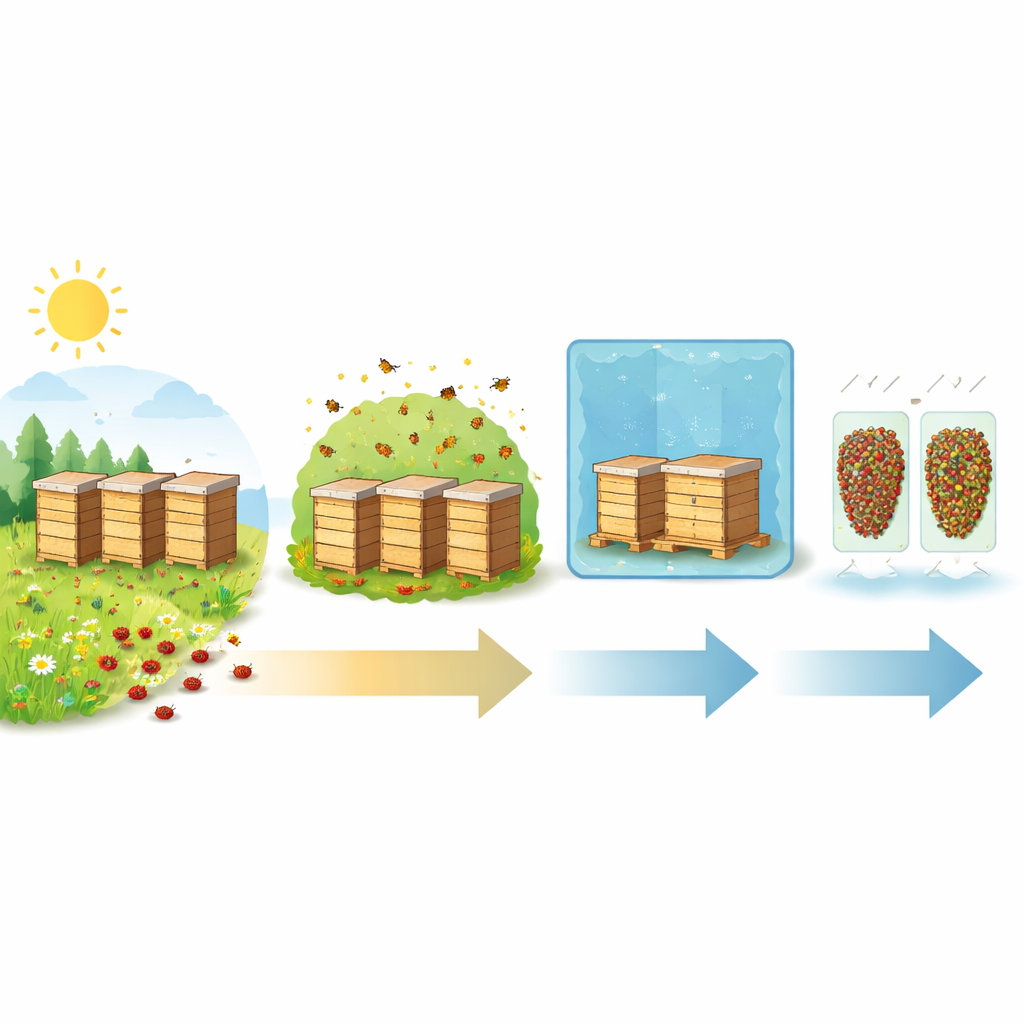
Two Ways To Help Honey Bees
The researchers compared two main strategies for protecting colonies. One was a management trick: placing hives in a chilled, dark room at 5 °C for 18 days in late summer. This “cold storage” stop to brood rearing is meant to flush mites out of sealed brood cells into the open, where they should be more exposed to a follow-up treatment with a thymol-based mite product. The second strategy was genetic. The team used three kinds of commercial honey bees: a common, mite‑susceptible Italian stock, and two stocks bred by the USDA for mite resistance, called Russian and Pol-line. They then watched how these colonies fared from August through the following February, a period that covers late summer buildup, autumn, and winter, mirroring the realities of commercial beekeeping.
Inside The Experiment
Each year for two years, 30 colonies (10 of each stock) were divided so that half went into cold storage and half stayed outside in the apiary. All colonies later received the same thymol mite treatment and standard feeding and care. The scientists measured capped brood area, adult bee mass, and natural mite fall, and washed samples of worker bees in alcohol to count mites per 100 bees. They also collected bees to examine internal health markers: levels of Deformed Wing Virus (two common forms, A and B) and vitellogenin, a protein linked to good nutrition and worker longevity. Continuous sensors tracked hive weight, temperature, and carbon dioxide, capturing how colonies were functioning day and night.
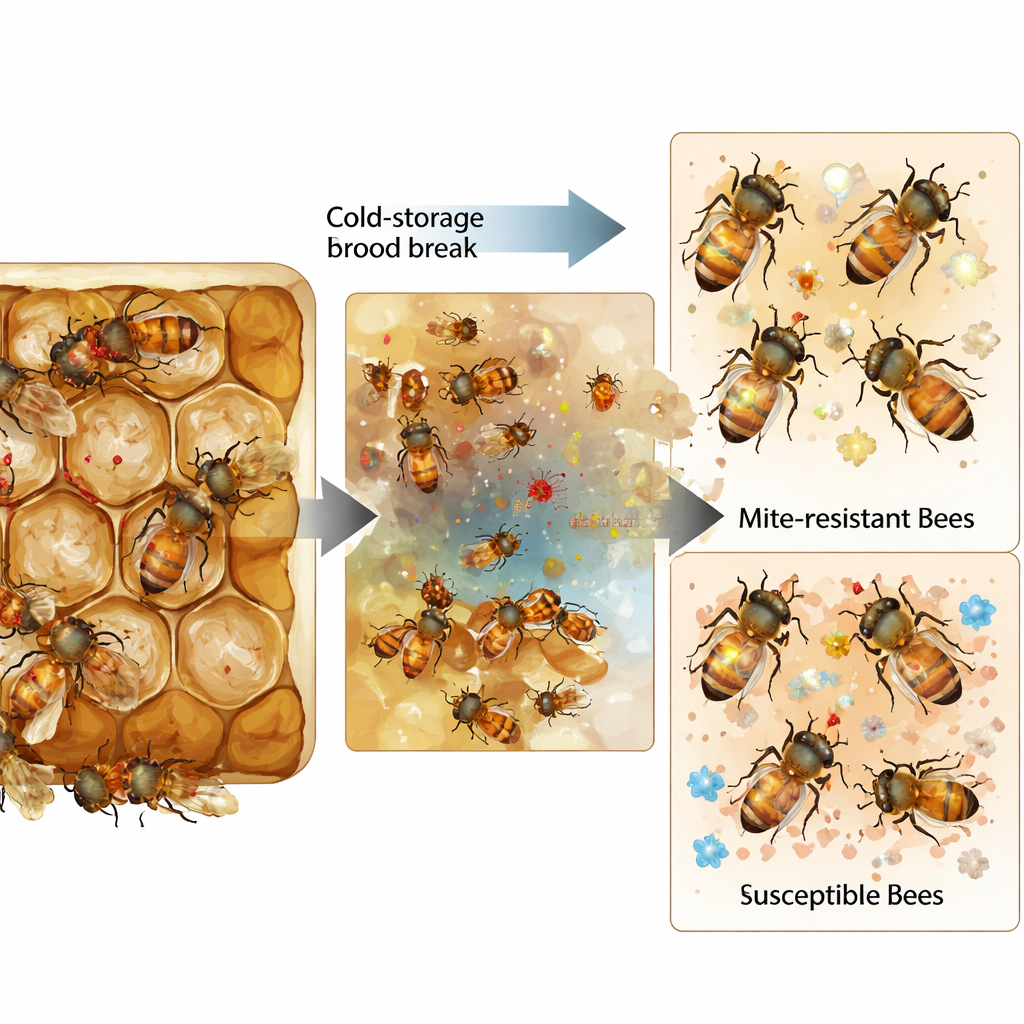
Cold Rooms Versus Tough Bees
The cold storage treatment did exactly what it was designed to do in the short term: brood production stopped, and by the end of the 18 days there was almost no sealed brood left for mites to hide in. However, the effect faded quickly. Within about two months, colonies that had experienced the artificial “winter” looked much like those that had stayed outside. There were no lasting differences in brood levels, adult bee population, mite loads, virus levels, hive weight loss, or carbon dioxide patterns. The main lasting signature of cold storage was slightly lower and more variable internal hive temperature, likely because the brood nest shifted relative to the sensor rather than because the colonies were fundamentally weaker.
The Power Of Bee Genetics
In contrast, the choice of bee stock had a strong and consistent impact on colony health. Italian colonies carried more mites overall, gained fewer mites over the season, and showed much higher levels of both forms of Deformed Wing Virus. They also had lower vitellogenin expression and lost hive weight faster, signs of poorer nutritional status and higher stress. Russian and Pol-line colonies, which were bred for resistance, maintained markedly lower mite densities—on average more than 65% lower than Italian colonies across both years and both treatment groups. They also kept virus levels down and showed healthier molecular profiles, without sacrificing adult bee population size. In short, the genetic makeup of the bees did far more to limit mites and viruses than the cold-storage brood break.
What This Means For Bees And Beekeepers
For the lay reader, the take‑home message is straightforward: breeding tougher bees appears to offer more reliable, long‑term protection than briefly chilling hives to interrupt brood rearing, at least under the conditions tested here. While cold storage is a useful tool for overwintering colonies and can safely induce a temporary brood pause, it did not measurably reduce mite or virus burdens over the half‑year window leading into a major pollination season. Mite‑resistant stocks, on the other hand, kept parasite and virus levels in check and maintained stronger nutritional health, reducing the need to lean heavily on chemical treatments. As mites continue to evolve resistance to common miticides, the study suggests that investing in resistant bee genetics—and pairing them with new biological tools—may be one of the most effective and sustainable ways to safeguard both honey bees and the food systems they support.
Citation: Meikle, W.G., Weiss, M., Adjaye, D. et al. Honey bee genetic resistance outperforms a cold-storage induced halt in brood production to control mites and viruses. Sci Rep 16, 11782 (2026). https://doi.org/10.1038/s41598-026-44701-3
Keywords: honey bee health, Varroa mites, mite-resistant bees, brood break, Deformed Wing Virus