Clear Sky Science · en
Serogroups, antibiotic resistance profiles and virulence factors of non-O157 Shiga-toxin producing Escherichia coli from ovine and caprine
Why farm animals matter to your dinner plate
Many people enjoy meat and milk from sheep and goats without realizing that these animals can quietly carry harmful gut bacteria. This study looks at a dangerous type of Escherichia coli, a germ linked to food poisoning, in sheep and goats in South Africa. By asking where these bacteria live, how risky they are, and whether antibiotics still work against them, the research offers clues that matter for farmers, consumers, and public health officials alike. 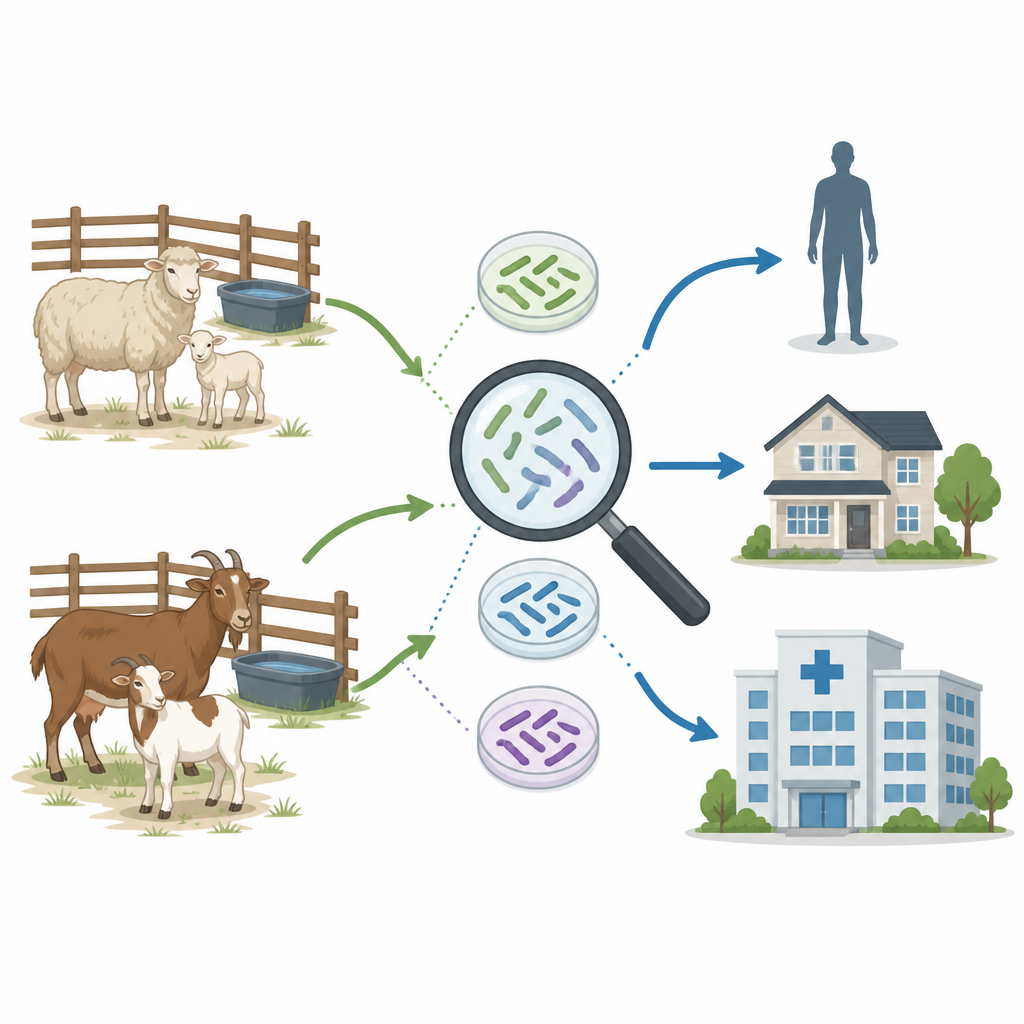
Germs that move from animals to people
Escherichia coli, or E. coli, normally lives harmlessly in the intestines of humans and animals, but some strains produce Shiga toxins that can cause severe stomach cramps, bloody diarrhea, and in rare cases kidney failure. These Shiga toxin producing E. coli, called STEC, often spread from animals to people through contaminated meat, milk, or water. While cattle are well known carriers, far less is known about sheep and goats, especially in low and middle income regions. This study focused on these smaller farm animals and their surroundings to understand how often STEC occurs and how dangerous these strains might be.
What the scientists collected and tested
Researchers visited two types of farms in South Africa’s North West Province, one communal village farm and one commercial farm. They collected 207 samples, including fresh droppings from 114 sheep and 58 goats, manure from animal pens, and water from troughs and nearby boreholes. In the laboratory, they enriched the samples in broth, grew bacteria on special agar plates, and used DNA based tests to confirm which colonies were E. coli and which carried Shiga toxin genes. They also checked for other traits that can help the bacteria stick to the gut and cause disease, and they grouped the strains based on surface structures known as O serogroups that are linked with human illness.
Hidden patterns of risk in sheep and goats
Out of all the samples, 112 were confirmed as E. coli and 26 of these carried Shiga toxin genes, making them STEC. Every STEC strain in this study carried the stx1 toxin gene and a smaller share also had stx2 or an attachment gene called eae, combinations that can increase disease severity. The most frequent serogroup was O128, followed by O26, O121, and O103, all non O157 types that are still important in human disease. The well known O157 group was not found. STEC was more often detected in sheep than in goats and more often in older and female animals, likely reflecting how long these animals stay in the herd and how they are managed. These patterns suggest that seemingly healthy small ruminants can act as quiet reservoirs for strains that could reach the food chain. 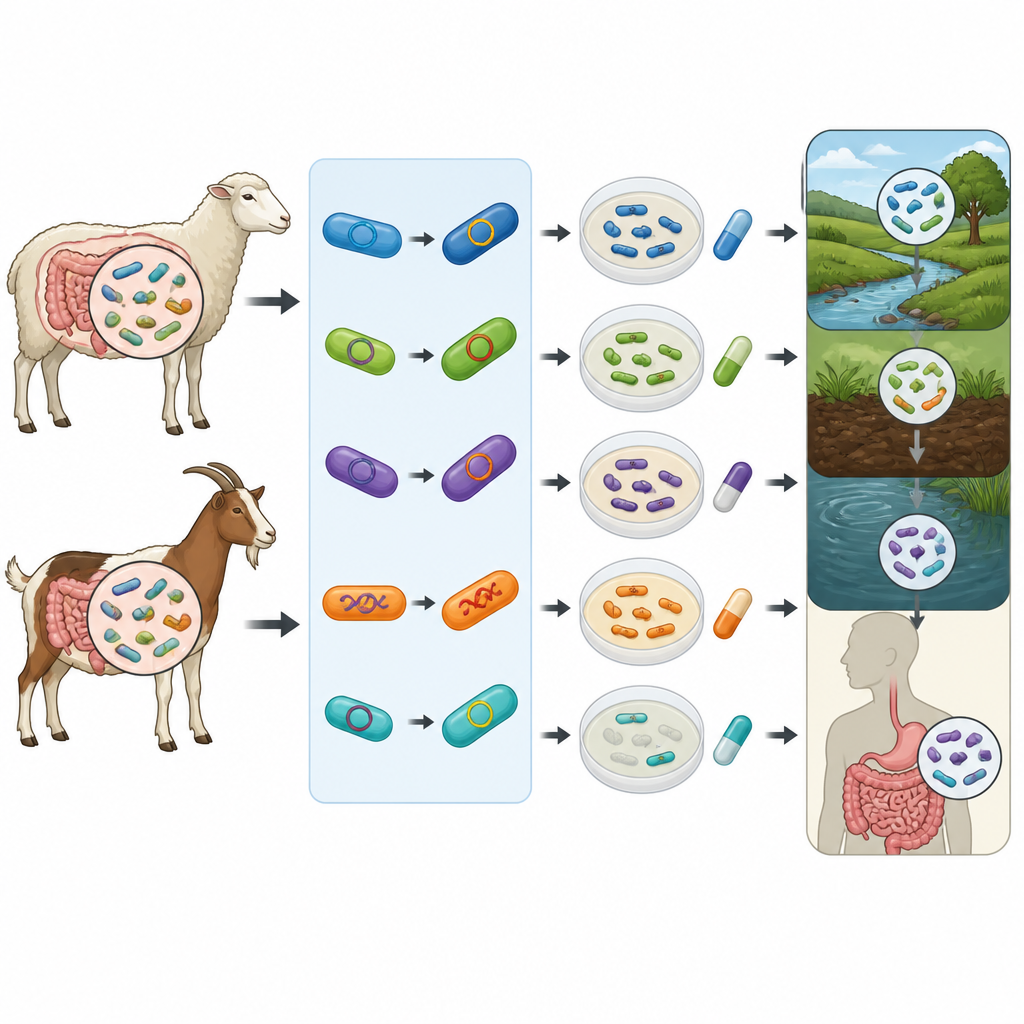
Antibiotics losing their edge
The team then asked whether common antibiotics still work against these strains. Using standard disk tests, they found high levels of resistance to ampicillin and notable resistance to erythromycin and streptomycin, with some resistance to ceftriaxone, meropenem, and gentamicin. Almost all STEC isolates resisted at least one drug, and about one in ten were resistant to three or more classes of antibiotics, qualifying as multidrug resistant. When the scientists looked at resistance genes in the bacterial DNA, they found that a gene called blaSHV, which can inactivate certain beta lactam antibiotics, was very common. Other resistance genes appeared less often, but their presence shows that these germs carry genetic tools that can blunt the effect of important medicines.
What this means for food safety and health
In plain terms, this study shows that some sheep and goats in South Africa carry strains of E. coli that can make people very sick and that are increasingly hard to treat with routine antibiotics. Although only a fraction of the samples contained these high risk bacteria, their mix of toxin genes, disease linked serogroups, and resistance genes raises concern. Because people, animals, and the environment are so closely connected, the authors argue for a One Health approach that watches these germs in livestock, improves farm and slaughter hygiene, and guides smarter antibiotic use. Doing so can help keep meat and milk safer and preserve the power of antibiotics for when they are truly needed.
Citation: Howard, J., Thekisoe, O., Ramatla, T. et al. Serogroups, antibiotic resistance profiles and virulence factors of non-O157 Shiga-toxin producing Escherichia coli from ovine and caprine. Sci Rep 16, 14798 (2026). https://doi.org/10.1038/s41598-026-44661-8
Keywords: Shiga toxin producing E. coli, sheep and goats, antibiotic resistance, foodborne pathogens, One Health