Clear Sky Science · en
Nociceptive thresholds in broiler chickens are modulated by lameness of their progenitors and sex category
Why sore legs in chickens matter to us
Chicken is one of the world’s most popular and affordable meats, and much of it comes from fast-growing broiler birds raised in large flocks. As these birds gain weight quickly, many develop leg pain and difficulty walking. This study looks at a surprisingly far-reaching question: can the leg problems and pain experienced by parent chickens change how their chicks feel and respond to pain, and does this differ between males and females? The answers could shape how we breed and care for billions of birds—and how we think about inherited pain more broadly.
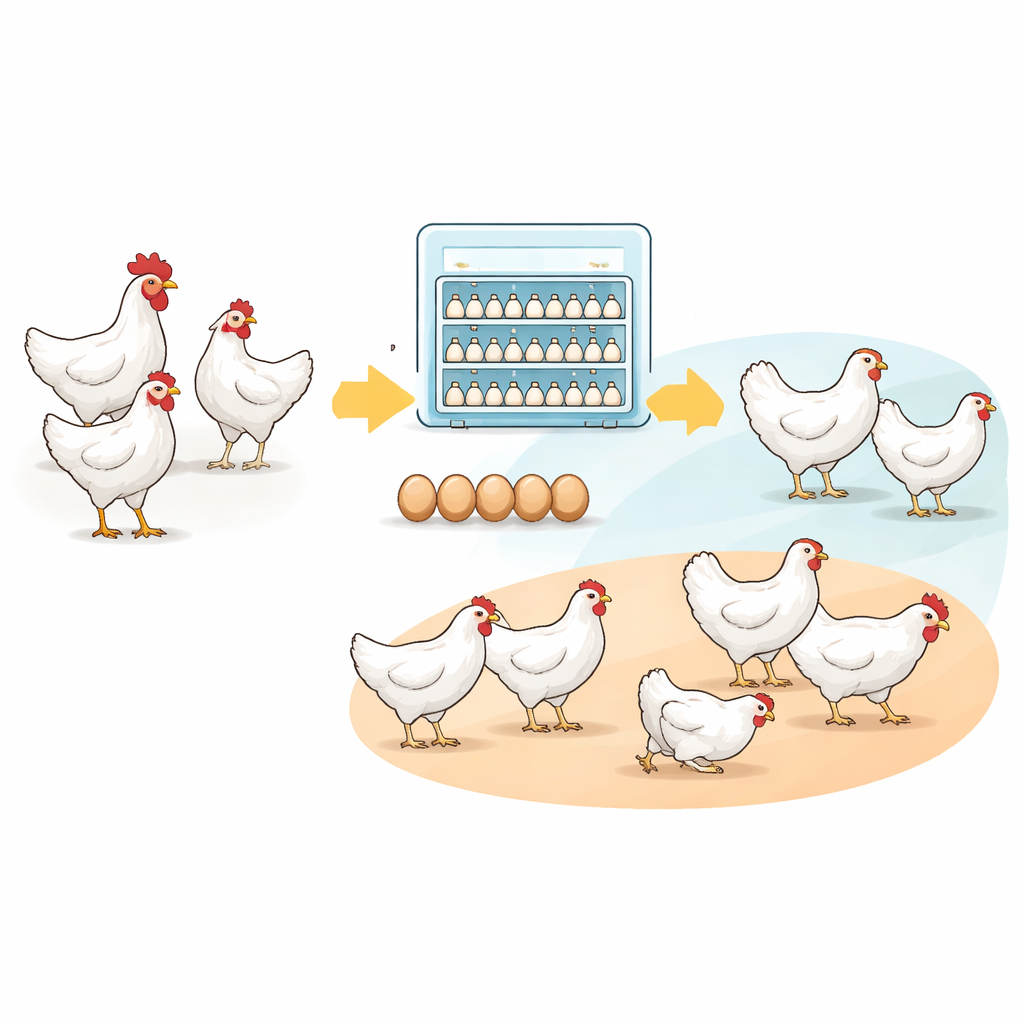
Looking at families, not just flocks
The researchers worked entirely within a commercial Brazilian production chain, from breeding farm to hatchery to broiler house. They first examined adult breeder hens and males and grouped them as either lame or non-lame using a standard walking score. These birds were then paired in four combinations: both sound, one lame parent, or both lame. Their fertilized eggs were tracked through normal industrial incubation, hatched, and the resulting 374 chicks were raised like any other commercial flock. By keeping everything else typical—feed, housing, lighting, and handling—the team could focus on how the parents’ leg condition and the chicks’ sex influenced movement and pain sensitivity.
How walking and pain were tested
When the broilers reached market age at 39 days, trained veterinarians who did not know which group they were judging scored each bird’s walking ability and leg health. They looked at how easily birds moved, whether they relied on their wings for balance, and whether they preferred to lie down rather than walk. They also checked for skin injuries on the legs and hocks, which are common signs of poor welfare. To probe pain sensitivity, a small hand-held device gently pressed on the lower leg until the bird lifted the limb. The amount of pressure needed before that withdrawal gave a direct measure of the bird’s nociceptive threshold—how strong a mechanical stimulus had to be before it felt painful enough to trigger a reaction.
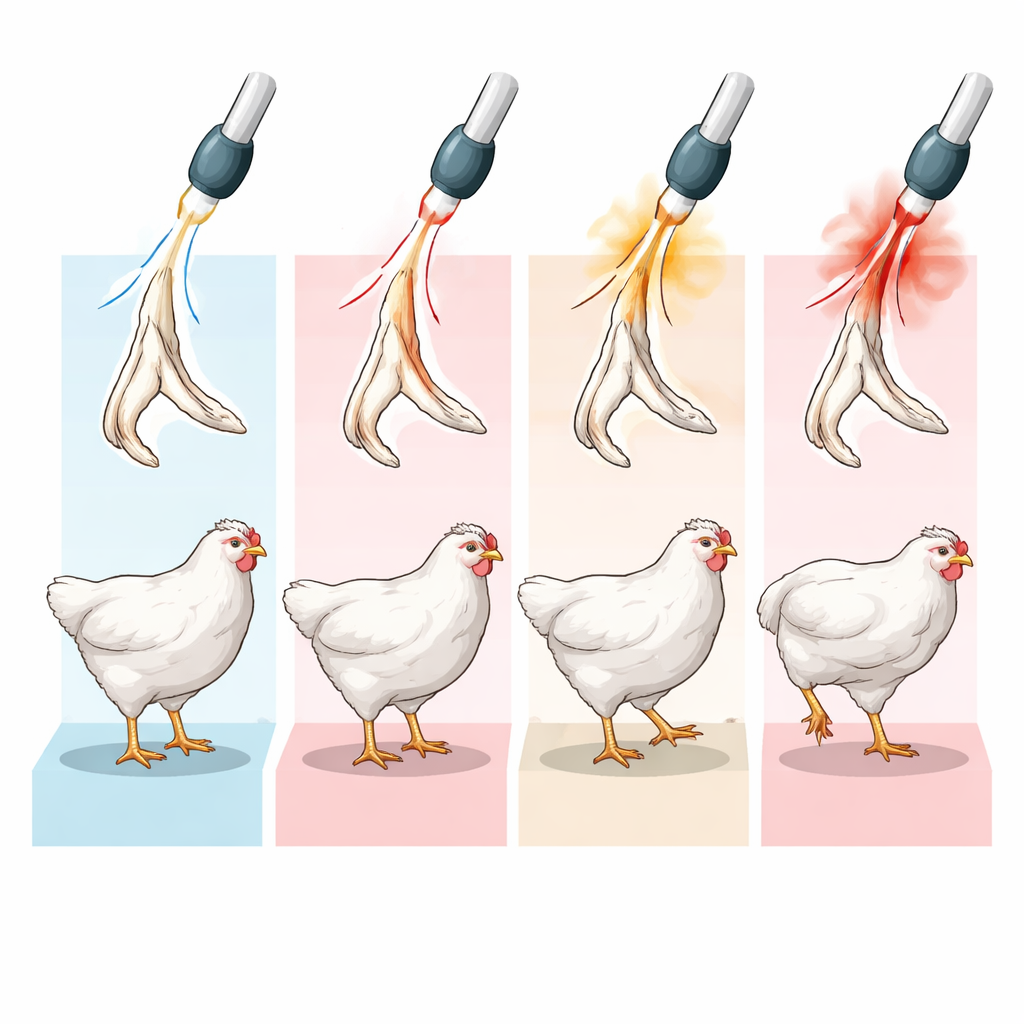
What the team found in the barn
Across the whole flock, the average walking problems were mild, although about one in ten birds had more serious difficulty moving and roughly three in a hundred were so badly affected that they would normally be culled. When the scientists compared the four parental combinations, they did not see large or clear differences in average lameness among the offspring. What stood out instead was sex: male broilers walked worse and had more leg skin damage than females, echoing previous reports that fast-growing males are more prone to leg troubles.
Pain sensitivity written into the next generation
The pain tests revealed a subtler but important pattern. Overall, male broilers needed stronger pressure on the leg before they lifted it, meaning they were less sensitive to the noxious stimulus than females. This reduced sensitivity was especially marked in the left leg. When the team examined how parental lameness played into this, they discovered that sons of lame hens mated with sound males showed particularly high pain thresholds compared with sons of two sound parents. In other words, having a lame mother appeared to blunt pain sensitivity in male offspring, even though the chicks themselves had not directly experienced that maternal pain before hatching. This points toward an intergenerational effect, likely involving changes in how the nervous system processes pain signals rather than overt injury alone.
What this means for farm animals and beyond
To a non-specialist, the key message is that pain and leg problems in parent chickens do not stay with those birds alone—they can subtly reshape how their chicks feel pain and how vulnerable they are to leg trouble, especially in males. The study suggests that chronic pain in breeding flocks may promote a kind of built-in dampening of pain responses in their offspring. While this might sound protective, it can actually be harmful: if an animal feels pain less clearly, it may continue using a damaged limb and silently worsen its injuries. Understanding these inherited shifts in pain sensitivity could help the poultry industry design breeding and housing systems that reduce suffering, and it also offers a living model for how long-term pain experiences in one generation can echo into the next.
Citation: de Almeida, M.A.P., Çakmakçi, C., de Lima, V.A. et al. Nociceptive thresholds in broiler chickens are modulated by lameness of their progenitors and sex category. Sci Rep 16, 12579 (2026). https://doi.org/10.1038/s41598-026-44221-0
Keywords: broiler welfare, chicken lameness, animal pain, epigenetic effects, poultry farming