Clear Sky Science · en
Dietary quercetagetin enhances antioxidant capacity and modulates intestinal microbiota in dexamethasone-challenged broilers
Why this chicken study matters
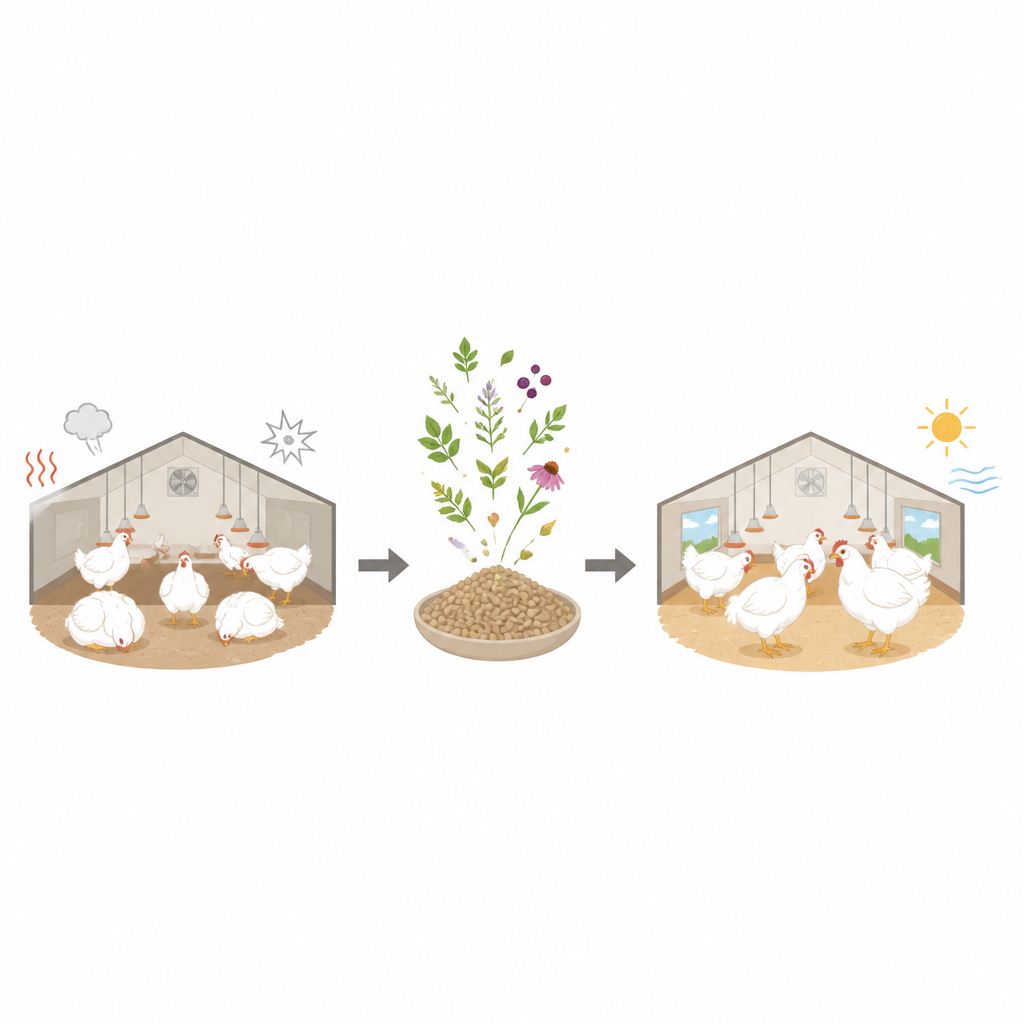
Modern chicken farms push birds to grow fast, but that speed comes with hidden costs, including internal stress that can harm their health and the quality of food they provide. This study explores whether a natural plant compound called quercetagetin, added to feed, can help young broiler chickens cope better with stress, protect their guts, and reduce the need for traditional drug-based additives.
Stress inside the modern chicken house
Today’s intensive poultry systems expose birds to crowding, handling, and other pressures that trigger a surge of stress hormones. These hormones can tip the balance inside cells, creating more harmful oxygen byproducts than the body’s natural defenses can safely clear. When that happens, fats in cell membranes begin to break down, producing substances such as malondialdehyde that signal oxidative damage. In chickens, this kind of stress can weaken immunity, slow growth, and even raise mortality, posing challenges for both animal welfare and farm productivity.
A plant compound put to the test
To mimic real-world stress, the researchers gave broiler chickens a drug called dexamethasone, which is known to provoke oxidative strain similar to that seen under harsh farming conditions. Six hundred chicks were divided into groups receiving either a standard diet or diets enriched with different doses of quercetagetin for three weeks. Quercetagetin is a flavonoid extracted from marigold, recognized for its strong ability to neutralize free radicals in lab tests. The team then compared blood, liver, and intestinal samples to see whether birds fed quercetagetin were better able to withstand the drug-induced stress.
Healthier blood and stronger guts
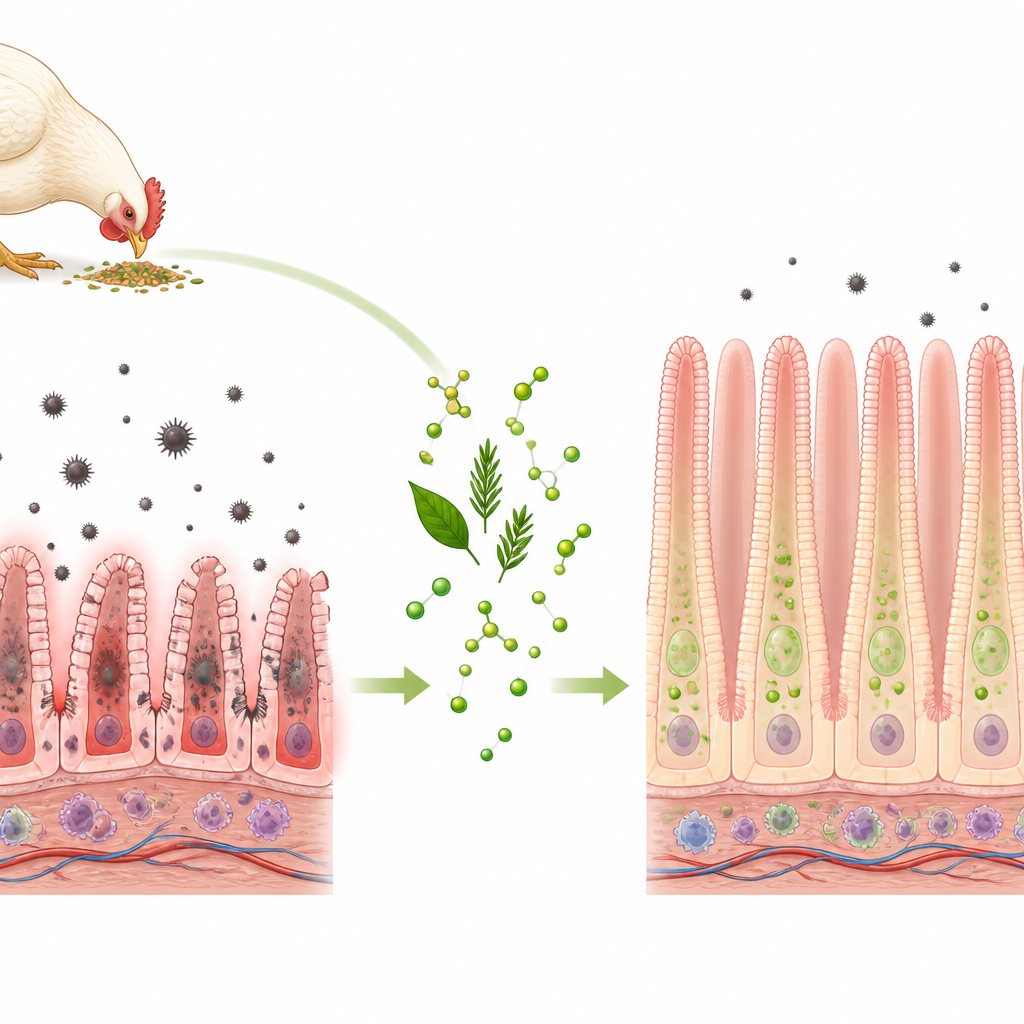
Chickens challenged with dexamethasone but not given quercetagetin showed clear signs of oxidative harm: higher levels of damage markers and lower levels of protective molecules in their blood and intestinal lining. In contrast, birds that received quercetagetin had more active antioxidant enzymes, including superoxide dismutase, catalase, and glutathione, and less of the damaging breakdown products. The dose of 100 milligrams per kilogram of feed gave the most consistent boost, especially in the gut. Under the microscope, their intestines had longer, slimmer villi and better villus-to-crypt ratios, features linked to more efficient nutrient absorption and a sturdier barrier against germs.
Hidden shifts in proteins and microbes
Beyond these visible improvements, the scientists looked inside intestinal cells to see which proteins changed. Using a technique that tags and compares many proteins at once, they found that birds fed quercetagetin produced more of a transport protein called SCP2, which is involved in moving and breaking down fatty acids inside small cell structures like peroxisomes and mitochondria. This shift fit with broader pathway signals pointing to ramped-up fatty acid metabolism and reduced lipid peroxidation, a core source of oxidative damage. At the same time, DNA sequencing of gut bacteria showed that while overall diversity did not change much, the group receiving 100 milligrams per kilogram had more unique microbial types and a trend toward fewer Proteobacteria, a group that contains many potential pathogens.
What this could mean for everyday farming
Taken together, the findings suggest that adding quercetagetin to broiler feed helps young birds better weather oxidative stress by strengthening their own defense systems, preserving gut structure, and subtly steering microbial communities in a favorable direction. The most effective dose in this study, 100 milligrams per kilogram of feed, consistently lowered markers of damage and raised protective molecules without disrupting the overall balance of gut microbes. For farmers and feed producers, this points to a plant-based, non-antibiotic supplement that could support healthier flocks and more resilient production systems while easing reliance on traditional drugs.
Citation: Feng, Y., Li, X., Liu, S. et al. Dietary quercetagetin enhances antioxidant capacity and modulates intestinal microbiota in dexamethasone-challenged broilers. Sci Rep 16, 14881 (2026). https://doi.org/10.1038/s41598-026-44135-x
Keywords: quercetagetin, broiler chickens, oxidative stress, gut health, feed additives