Clear Sky Science · en
A novel momentum-based intervention sustains real-life participation in a social movement
Why some protests keep going
From climate marches to pro-democracy rallies, we often see huge crowds filling the streets—only to watch the numbers shrink weeks later. This study asks a simple but rarely tested question: what can actually help ordinary people keep showing up, again and again, for a social cause they care about? Using Israel’s massive 2023 pro-democracy protests as a living laboratory, the researchers tested different message strategies to see which one truly sustains participation over time.
The challenge of staying in the fight
Joining a protest once can feel inspiring; returning every week is much harder. People must juggle work and family, pay for transportation, cope with fatigue and worries about safety, and wonder whether their presence still matters. Social scientists have long known that feeling a strong group identity ("who we are") and deep moral conviction ("what we stand for") can motivate people to take to the streets. But those same forces may not be enough to overcome the grind of repeated action, when the outcome is uncertain and each individual’s contribution seems tiny.
The power of feeling movement
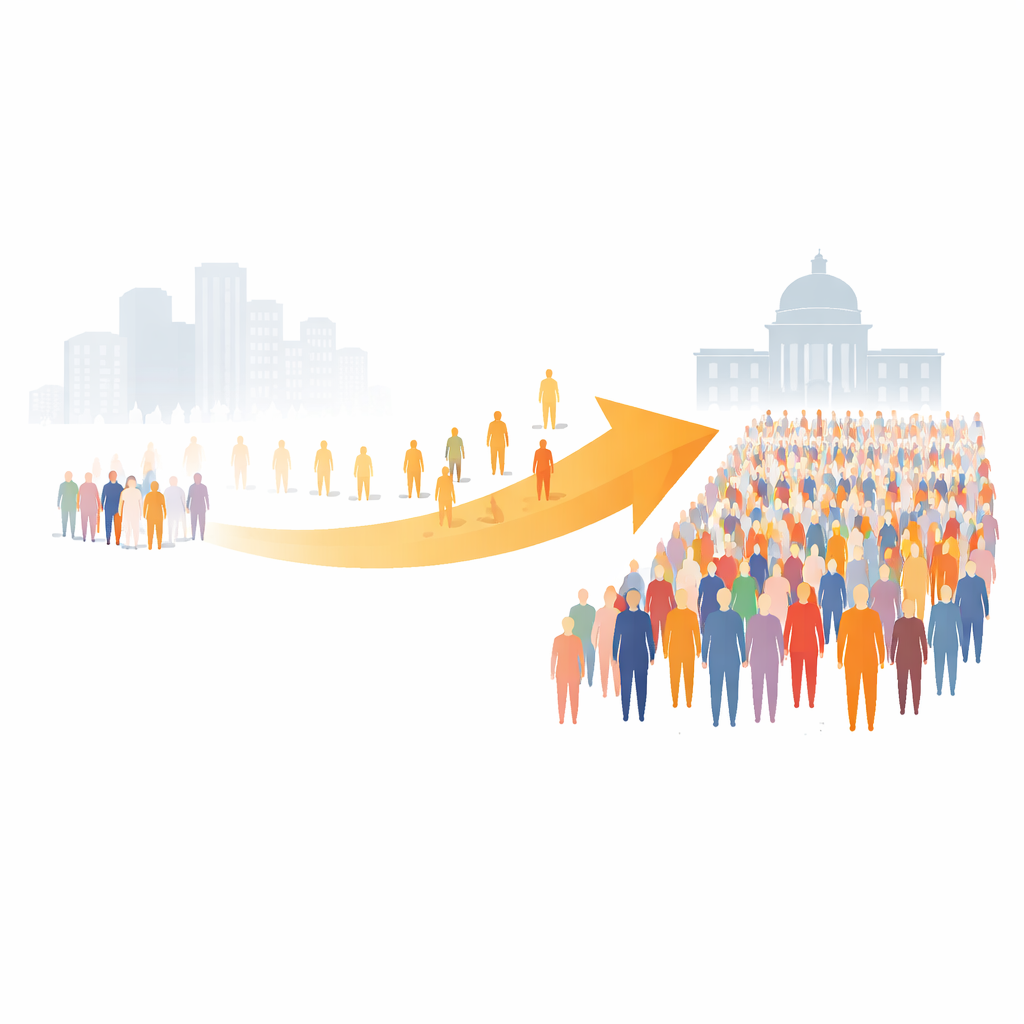
The authors focused on a different ingredient: a sense of momentum. In everyday terms, momentum is the feeling that “things are moving forward” and the group is getting closer to its goal. In protests, that can mean sensing that crowds are growing, events are becoming more frequent, and real progress is being made. Rather than just reminding people of their values or identity, messages built around momentum tell them that the movement is gaining strength and their continued presence helps keep it rolling. The team suspected that this feeling could help people push through the natural friction that usually wears protesters down.
A real-world message tournament
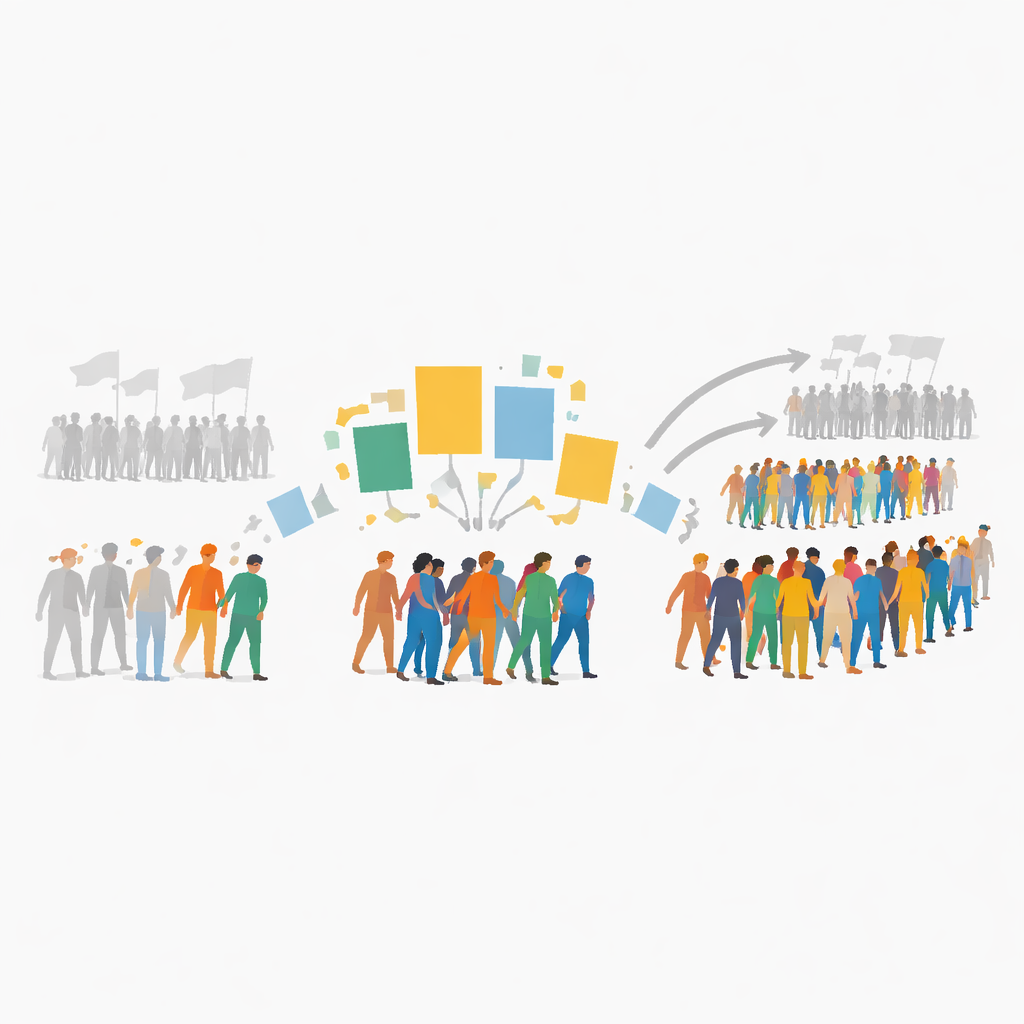
To put this idea to the test, the researchers ran what they call an “intervention tournament” with 1,218 Jewish Israeli adults during the 2023 protests against a proposed legal reform widely seen as weakening democracy. First, they measured who was already protesting. Then participants were randomly assigned to receive one of three kinds of mobilizing messages—momentum-based, morality-based, or identity-based—or no message at all (a control group). Over the course of a week, people in the message groups repeatedly saw short videos and posters tailored to their condition. The momentum messages emphasized that the protests were growing, making noise, and moving toward their goals. The identity messages stressed a shared democratic identity and the need to defend it. The moral messages highlighted the serious moral harm the reform would cause. The researchers then tracked who joined a major demonstration right after the campaign, and again about two and a half months later.
What kept people coming back
Across the whole sample, participation dropped over time—a sign of how difficult it is to stay engaged in ongoing protests. But one pattern clearly stood out. At the follow-up two and a half months later, people who had received the momentum-based messages were about twice as likely to report protesting that week as those in the control group, even after accounting for age, politics, and how many times they actually viewed the materials. The momentum messages also outperformed the moral-harm messages at this later point. The identity-focused messages produced similar participation levels to the momentum condition, but only the momentum messages clearly beat the control group statistically. Notably, these differences did not appear right away; they emerged over time, as the sense of collective progress likely built and as the movement scored a temporary win when the disputed legislation was paused.
What this means for social movements
The findings suggest that helping people feel that “we are moving forward together” may be especially powerful for keeping protests alive over the long haul. Rather than only reminding citizens of what is at stake or who they are, organizers may benefit from showing concrete signs that their efforts are adding up: growing crowds, visible gains, and ongoing pressure on decision-makers. While this study took place in a specific political moment in Israel, it points to a broader lesson: when people can sense real momentum, they are more likely to keep showing up, week after week, turning brief outbursts of protest into sustained pushes for change.
Citation: Cohen-Eick, N., Shuman, E., Hasson, Y. et al. A novel momentum-based intervention sustains real-life participation in a social movement. Sci Rep 16, 13855 (2026). https://doi.org/10.1038/s41598-026-43735-x
Keywords: social movements, protest participation, political psychology, democracy, collective action