Clear Sky Science · en
A nationwide cross-sectional survey of major allergic diseases in China during 2010–2015 involving 120,000 participants
Why this nationwide allergy picture matters
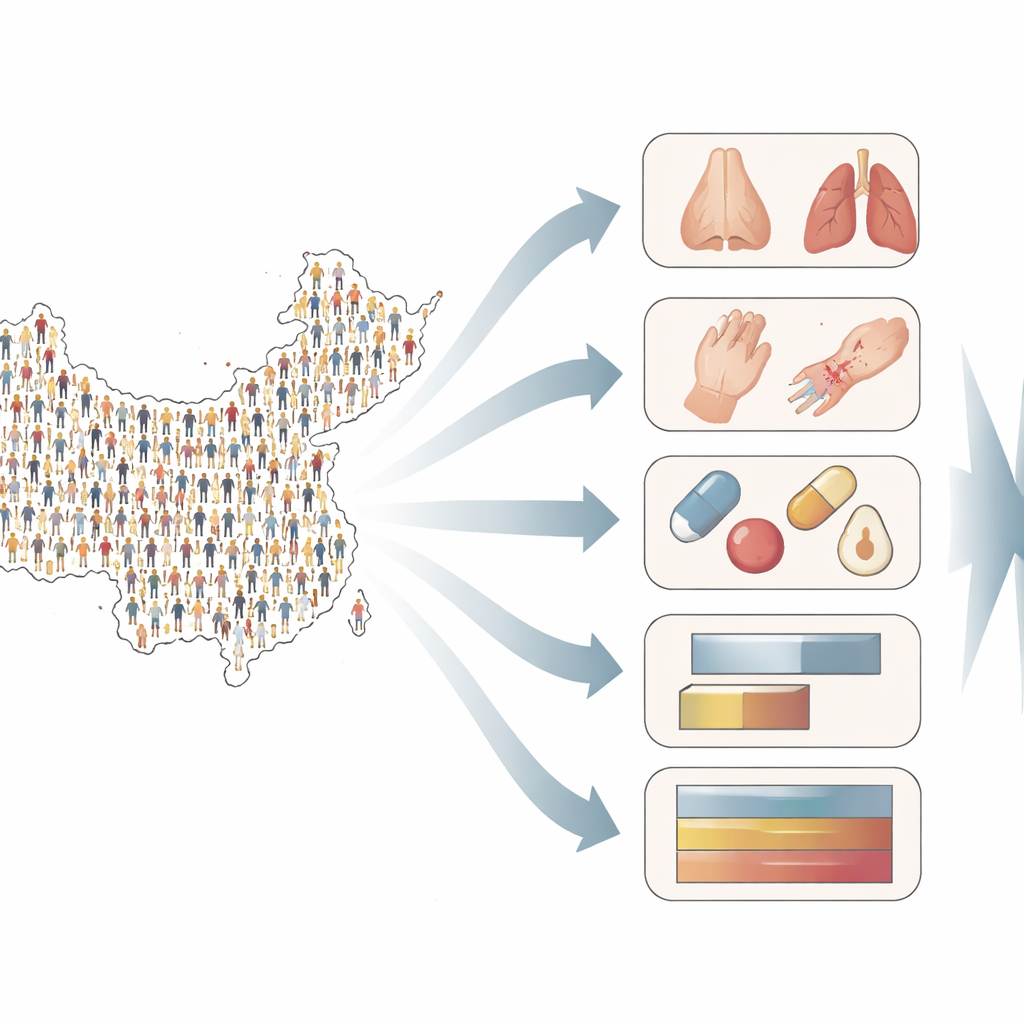
Allergies are no longer rare seasonal nuisances; they now touch almost every family, shaping everything from what children can eat to how older adults take medicines. Yet in a country as vast and varied as China, no one had a clear national picture of who is affected, where, and by which kinds of allergies. This study set out to change that by visiting communities across the country and asking over 120,000 people detailed questions about their noses, lungs, skin and reactions to foods and medicines.
A countrywide checkup on allergies
The project, called the National Epidemiology Study of Asthma and Allergies in China (NESAAC), ran from 2010 to 2015 and was designed to capture everyday life, not just hospital visits. Researchers used a stepwise sampling plan to select 16 cities spread across seven broad regions, from coastal metropolises to inland towns. Within 882 urban communities and 587 rural villages, trained interviewers went door to door and conducted face‑to‑face interviews using standardized questionnaires. They asked about eight major allergic problems: nasal allergy (allergic rhinitis), asthma, eczema, hives, contact rashes, food allergy, drug allergy and life‑threatening collapse known as anaphylactic shock. For each, participants reported whether they had ever had symptoms, had symptoms in the last year, or had received a doctor’s diagnosis.
How common different allergies really are
The clearest message from the data is that nasal allergy is the dominant problem. About 4.2% of people reported current nasal allergy symptoms, more than for any other condition, and it was also the one most often formally diagnosed. Asthma, eczema, drug allergy, food allergy, hives and contact dermatitis were less common, and true anaphylactic shock was very rare in the community. Lifetime experience of a problem was typically higher than symptoms in the past year, hinting that some people improve over time or change their exposures. Women generally reported more allergies than men, especially for asthma, eczema and drug reactions, suggesting sex‑related differences in immune responses, health‑care use or both.
Cities, regions and age all shape risk
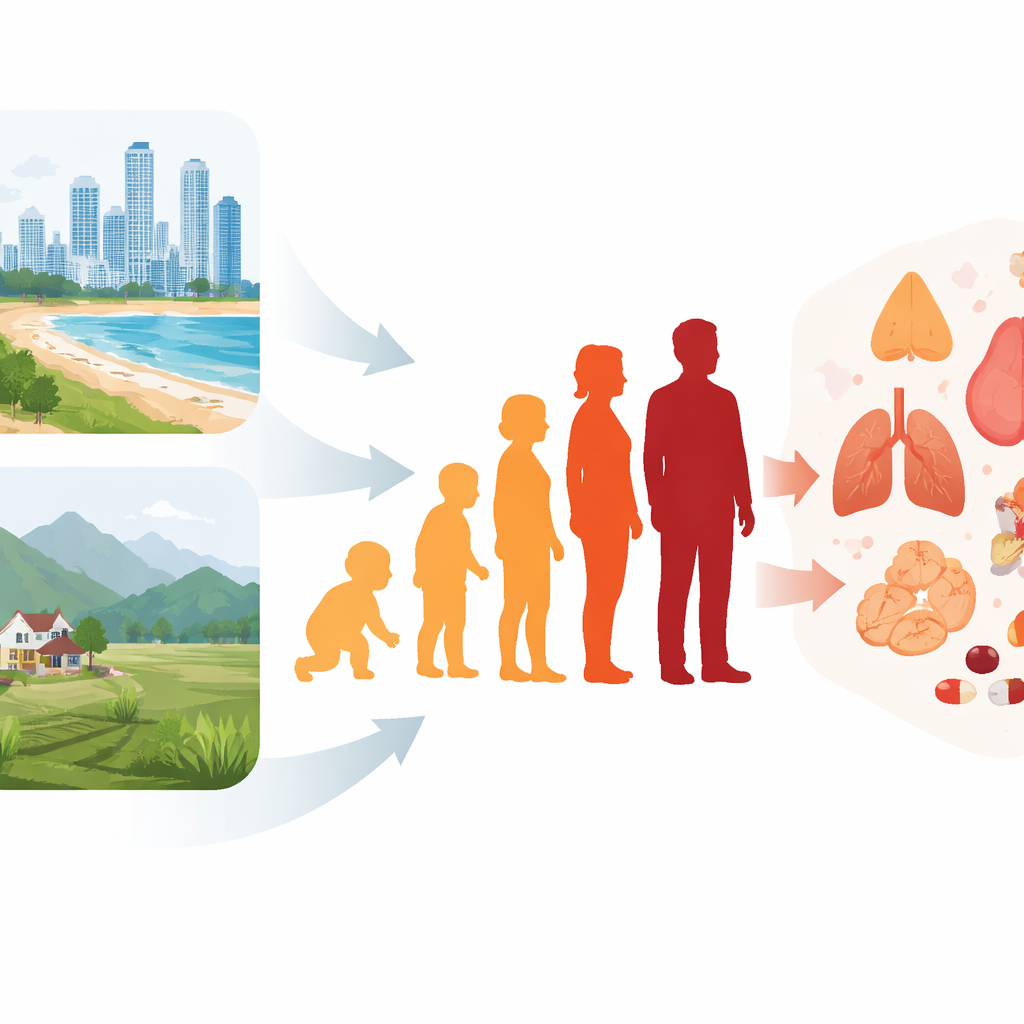
Where people lived made a striking difference. For nearly every type of allergy and for all three ways of defining it, city dwellers had higher rates than villagers, with the exception of anaphylactic shock and, in one definition, contact dermatitis. The highest levels clustered in North, East and South China, especially in coastal and economically advanced areas; Central and Southwest China showed the lowest levels, with Northeast and Northwest China in between. Environmental conditions likely play a major role. Dry, windy northern areas with abundant Artemisia weeds, for instance, produce heavy pollen loads in late summer and autumn, fueling nasal allergy and asthma even in regions that are not the richest. At the same time, modern urban lifestyles—with cleaner but more indoor environments, different diets and widespread antibiotic use—fit with the “hygiene hypothesis,” which links reduced early‑life germ exposure to later allergy risk.
Allergies across the lifespan and how they cluster
Age added another layer of pattern. In preschool children, eczema and food allergy were the most common allergic problems, followed by nasal symptoms. After about age six, eczema and food allergy gradually became less frequent, while nasal allergy rose and then leveled off in adolescence, echoing the classic “atopic march” from childhood eczema and food reactions to later airway problems. Drug allergy and asthma became more prominent with aging, taking off after about 60 years of age—likely reflecting both biological vulnerability and heavier medication use in older adults. The team also built a map of how conditions tend to travel together. Nasal allergy emerged as the central hub: roughly a third of people with asthma also had nasal symptoms, and a notable share of those with eczema, food allergy or hives did as well, underscoring that inflamed noses and wheezing lungs are often two sides of the same underlying process.
What this means for everyday health and policy
For the average person, these findings confirm that allergies are common but far from evenly spread: they concentrate in cities, in certain regions and at particular ages, and often arrive in clusters within the same individual. For health planners, the study delivers a much‑needed baseline: a carefully drawn national map of who is affected by which allergic diseases, and where public health efforts and specialist services are most needed. Even though the data were gathered a decade ago and newer waves of urbanization may have pushed rates higher since, this snapshot offers a starting point for tracking trends, targeting prevention—such as pollen warnings or safer prescribing for older adults—and designing future studies that add laboratory testing to sharpen the picture of allergy in modern China.
Citation: Cui, L., Zhou, J., Wang, Z. et al. A nationwide cross-sectional survey of major allergic diseases in China during 2010–2015 involving 120,000 participants. Sci Rep 16, 12391 (2026). https://doi.org/10.1038/s41598-026-42302-8
Keywords: allergic diseases, asthma, allergic rhinitis, China epidemiology, urban rural health