Clear Sky Science · en
A two-stage volunteer assignment model for post-disaster search and rescue operations
Why organizing helpers after disasters matters
When a major earthquake or flood strikes, thousands of people rush in to help. Yet good intentions alone are not enough: volunteers must be sent to the right places, at the right times, and matched to tasks they can safely perform. This paper presents a practical planning method that shows how cities can both decide where to set up volunteer hubs before a disaster and how to assign volunteers of different skill levels once an emergency happens, so that scarce expertise is used where it can save the most lives.
Finding the best places to gather volunteers
The authors first focus on geography: in any city there may be many safe open areas that could serve as gathering points after a quake or flood. Opening too few centers leads to crowding and long travel times; opening too many spreads staff too thin and makes coordination difficult. Using data from the small Turkish city of Tunceli, the researchers applied a classic location tool that looks at population and distance to choose a small set of response centers from 14 possible disaster collection areas. The method seeks to minimize overall travel distance between neighborhoods and the chosen hubs, ensuring that most people in need are close to help without overburdening the system. In this case, it pointed to seven centers as the best balance between coverage and manageability. 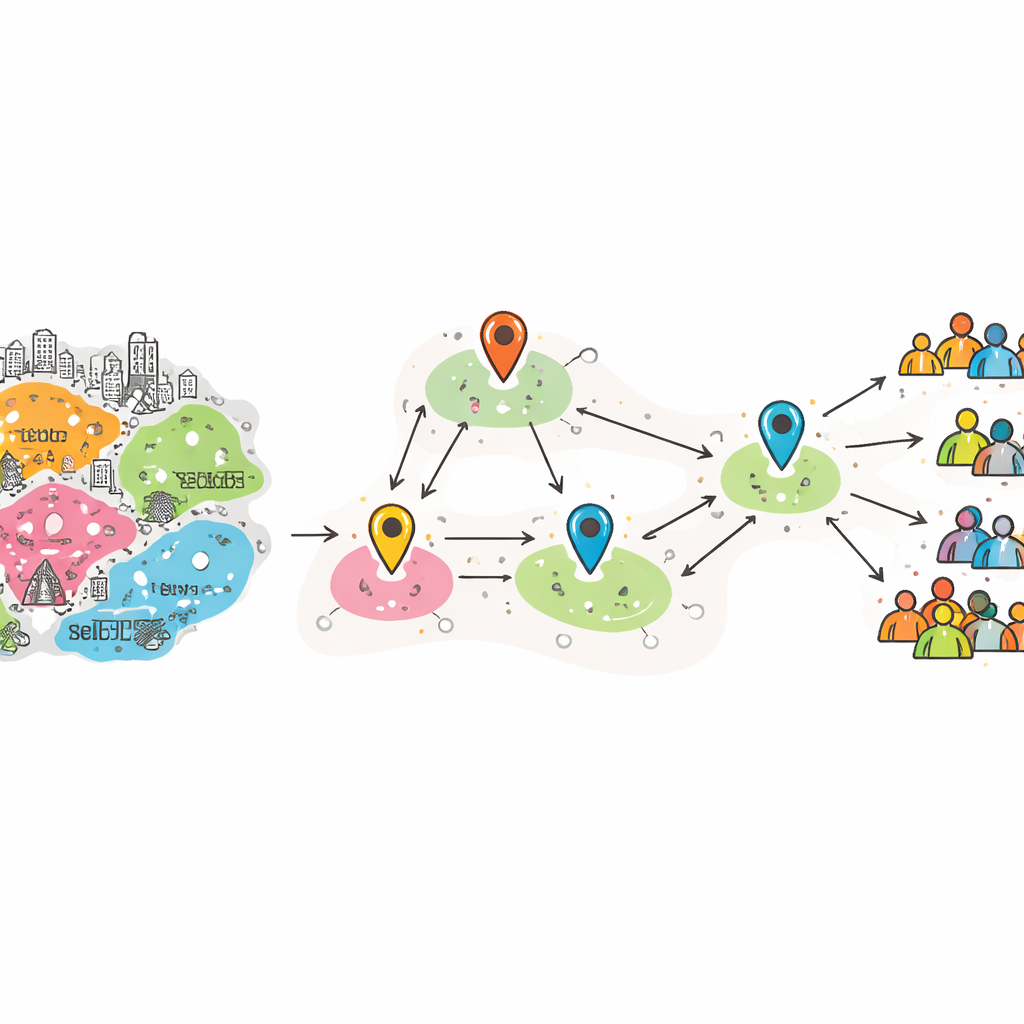
Sorting volunteers by what they can do
Next, the study turns to people rather than places. Not all volunteers arrive with the same abilities: some are trained in search and rescue and first aid, while others may be new and best suited to support roles. Building on earlier work that scored volunteers on nine skills, including teamwork and equipment use, the authors group 124 volunteers into four classes, from “expert” to “inadequate” for high‑risk field tasks. Less prepared helpers are not excluded; instead, the model steers them toward safer jobs such as food distribution or communication with survivors, while giving them a path to gain experience through training and drills before the next disaster.
Matching skills to urgency and allowing for rest
The heart of the paper is a mathematical assignment model that decides which volunteer works at which center and during which 8‑hour shift over the crucial first 72 hours after a disaster. Each response center is given an urgency level, from safe to very urgent, and a target number of volunteers for each shift. The model then tries to maximize the “value” of assignments by pairing the most skilled volunteers with the most urgent needs, while also respecting several real‑world rules: no one works consecutive shifts, each volunteer serves at only one center at a time, and centers cannot receive more or fewer volunteers than requested. In effect, the model behaves like an automated planner that balances medical triage–style priorities with humane working conditions. 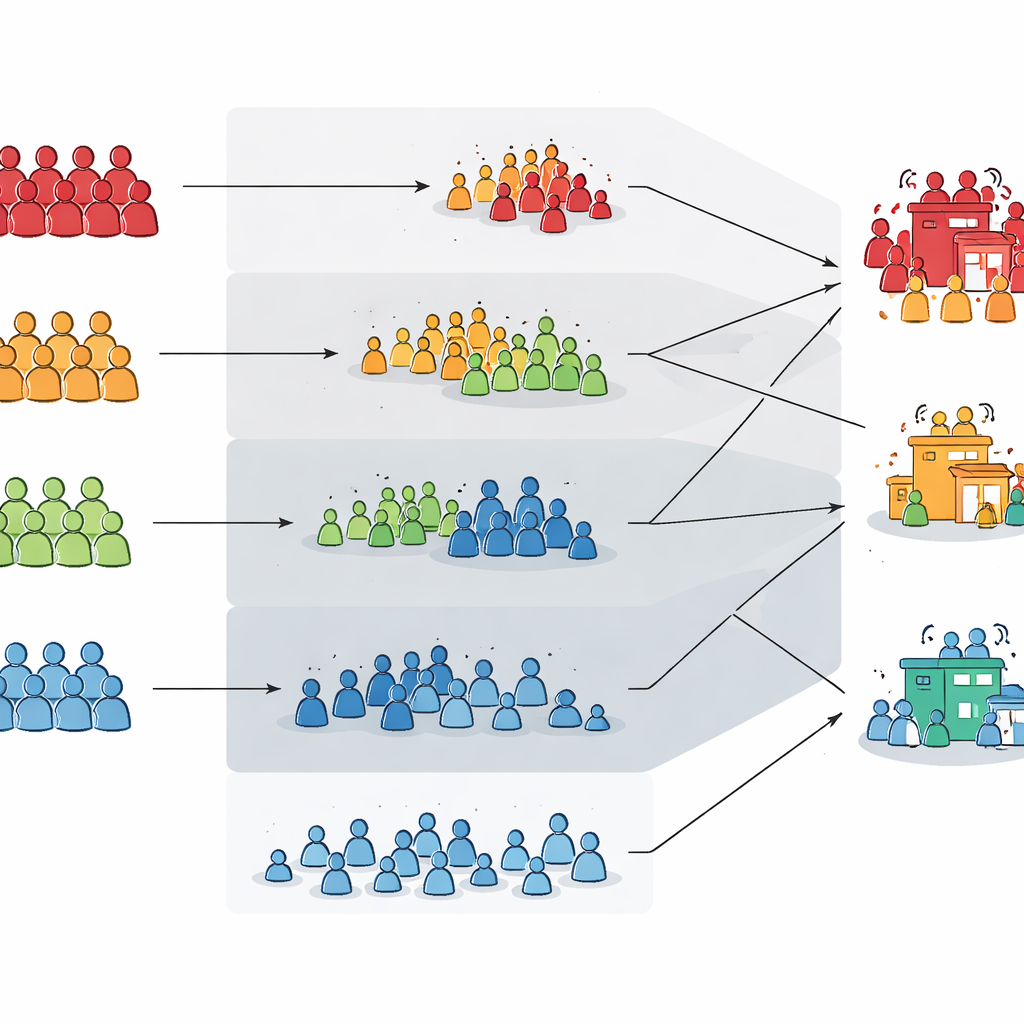
Testing the plan with realistic disaster scenarios
To see how this approach behaves in practice, the authors run three kinds of scenarios. In a city‑wide crisis where every center is treated as very urgent, expert volunteers are used heavily, typically working five of nine possible shifts, and almost all volunteers get some assignment. In a more uneven event where only some districts are hit hard or where aftershocks create secondary emergencies, the model concentrates experts in the worst‑hit centers and leaves lower‑urgency areas partially understaffed if total volunteer numbers are not enough. In a small, localized disaster, such as a flood along a riverbank, only two centers need help and overall demand is low; in this case, only the most skilled volunteers are deployed, while many less experienced helpers are held back from potentially risky work.
What this means for future disaster response
Overall, the study shows that combining smart location planning with skill‑ and rest‑aware scheduling can make volunteer efforts both safer and more effective. By pre‑selecting response centers and then using a transparent rule set to send the right people to the right place at the right time, disaster managers can reduce chaos, avoid burning out their most capable volunteers, and still make use of less experienced helpers where it is safe to do so. The authors note that their model has limits—it was tested in a small city with a modest volunteer pool—but they argue it could be scaled up, enriched with travel times, budgets, and personal preferences, and adapted to many kinds of disasters and volunteer organizations.
Citation: Ozdemir, U., Mete, S. & Gul, M. A two-stage volunteer assignment model for post-disaster search and rescue operations. Sci Rep 16, 11159 (2026). https://doi.org/10.1038/s41598-026-41627-8
Keywords: disaster management, volunteer coordination, search and rescue, optimization model, emergency response planning