Clear Sky Science · en
How climate, Indigenous people, and fire shaped Brazil’s Araucaria Forests through the Late Holocene
A Forest Story That Matters Today
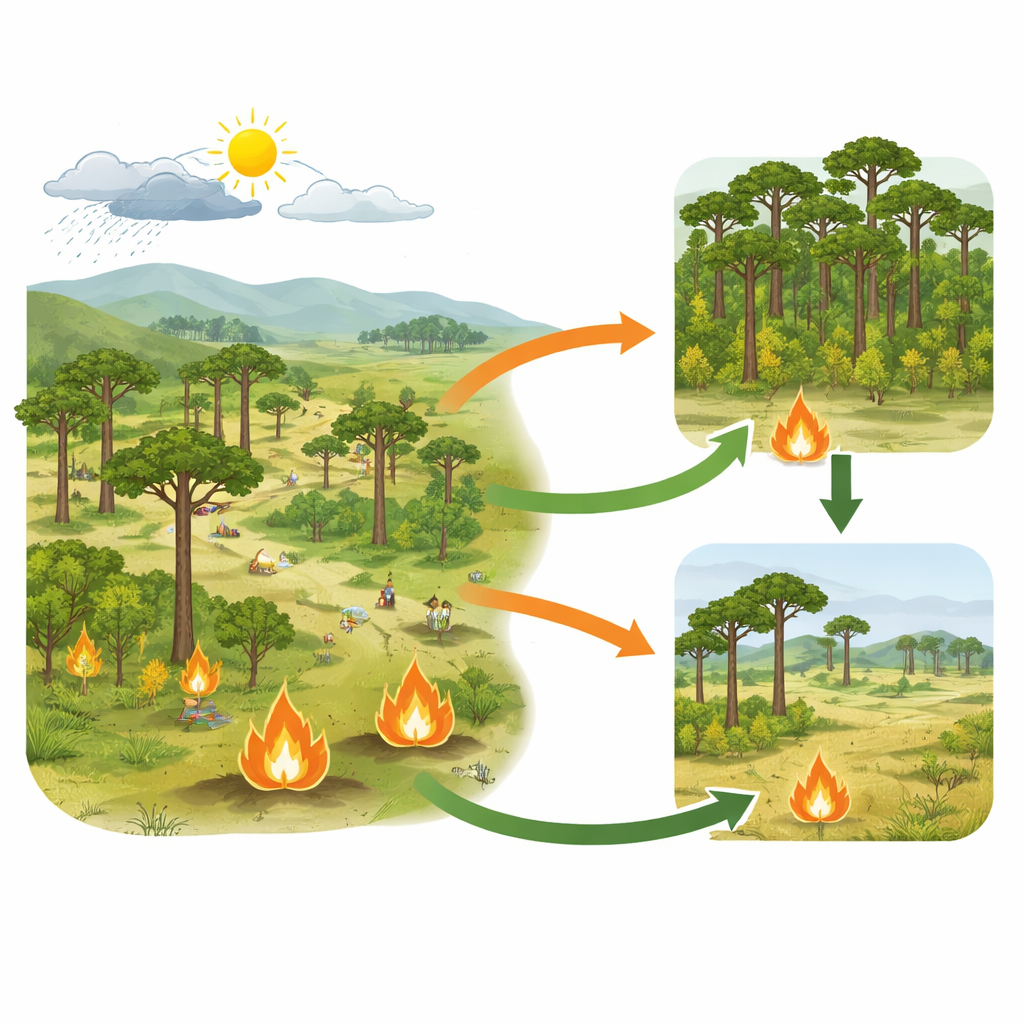
On the high, cool plateaus of southern Brazil, ancient pine-like Araucaria trees share the land with open Campos grasslands. This patchwork of forest and grassland is a global treasure for wildlife and a vital part of Indigenous cultures, yet it is now under severe pressure from logging, farming, and climate change. This study looks back 6,000 years to ask a pressing question: did shifts in climate or the actions of Indigenous peoples matter more in shaping this landscape—and what does the answer mean for how we protect it now?
A Unique Mix of Trees, Grass, and People
The Araucaria Forest–Campos mosaic is part of the Atlantic Forest, one of the world’s richest and most threatened biodiversity hotspots. Here, cold-tolerant Araucaria trees, sometimes called “living fossils,” rise above a carpet of highland grasslands, each home to many plant species found nowhere else. For more than 12,000 years, Indigenous southern Jê peoples have lived in and around these forests, relying on the large, nutritious seeds of Araucaria, hunting in the grasslands, and growing crops such as maize, beans, and squash. Because the region has already lost most of its original vegetation, understanding how this mosaic formed and persisted is crucial for judging how resilient it may be to today’s rapid changes.
Reading the Landscape’s Ancient Memory
To untangle nature’s role from people’s influence, the researchers combined five independent lines of evidence. They used cave deposits that record past rainfall, archaeological radiocarbon dates that track when and where people lived, dozens of lake and bog cores that preserve fossil pollen and charcoal from ancient vegetation and fires, and computer models that estimate where climate would have favored forest or grassland at different times. They also produced three new high-resolution records taken next to well-studied Indigenous sites. Together, these archives act like overlapping time-lapse cameras, capturing shifts in trees, grass, fire, and human presence across thousands of years.
When Climate Tips the Balance
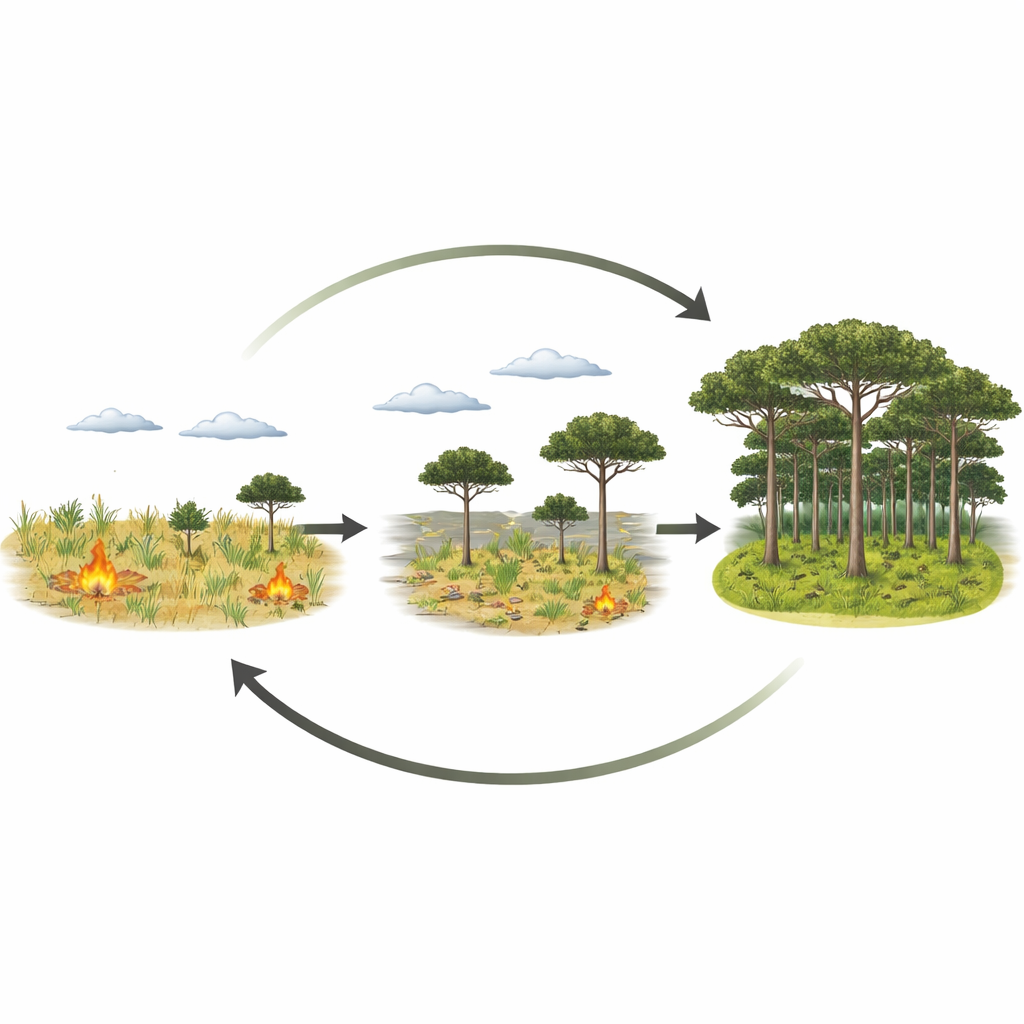
The records reveal that climate changes alone were enough to trigger major expansions of Araucaria Forest into Campos grasslands at several points over the last 4,000 years. Periods with slightly wetter conditions, or modest shifts in temperature and seasonality, coincided with times when the models predict improved conditions for forest. Yet these climate nudges did not simply push trees uphill in a smooth way. Instead, they set off powerful feedbacks between forest cover and fire. Grasslands, which burn easily, tend to keep trees from taking hold, while mature Araucaria stands rarely burn. The data show that when fire activity dropped—often just a little at first—forest began to spread, which further reduced the chance of fire, leading to rapid, sometimes seemingly abrupt, jumps from open grassland to much more wooded landscapes.
How Indigenous Care Changed the Forest
In places where southern Jê occupation was especially intense, the story looks different. At four key sites, increases in charcoal, signs of crop cultivation, and higher amounts of Araucaria pollen all rise together—breaking the usual pattern in which more fire means less forest. At one site, called Amaral, the pollen record suggests a distinctive “parkland” with scattered Araucaria trees above shrubs and grasses, maintained with frequent burning and farming for several centuries. Later, forest composition shifted again, with other useful trees becoming more common near a large village. These patterns indicate that Indigenous communities were not simply passive inhabitants of a wild forest. They actively shaped patches of the mosaic, enriching stands of Araucaria, managing fire, and cultivating fields and secondary woods in ways that supported both livelihoods and long-term forest persistence.
Lessons for Safeguarding a Living Mosaic
By weaving together climate records, ecological models, and archaeological and pollen evidence, the study shows that there is no simple either–or answer to whether climate or people built the Araucaria–Campos landscape. Climate shifts could, by subtly changing fire behavior, tip the system between grassland and forest in ways that were hard to reverse. At the same time, Indigenous southern Jê groups left clear, long-lasting signatures on forest structure and tree composition without simply turning everything into woodland. For today, this history carries a double warning and a guide: small climatic changes can push this fragile mosaic past tipping points, and conservation efforts that ignore Indigenous histories and knowledge risk misreading the very landscapes they hope to save.
Citation: Wilson, O.J., Cárdenas, M.L., Latorre, C. et al. How climate, Indigenous people, and fire shaped Brazil’s Araucaria Forests through the Late Holocene. Sci Rep 16, 10810 (2026). https://doi.org/10.1038/s41598-026-41607-y
Keywords: Araucaria Forest, Indigenous land use, fire regimes, Atlantic Forest Brazil, paleoecology