Clear Sky Science · en
Feeder-free ex vivo expansion of cord blood-derived natural killer cells for enhanced proliferation and functional maturation
Why Growing Natural Killers Matters
Scientists are racing to turn the body’s own immune cells into off‑the‑shelf cancer treatments. Among the most promising are natural killer (NK) cells, which can destroy cancer cells without needing to be custom‑matched to each patient. This study explores how to reliably grow large numbers of NK cells from umbilical cord blood in the lab, without relying on helper “feeder” cells, and how to do so in a way that is both powerful and affordable enough for real‑world therapies.
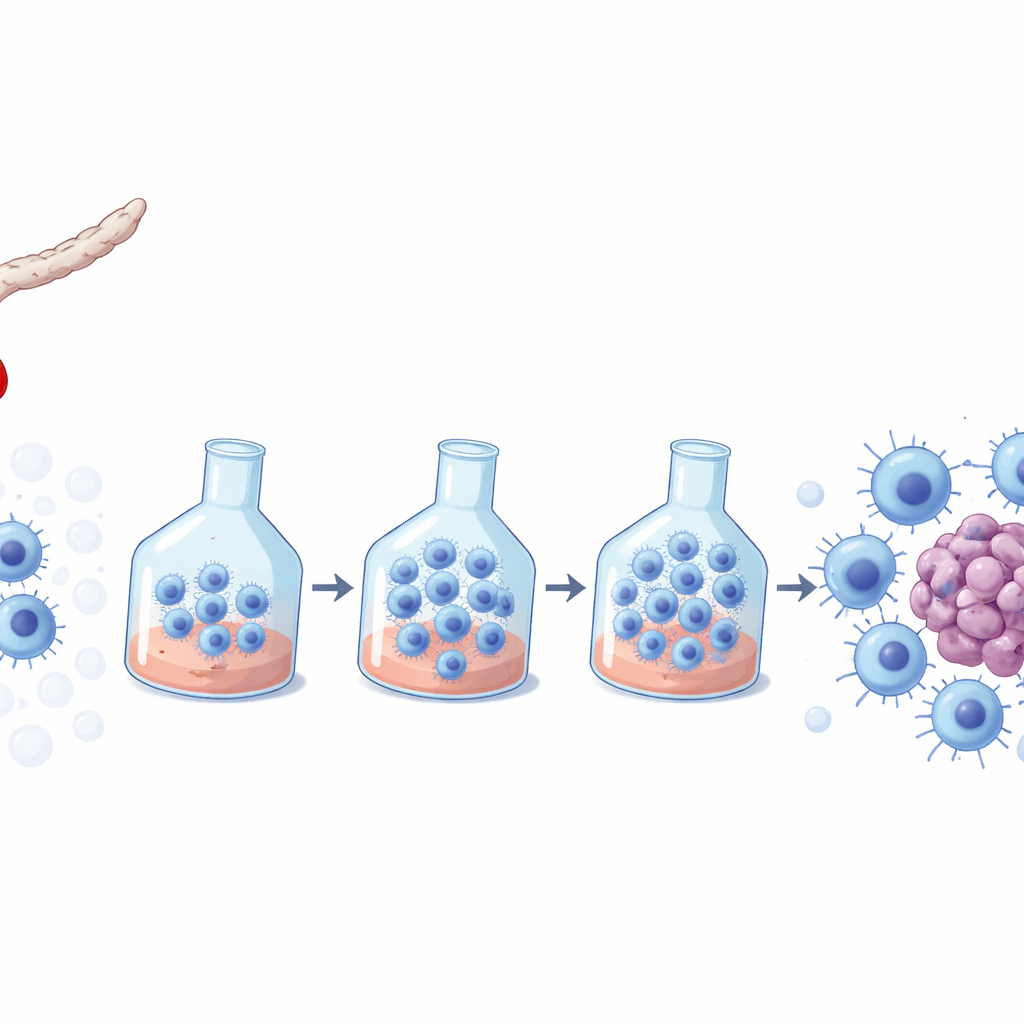
A Cancer‑Fighting Cell from Newborn Blood
NK cells are immune sentinels that can recognize and kill virus‑infected or cancerous cells on sight. Cord blood, collected from the umbilical cord after birth, is an attractive source of NK cells because it is easily obtained, widely banked, and carries a lower risk of triggering dangerous immune reactions in recipients. However, each cord blood unit contains too few NK cells to treat a patient directly, so the cells must be multiplied ex vivo – grown outside the body – while keeping them potent and safe. Many commercial recipes for NK cell growth were designed for adult blood, leaving open the question of which ones best support cord‑blood‑derived NK cells.
Testing Different Growth Recipes
The researchers began by isolating NK‑rich CD56‑positive cells from frozen cord blood samples using magnetic beads. This process greatly increased the share of NK cells but recovered fewer than a third of them and caused some early cell stress, highlighting why strong expansion protocols are needed. The team then compared six commercially available culture media, all boosted with the immune signal interleukin‑2, to see which would best support feeder‑free NK cell growth. From this screen they selected three conditions for deeper analysis: NK‑Xpander (NKX) and two versions of NK MACS (NKM1 with a lower supplement level, and NKM2 with a higher one).
Multiplying and Powering Up the Cells
When cultured for about four weeks, NK cells in NKX, NKM1, and NKM2 all passed through a quiet “lag” period before entering a robust growth phase where they formed clusters and multiplied. On average, total cell numbers rose roughly 15–19‑fold, yielding around 200 million cells per cord blood unit, with high viability above 90%. At the same time, their cancer‑killing abilities improved dramatically. Initially, freshly isolated cells showed only modest capacity to kill a standard leukemia cell line and limited signs of degranulation – the process of releasing toxic packets. After expansion, NK cells from all three media displayed much stronger target cell killing and higher levels of degranulation, indicating that the ex vivo process not only increased cell numbers but also functionally activated them.
Different Flavors of Killer Cells and the Cost Question
Although the three media produced similar overall expansion, they shaped the NK cells in different ways. Across all conditions, an activating surface marker associated with readiness to attack rose sharply, while an inhibitory marker stayed relatively stable. In NKX, expression of a key receptor linked to antibody‑guided killing remained higher, preserving a population of more aggressively cytotoxic cells. In contrast, cells grown in NKM1 and NKM2 gradually shifted toward a CD56‑bright, CD16‑low profile often associated with more regulatory, signal‑producing behavior rather than direct killing. The team also ran a detailed cost analysis. NKX and NKM1 produced cells at similar cost per million, whereas NKM2, which used twice as much supplement, roughly doubled manufacturing costs, without delivering clearly superior performance.
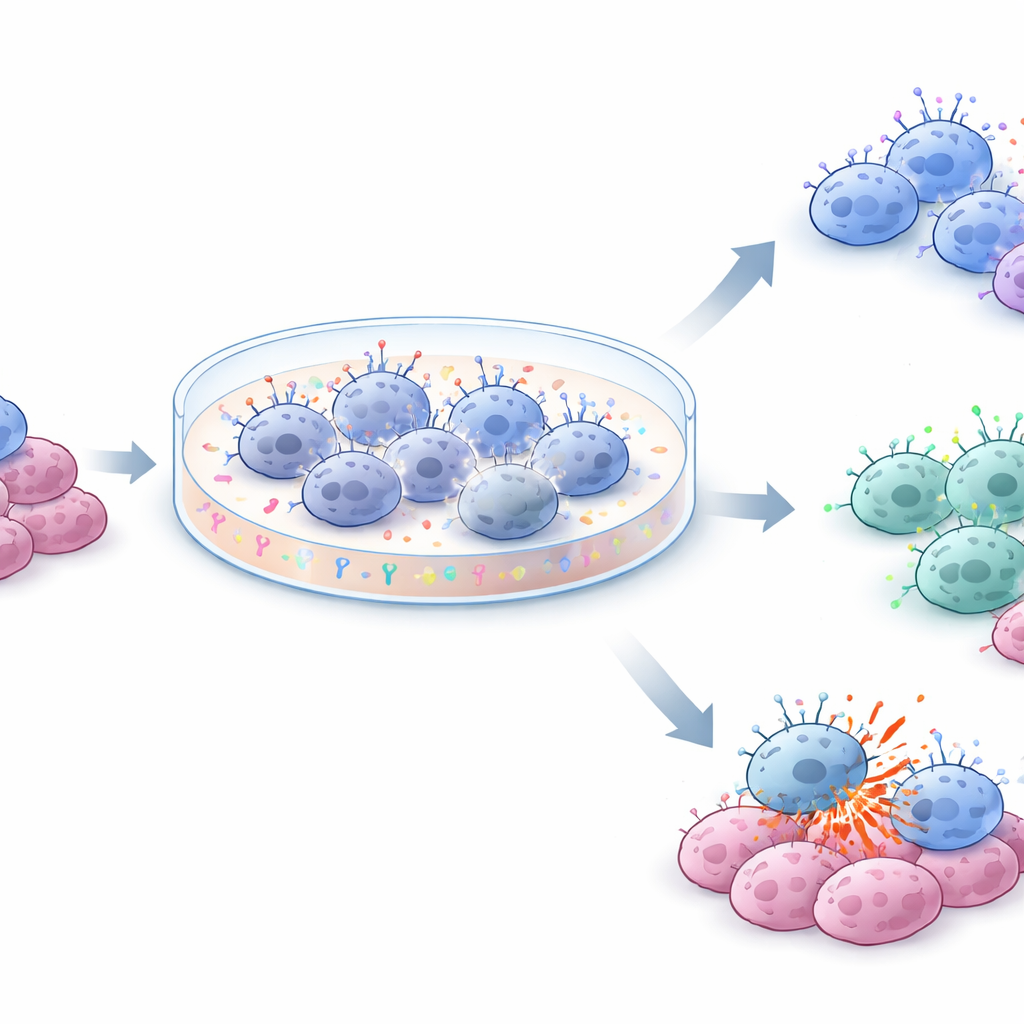
What This Means for Future Therapies
For non‑specialist readers, the key message is that it is now feasible to grow large batches of cord‑blood‑derived NK cells in the lab without complex feeder systems, while keeping them alive, active, and relatively inexpensive. NK‑Xpander offered the most predictable expansion across different donors and better preserved NK cells that can work hand‑in‑hand with therapeutic antibodies, making it well suited for cancer‑killing applications. NK MACS, particularly at lower supplement levels, still expanded the cells effectively but tended to generate a more regulatory‑like NK profile that might fit other clinical goals. Overall, this work provides a practical roadmap for turning donated cord blood into standardized, scalable NK cell products that could be banked and shipped as ready‑to‑use immunotherapies.
Citation: Doutor, I., Costa, G., Filipe, B. et al. Feeder-free ex vivo expansion of cord blood-derived natural killer cells for enhanced proliferation and functional maturation. Sci Rep 16, 10417 (2026). https://doi.org/10.1038/s41598-026-41101-5
Keywords: cord blood, natural killer cells, cancer immunotherapy, cell expansion, off-the-shelf therapies