Clear Sky Science · en
Night eating behavior, sleep quality, body composition, and type 2 diabetes risk among Saudi Arabian females: a cross-sectional study
Why Late-Night Snacking Matters
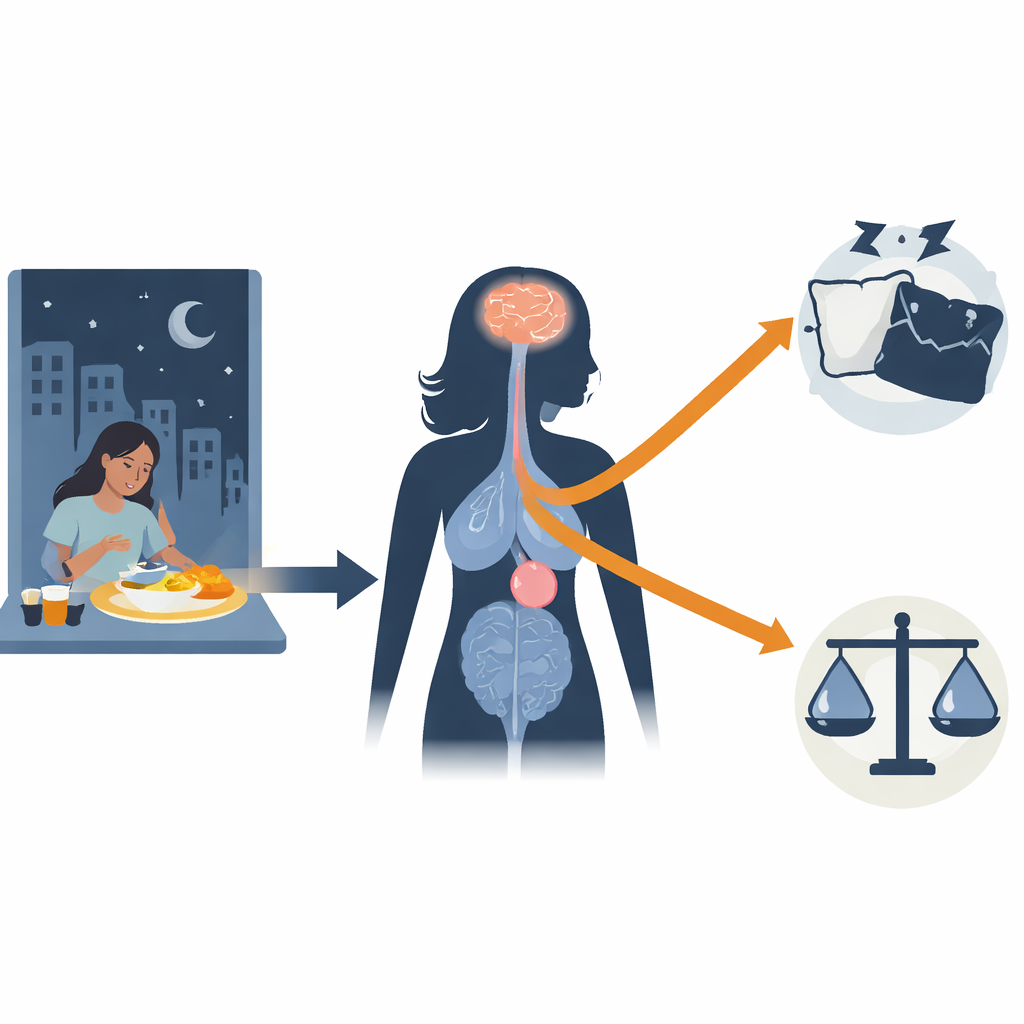
Many people enjoy snacks late at night, often believing that as long as total calories stay in check, the timing does not matter. This study asks a different question: for young Saudi women, is eating late at night more dangerous for future diabetes, or is it mainly a problem for sleep? By following a group of healthy female university students, the research teases apart how night eating relates to sleep quality, body fat, and early warning signs of type 2 diabetes.
What the Researchers Wanted to Know
The study focused on three everyday elements of lifestyle: when participants tended to eat, how well they slept, and markers that signal a higher chance of developing type 2 diabetes within the next decade. Night eating was defined as concentrating a notable share of daily food intake in the late evening or during the night. Sleep quality covered how long it took to fall asleep, how restful sleep felt, and how often it was disturbed. Diabetes risk was estimated with a widely used questionnaire that combines age, waist size, weight, activity level, and family history into a single risk score. The central aim was to see whether stronger night eating habits tracked more closely with poor sleep, with less healthy body composition, or with elevated diabetes risk.
How the Study Was Carried Out
The research involved 150 female students at King Faisal University in Saudi Arabia. All were at least 18 years old, free of diagnosed diabetes, and not pregnant or breastfeeding. Each participant completed three validated Arabic questionnaires: one measuring night eating behavior, one assessing sleep quality over the previous month, and one estimating the chance of developing type 2 diabetes in the next ten years. Trained staff also measured height, weight, waist circumference, body fat percentage, and a simple estimate of deep belly fat. The scientists then used statistical tests to examine how strongly night eating scores were linked to sleep features, body measures, and diabetes risk, while correcting for the possibility of chance findings and adjusting for age and body mass index.
What the Study Found
Overall, the women showed low to moderate night eating tendencies and, on average, had normal weight and low central fat. In this relatively healthy group, night eating was not meaningfully tied to diabetes risk scores: women who ate more at night did not, as a group, have higher ten-year diabetes risk according to the questionnaire. Likewise, connections between night eating and body measurements such as body mass index, waist size, and body fat percentage were weak and did not hold up when the researchers adjusted for multiple comparisons. In other words, in these young adults, late-night eating did not yet show clear links to extra weight or higher calculated diabetes risk.
Night Eating and Troubled Sleep
In contrast, the study uncovered a consistent pattern between night eating and sleep problems. Women with stronger night eating behavior, especially those who reported more frequent nighttime ingestions, tended to take longer to fall asleep, reported poorer subjective sleep quality, and experienced more frequent night-time disturbances. These associations remained even after accounting for age and body mass index, suggesting that body size alone does not explain the link. A regression model showed that night eating severity was an independent predictor of sleep disturbances, while age and weight were not. The findings fit with broader evidence that eating close to bedtime can interfere with the body’s internal clock and the hormones that promote restful sleep.

What It Means for Health
For young Saudi women, the message from this study is that late-night eating may first show up as a sleep problem rather than as immediate weight gain or raised diabetes risk. Poor sleep itself is known to influence appetite, weight, and blood sugar over time, so persistent night eating could still contribute indirectly to future metabolic trouble if it keeps disturbing sleep night after night. The work suggests that people who struggle with falling or staying asleep might benefit from shifting food intake earlier in the day, even before changes in weight or blood sugar appear. In simple terms, this research indicates that for healthy young women, night eating behaves less like an instant trigger for diabetes and more like a habit that quietly chips away at good-quality sleep.
Citation: Alotaibi, W. Night eating behavior, sleep quality, body composition, and type 2 diabetes risk among Saudi Arabian females: a cross-sectional study. Sci Rep 16, 10269 (2026). https://doi.org/10.1038/s41598-026-40702-4
Keywords: night eating, sleep quality, type 2 diabetes risk, young women, chrononutrition