Clear Sky Science · en
FRAX-based national survey of osteoporotic fracture risk, related knowledge, and associated factors, among Egyptian adults aged 40 years and older, 2025
Why this matters for everyday life
As people live longer, broken bones from minor falls are becoming a major health problem worldwide. This study looks at how likely Egyptian adults over 40 are to suffer such fractures, what everyday habits raise or lower that risk, and how much people actually know about protecting their bones. The findings shine a light on a "silent" condition that often goes unnoticed until a serious break happens, and point to practical steps individuals and health systems can take to prevent disability later in life.
Quiet bone loss, big consequences
Osteoporosis weakens bones so that a simple slip on a wet floor or a small bump can cause a serious fracture, especially in the hip or spine. The disease progresses slowly and without pain until a break occurs, which is why it is often called a silent condition. In Egypt, earlier studies suggest that more than one in five men and nearly one in three women over 50 have osteoporosis, and many more have milder bone loss. The authors used a widely accepted tool, called FRAX, that estimates a person’s chance of having a major fracture or hip fracture over the next 10 years, based on factors like age, weight, past breaks, smoking, and certain medicines. 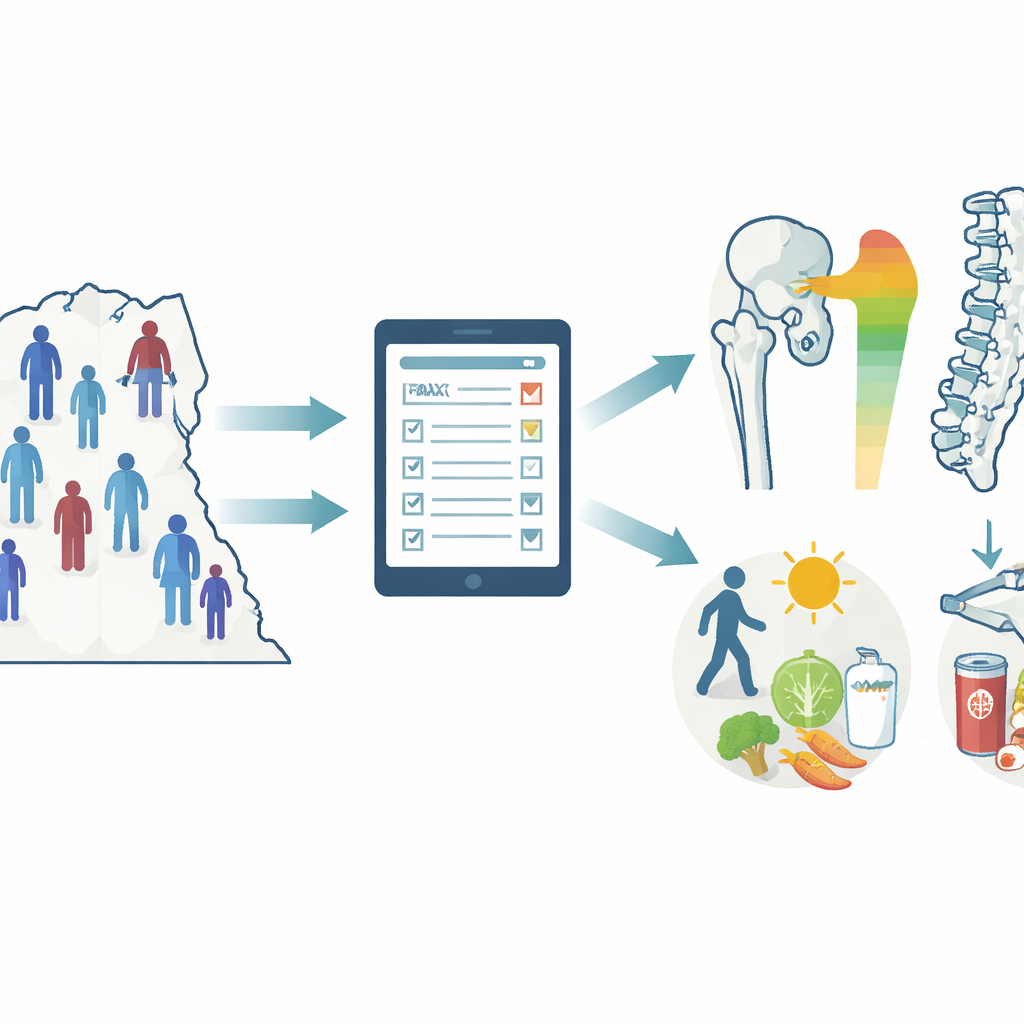
A nationwide snapshot of middle-aged and older adults
Between April and July 2025, researchers surveyed 2,242 Egyptians aged 40 to 90 years from regions across the country. Trained medical students interviewed participants face-to-face using an online questionnaire. They collected information on age, education, income, health problems, medicines, smoking, diet, sun exposure, physical activity, and for women, reproductive history. They measured height and weight, calculated body mass index, and entered key data into the Egyptian FRAX website to estimate each person’s 10‑year risk of major osteoporotic and hip fractures. Participants also completed an Arabic version of the Osteoporosis Knowledge Assessment Test (OKAT), which scores understanding of bone health, risk factors, and prevention.
What the risk scores revealed
Despite a high burden of risk factors, relatively few participants met the threshold for being labeled “high risk” by FRAX: about 2% for major fractures and 4.1% for hip fractures. However, fracture risk climbed sharply with older age, being widowed or divorced, having lower education, or working in manual jobs or being retired. Certain medical conditions, such as rheumatoid arthritis, kidney failure, and thyroid disorders, were linked to higher risk. Lifestyle and medical exposures also mattered: long-term cortisone use, smoking and longer smoking history, frequent soft or energy drink intake, early menopause, use of hormonal contraceptives in women, previous fractures, family history of hip fracture, and noticeable loss of height or curved spine all pushed risk scores higher. 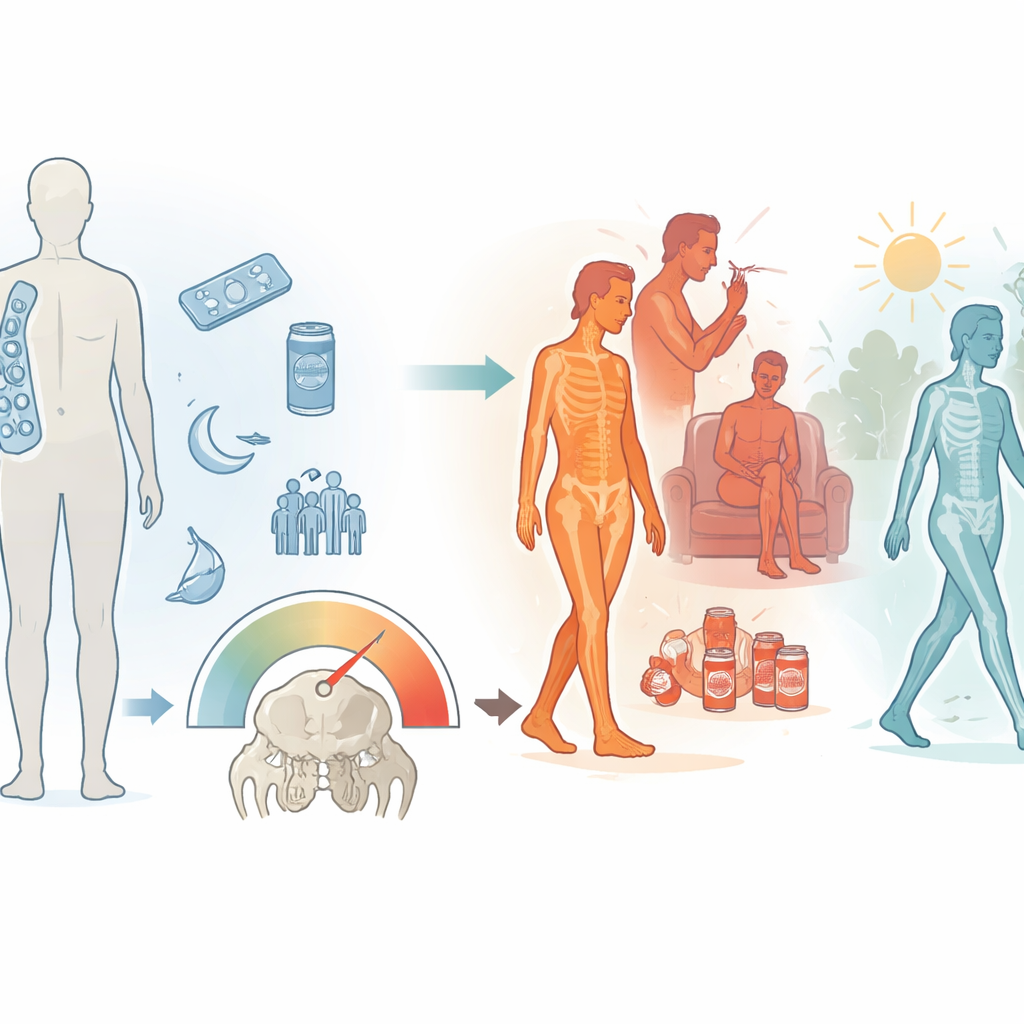
How people live and what they know
The survey painted a worrying picture of everyday habits. Most participants were overweight or obese, and more than four in ten reported never exercising. Daily milk drinking was uncommon, and only a small minority had ever had a bone density scan. Many did not take vitamin D or calcium, and those who did generally turned out to be people already at higher risk, reflecting that these measures were started in response to problems, not as early prevention. Knowledge was also lacking: the average OKAT score was just over half of the maximum, and 58.7% of participants fell into the “poor knowledge” category. Many believed osteoporosis causes symptoms before a fracture, underestimated women’s risk, or misunderstood the roles of salt, hormones, and treatment. Women and university-educated people knew more, and higher knowledge scores were modestly linked to lower hip fracture risk.
What it means for protecting bones
The study concludes that while only a small fraction of Egyptians over 40 currently reach the highest FRAX risk categories, the combination of widespread risk factors, low physical activity, poor bone-supporting diets, and major knowledge gaps is a warning sign for the future. Because bone loss and fracture risk build up silently over decades, the authors argue that adults should start assessing their fracture risk from age 40 onward, and that Egypt needs targeted education campaigns, better screening with tools like FRAX and bone scans, and stronger support for healthy lifestyles. In simple terms, the message is that broken hips and fragile bones in later life are not an inevitable part of aging—and that smarter habits and earlier checks can prevent many of these life-changing injuries.
Citation: Omar, D.I., Amer, S.A., Mohammed, S.G. et al. FRAX-based national survey of osteoporotic fracture risk, related knowledge, and associated factors, among Egyptian adults aged 40 years and older, 2025. Sci Rep 16, 13767 (2026). https://doi.org/10.1038/s41598-026-40443-4
Keywords: osteoporosis, fracture risk, FRAX, bone health, Egypt