Clear Sky Science · en
Epidemiology and genetic evolution of Anaplasma species in rodents from southeastern China
Hidden Germs in Common Mice and Rats
Most of us think of ticks and rodent-borne diseases as problems of forests and farms, far from city life. This study shows that a little-known tick‑borne germ, Anaplasma phagocytophilum, is quietly circulating in both wild and house‑dwelling rodents across Fujian Province in southeastern China. Because this microbe can infect people and domestic animals, understanding where it hides and how it spreads in rodents offers an early warning system for future human and livestock illness.
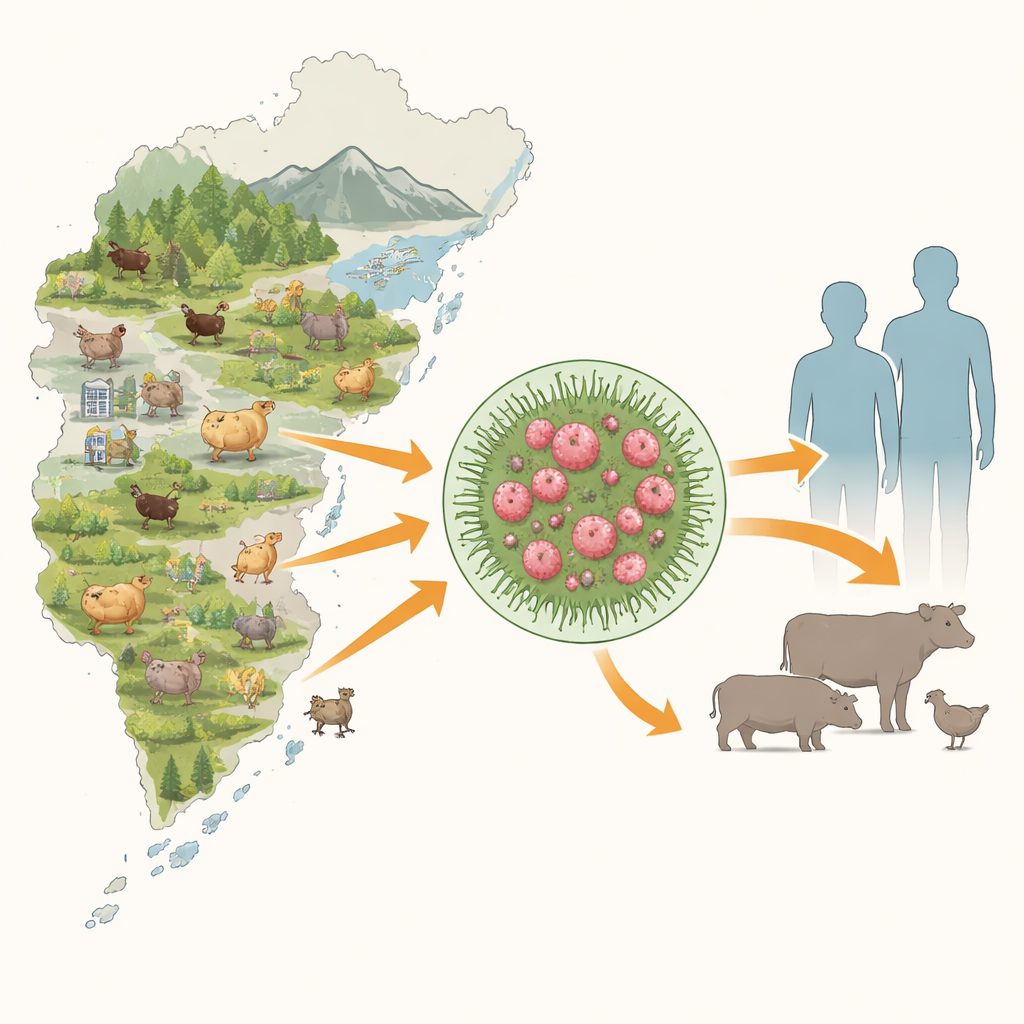
Where the Study Took Place and What Was Collected
Researchers drew on a decade of rodent surveillance from 2015 to 2024 across 22 counties and districts in Fujian, a humid, forest‑rich coastal province ideal for ticks. They examined 966 animals from 17 rodent species, including familiar house rats as well as field‑dwelling species that live in hills, farmland, and mountains. Liver, lung, and kidney samples were carefully collected, frozen, and later tested for the presence of Anaplasma DNA using sensitive genetic methods. Alongside the lab work, the team logged where each animal was caught, its species, sex, and rough age, and whether it came from a home, farm field, hillside, or mountain area.
How the Germ Was Detected and Traced
To find the bacteria, the team first used a screening test targeting a heat‑shock protein gene (groEL) common to Anaplasma species. Any sample that tested positive went through a second, more detailed test focusing on part of the 16S rRNA gene, a standard genetic barcode for bacteria. The resulting DNA fragments were sequenced and compared with known sequences in global databases. Using computer tools, the scientists built family trees and genetic “maps” (haplotype networks) to see how the Fujian strains were related to those found in other animals, ticks, and regions around the world.
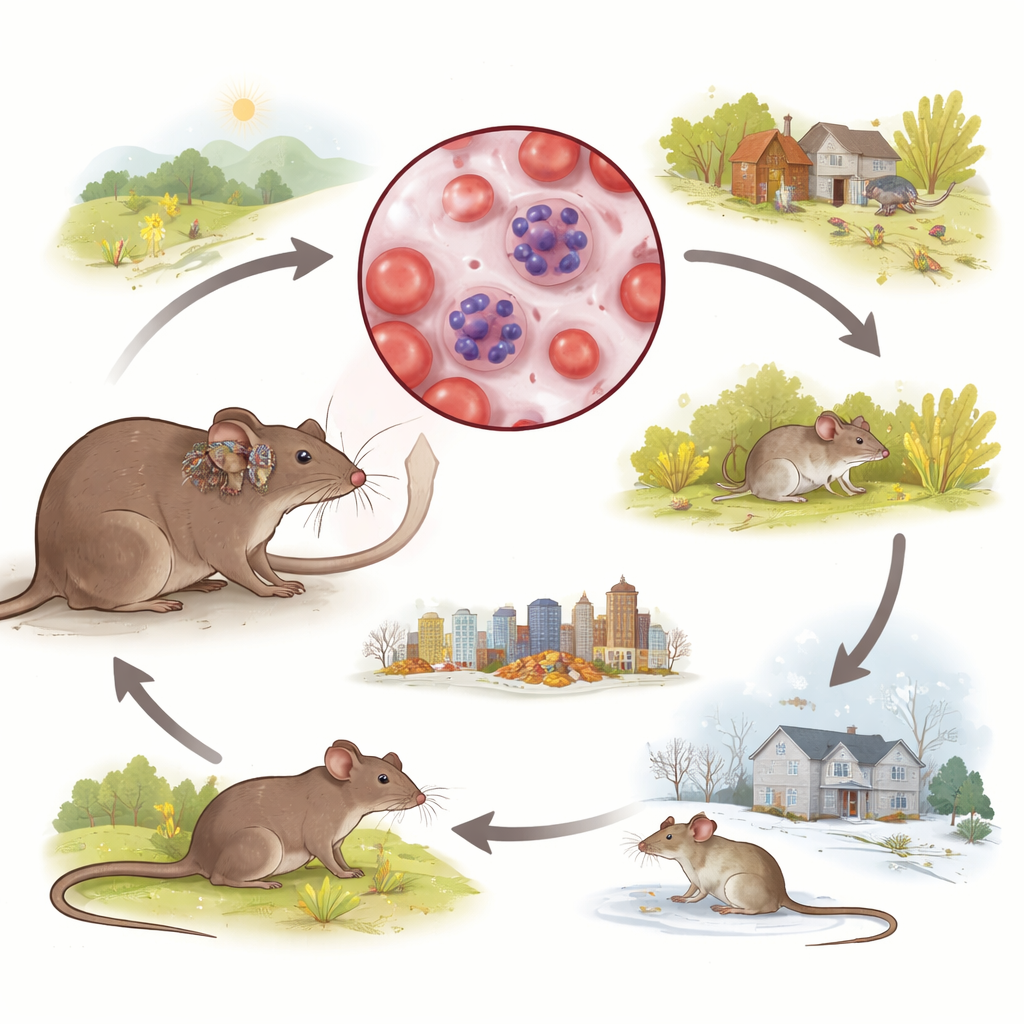
Who Was Infected, Where, and When
Overall, 4.35% of rodents carried Anaplasma, and every positive animal was infected with the same species, A. phagocytophilum. Infections were more common in wild rodents (about 6%) than in animals that live around people and depend on human food (about 2%). Some species that roam fields and hills, such as Rattus losea and Niviventer confucianus, had particularly high infection rates, while others were rarely infected. The germ showed up in nearly every city surveyed, with especially high rates in Fuzhou, Xiamen, and Nanping, but none of the tested animals from Ningde were positive. Rodents from hills and farmland were much more likely to be infected than those trapped in residential areas, suggesting that outdoor environments where ticks thrive are key to maintaining the bacterium.
Risk Patterns Linked to Age, Season, and Habitat
By combining all the information in a statistical model, the researchers found that landscape and time of year mattered more than sex or broad regional grouping. Animals taken from hills had more than ten times the infection risk of those from residential areas, and rodents from farmland were also at clearly higher risk. Younger animals (juveniles) were significantly less likely to be infected than older ones, fitting the idea that risk builds up with time as rodents encounter more infected ticks. Interestingly, captured rodents showed a higher chance of infection in winter than in spring, a pattern that contrasts with many tick studies but may reflect when and where sampling was heaviest rather than a true drop in summer transmission.
How Fujian Strains Fit into the Global Picture
Genetic analysis painted a picture of a widely shared and moderately diverse germ. All identified strains clustered within the known A. phagocytophilum group and were closely related to strains previously found in cattle and sheep in Iran, in ticks and dogs in Japan, and in rodents from Taiwan and another Chinese province, Henan. When the researchers condensed the sequences into genetic types, or haplotypes, they found seven variants. One of them, labeled H1, dominated and was shared between Fujian and several other regions. This pattern suggests that similar rodent‑ and tick‑associated strains circulate over large areas, possibly helped by the movement of wild animals or livestock and the spread of tick species.
What This Means for People and Animals
To a non‑specialist, the main message is that a human‑infecting tick‑borne bacterium is firmly established in the rodent populations of southeastern China, particularly in outdoor and hilly landscapes, and that it is genetically tied to strains found elsewhere in Asia and beyond. While the study did not track human patients, the presence of A. phagocytophilum in local rodents, combined with Fujian’s tick‑friendly climate and dense forests, signals a real potential for spillover to people and livestock. The authors argue that routine, long‑term monitoring of rodents, ticks, and the environment will be crucial for spotting changes in this hidden pathogen’s spread and for guiding measures to reduce the risk of future anaplasmosis outbreaks.
Citation: Zeng, Z., Hu, S., Wang, J. et al. Epidemiology and genetic evolution of Anaplasma species in rodents from southeastern China. Sci Rep 16, 11754 (2026). https://doi.org/10.1038/s41598-026-40394-w
Keywords: tick-borne disease, rodent reservoirs, Anaplasma phagocytophilum, Fujian China, zoonotic infection