Clear Sky Science · en
The rs3024839 and rs2227483 polymorphisms with immune pathomechanism offers a starting point for diagnosis and susceptibility testing of myocardial infarction
Why your genes may matter for heart attacks
Heart attacks are often blamed on high blood pressure, smoking, or high cholesterol. But many people who watch their diet and exercise still suffer a heart attack, sometimes as their very first sign of heart disease. This study asks a simple but powerful question: can specific inherited changes in our DNA help explain who is most at risk long before symptoms appear, and do these changes work through the body’s own immune system?
Looking for hidden risk in our DNA
The researchers focused on two tiny DNA differences, called variants, in genes that help control immune responses: STAT4 and IL22. These genes act like switches that tune how strongly the body reacts to damage and infection. Because chronic, low-grade inflammation is central to clogged arteries and heart attacks, the team wondered whether particular versions of STAT4 and IL22 might quietly raise a person’s chances of a heart attack. To test this idea, they studied 400 patients who had experienced their first heart attack and compared them with 400 healthy people of similar age and sex from the same Middle Eastern population.
Using several highly sensitive laboratory techniques, the team read each person’s DNA to see which variant they carried at the STAT4 and IL22 sites. They then measured how active these genes were, how tightly the surrounding DNA was packed (which helps determine whether a gene is “on” or “off”), and several immune markers in the blood. These markers included regulatory T cells that help calm inflammation, a signaling molecule called TGF‑β1 that supports these calming cells, a damage-response protein called p53 linked to cell death, and circulating endothelial cells that signal injury to blood vessel walls. 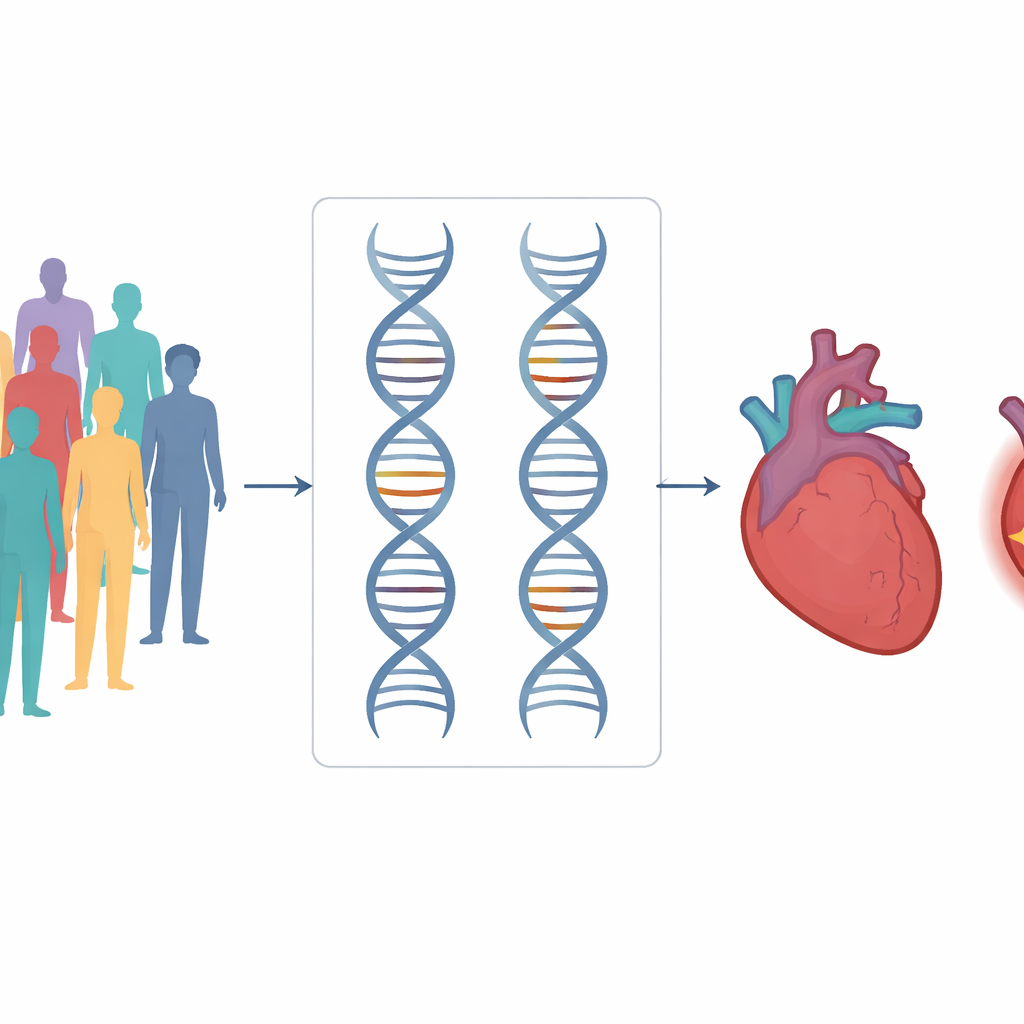
Gene variants tied to heart attack risk
Both DNA variants turned out to be strongly linked with heart attacks. More than 99% of patients carried the altered versions of STAT4 (rs3024839) and IL22 (rs2227483), and these versions were significantly more common in patients than in healthy controls. People with the risk forms had roughly a two- to threefold higher chance of having a heart attack. When the researchers built a prediction model that combined these genetic markers with familiar risk factors such as high blood pressure, high cholesterol, high blood sugar, coronary artery disease, and smoking, the model was able to very clearly separate high‑risk from low‑risk individuals. In statistical terms, the genetic model alone showed “excellent” performance in telling patients and controls apart.
At the molecular level, the risk variants changed how the genes behaved. In people with heart attacks, STAT4 was more active, and the DNA at its variant site was more “open,” making it easier for the gene to be switched on. By contrast, IL22 activity was reduced, and its DNA region was more tightly packed, making it harder to use. This tilt toward more STAT4 and less IL22 fits with a more aggressive, less controlled immune response in the heart and blood vessels.
How immune imbalance harms the heart
The genetic changes did not act in isolation; they reshaped the immune landscape. Patients carrying these variants had sharply lower levels of regulatory T cells marked by FOXP3, along with reduced FOXP3 gene activity and lower levels of TGF‑β1, a molecule that normally helps these calming cells develop. At the same time, markers of damage and inflammation were higher. The protein p53, which can trigger programmed cell death in stressed heart muscle cells, was elevated, consistent with more cell loss after a heart attack. The blood of variant carriers also showed more activated inflammatory monocytes and more circulating endothelial cells, a sign that the inner lining of blood vessels was being injured and shedding cells into the bloodstream. Together, these findings outline a chain from inherited DNA changes, to immune imbalance, to fragile vessel walls and more severe heart injury. 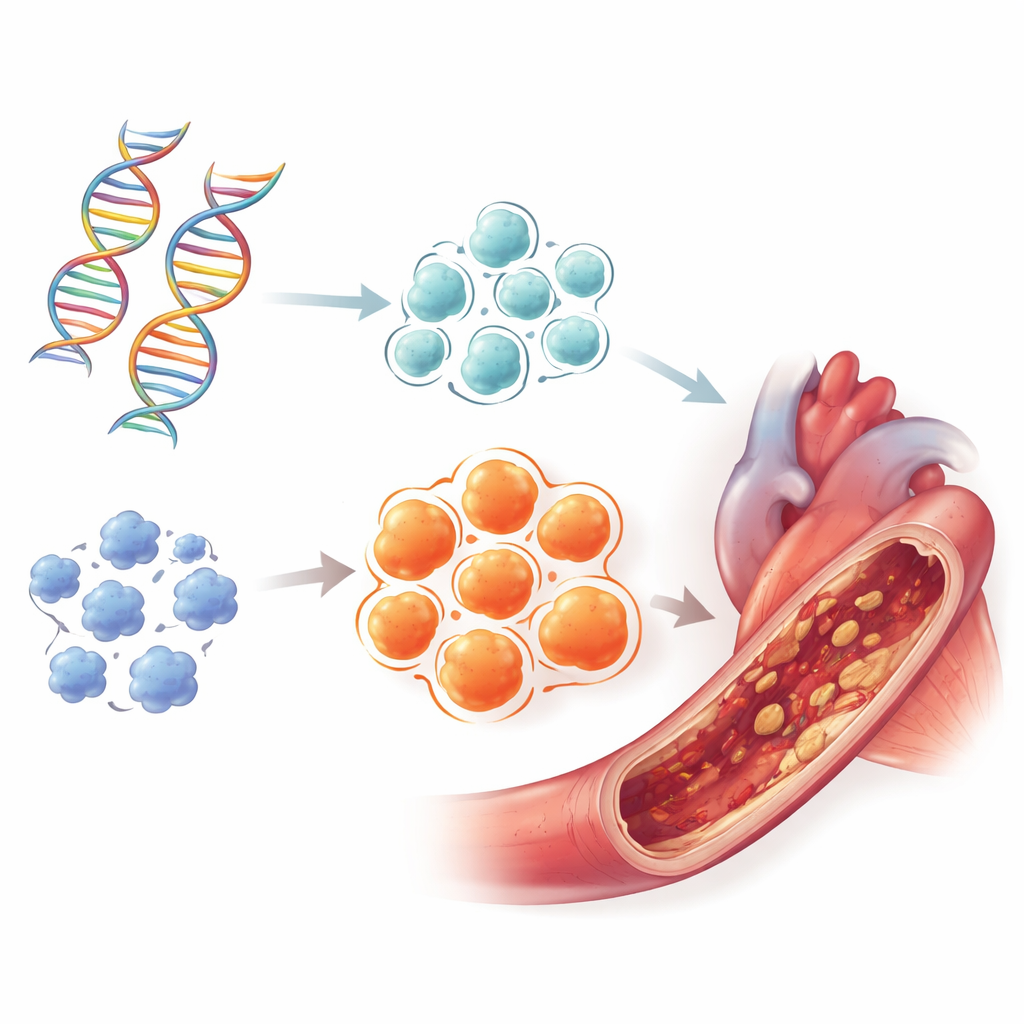
What this could mean for future prevention
For a layperson, the message is that some people may be “primed” for heart attacks not just by lifestyle, but by how their immune system is wired by their genes. The particular STAT4 and IL22 variants studied here appear to push the body toward a more damaging inflammatory state, weaken protective immune cells, and harm blood vessels, all while being strongly associated with common conditions like high blood pressure, high cholesterol, and high blood sugar. The authors suggest that, in the future, testing for these and similar variants could help doctors spot high‑risk individuals early—potentially even in youth—and tailor prevention and treatment strategies accordingly. While more studies in diverse populations are needed, this work lays a foundation for using inherited immune markers to refine heart‑attack risk prediction and, eventually, to guide therapies that calm harmful inflammation before it leads to a crisis.
Citation: Khosravi Nezhad, Z., Dehghani, F., Molavizade, S. et al. The rs3024839 and rs2227483 polymorphisms with immune pathomechanism offers a starting point for diagnosis and susceptibility testing of myocardial infarction. Sci Rep 16, 10144 (2026). https://doi.org/10.1038/s41598-026-39886-6
Keywords: myocardial infarction genetics, immune-driven heart disease, STAT4 IL22 variants, cardiovascular risk prediction, inflammation and heart attack