Clear Sky Science · en
A hybrid SMOTE and Gaussian mixture model based optimized XGBoost framework for bipolar disorder detection
Why this matters for everyday mental health
Bipolar disorder can dramatically disrupt a person’s life, yet it is often missed or misdiagnosed for years. Many people cycle through episodes of intense highs and crushing lows before receiving the right help. This study explores how advanced computer methods can sift through routine clinical questionnaires and records to flag people who may have bipolar disorder earlier and more reliably. The work points toward decision-support tools that could sit alongside clinicians, helping them spot patterns that are easy for humans to overlook but crucial for timely care.
The challenge of spotting hidden mood swings
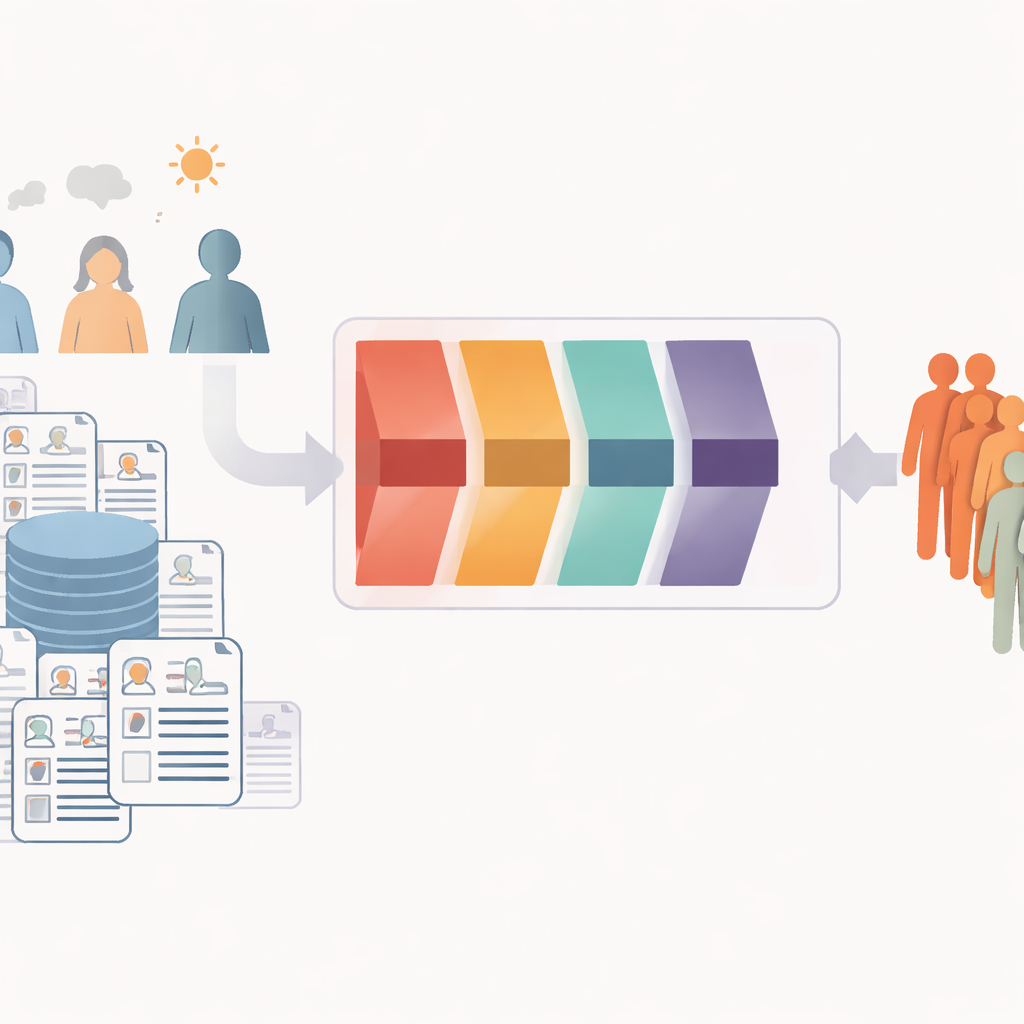
Bipolar disorder does not look the same in every person. Symptoms can overlap with depression, anxiety, and other conditions, and many assessments rely on what patients remember and how doctors interpret brief visits. As a result, important warning signs are missed, and people may receive treatments that are not suited to their actual condition. On top of that, medical databases typically contain far fewer confirmed bipolar cases than non-bipolar ones, which makes it harder for standard computer models to learn what bipolar disorder really looks like. The authors argue that we need tools that can handle this imbalance, uncover hidden patient subgroups, and still remain understandable to clinicians.
A smart pipeline built from simple building blocks
Instead of turning to opaque deep learning systems, the researchers build a step-by-step pipeline from three well-established techniques, each solving a specific problem. First, they clean and standardize a dataset of 3,753 people, each described by 54 clinical and questionnaire-style features related to mood, sleep, behavior, and functioning. Then they address the unequal numbers of bipolar and non-bipolar cases using a method called SMOTE. Rather than simply copying rare bipolar cases, SMOTE creates new “in-between” examples by gently interpolating between real bipolar patients, giving the computer more balanced experience of both groups during training while leaving the test data untouched.
Finding hidden groups inside the data
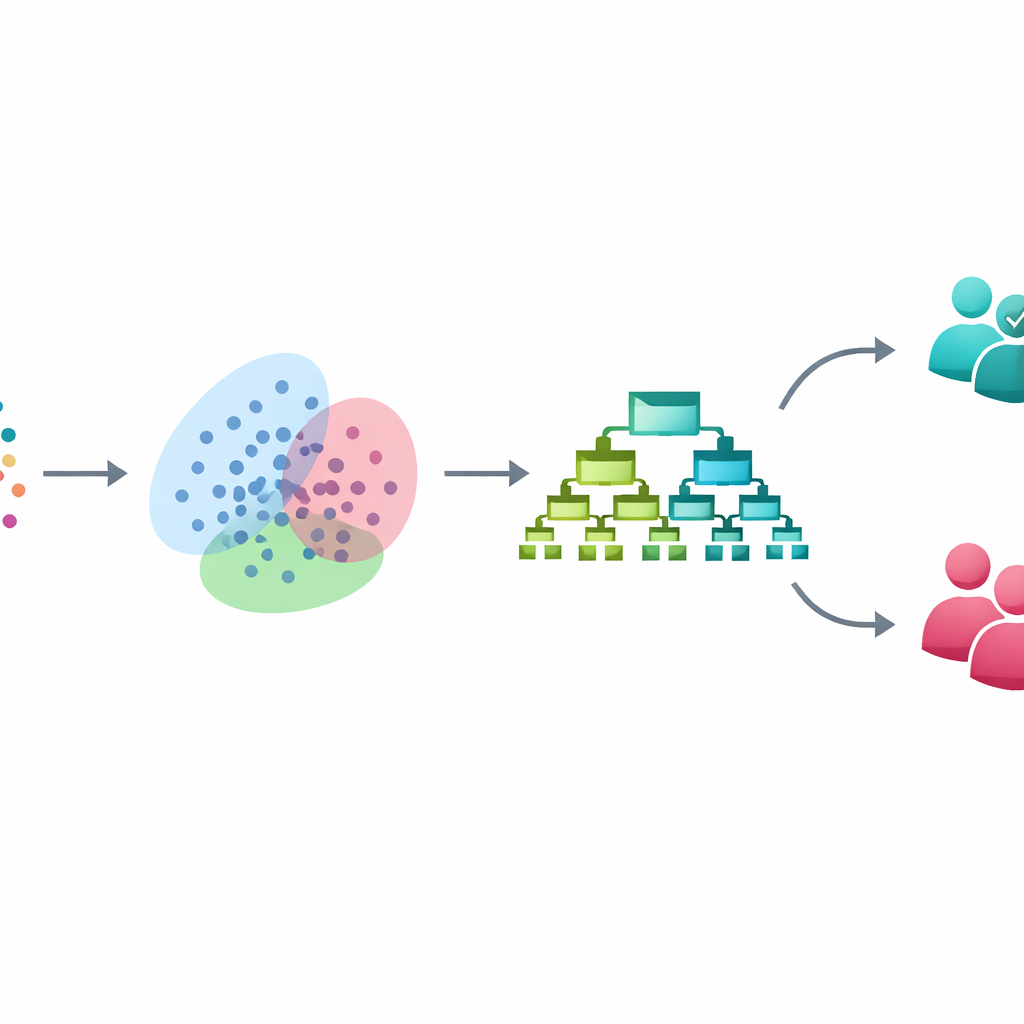
After balancing the data, the pipeline applies Gaussian mixture modeling, a flexible clustering approach that looks for natural groupings in the patients without using the diagnosis labels. Instead of forcing each person into a single box, it assigns probabilities of belonging to several overlapping groups, reflecting the blurred boundaries often seen in real psychiatric practice. These probabilities are then added as new, subtle features that describe each patient’s position among these hidden subgroups. In effect, the model learns not only from what the questionnaires directly measure, but also from deeper patterns of similarity that might correspond to different symptom profiles or stages of illness.
Turning patterns into practical predictions
With this enriched description of each patient, the final stage uses XGBoost, a powerful ensemble of decision trees that is particularly effective on table-style clinical data. The researchers carefully tune this model using cross-validation and keep all balancing and clustering steps strictly inside the training process to avoid contamination of the test set. On unseen data, their system correctly classifies bipolar versus non-bipolar cases 93% of the time. It identifies 97% of true bipolar cases (high sensitivity) while maintaining 93% precision and a strong overall balance between catching real cases and avoiding false alarms. Compared with familiar methods such as logistic regression, decision trees, support vector machines, and random forests, the new framework improves performance by 6 to 12 percentage points, depending on the comparison.
What this means for patients and clinicians
For a layperson, the main takeaway is that this hybrid approach offers a more reliable early warning system, not a replacement for a psychiatrist. By balancing the data, uncovering hidden patient subgroups, and using an interpretable tree-based model, the framework can flag individuals who are likely to have bipolar disorder so that clinicians can investigate further using standard diagnostic guidelines like DSM-5 or ICD-11. The authors emphasize that the tool is transparent enough to reveal which clinical and subgroup features matter most, making it easier to trust and integrate into real-world care. While the study is based on a single dataset and will need testing across hospitals and populations, it shows that thoughtfully combining several modest techniques can yield a practical, scalable aid for earlier and more accurate bipolar disorder screening.
Citation: Kumar, S., Kumari, D., Panwar, A. et al. A hybrid SMOTE and Gaussian mixture model based optimized XGBoost framework for bipolar disorder detection. Sci Rep 16, 11887 (2026). https://doi.org/10.1038/s41598-026-39104-3
Keywords: bipolar disorder detection, mental health screening, machine learning in psychiatry, clinical decision support, imbalanced medical data