Clear Sky Science · en
Potential impact of nicorandil on the pharmacodynamics of anti-angiogenic agents
Why this heart–cancer connection matters
Many people with cancer also have heart disease, so they may receive several powerful drugs at once. This study asks a simple but important question: could a heart medicine used for chest pain, called nicorandil, quietly weaken the benefits of modern cancer drugs that starve tumors by cutting off their blood supply? The answer could affect how doctors choose treatments for people living with both conditions.
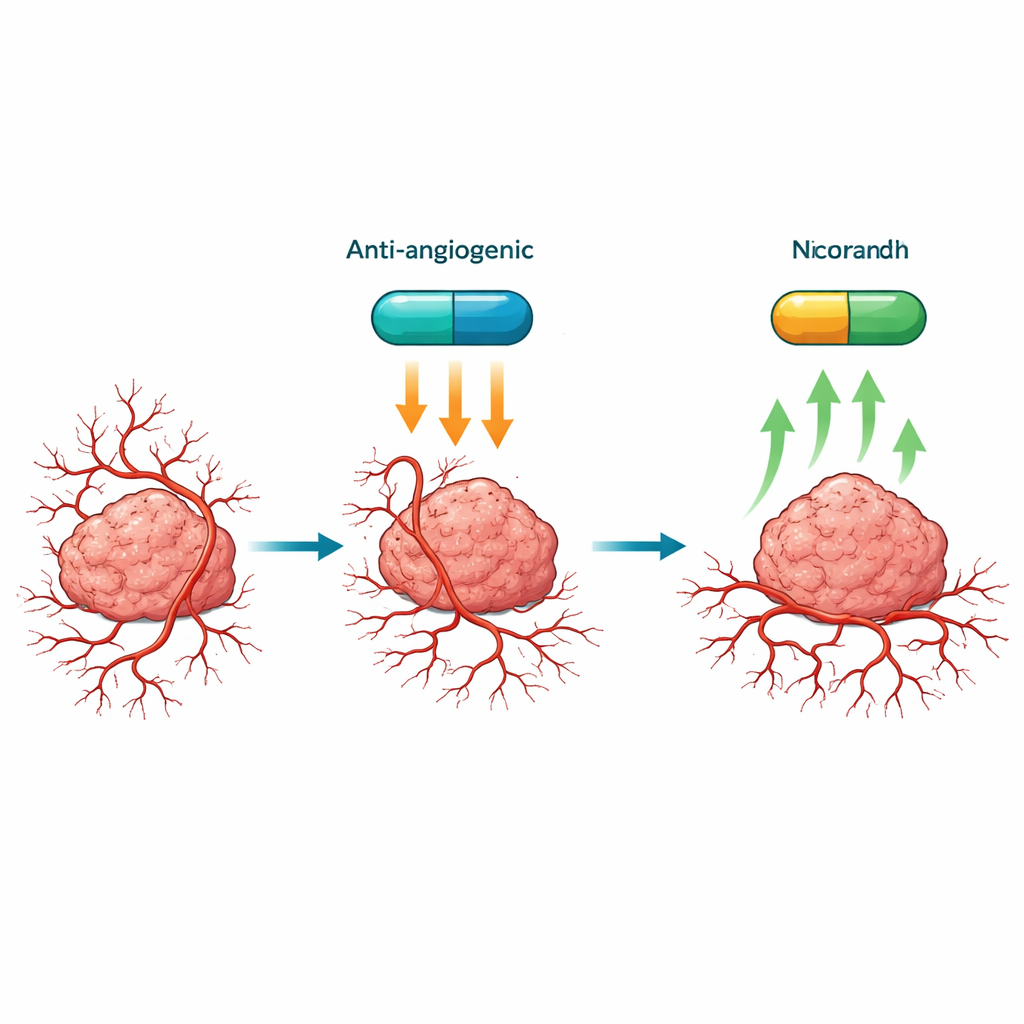
Drugs that starve tumors—and raise blood pressure
Certain cancer medicines, known as anti-angiogenic drugs, work by blocking signals that tumors use to grow new blood vessels. Without these vessels, tumors struggle to get oxygen and nutrients. These drugs, including bevacizumab, ramucirumab, and aflibercept, have improved outcomes in cancers such as colorectal and lung cancer. A well-known side effect, however, is higher blood pressure and kidney strain, reflected in protein leaking into the urine. Paradoxically, the rise in blood pressure is often linked with better cancer control, so it has been considered a sign that the drug is doing its job.
A heart drug that relaxes blood vessels
Nicorandil is a long-established drug for angina, the chest pain caused by narrowed heart arteries. It relaxes blood vessels in two ways: by opening a specific type of potassium channel in vessel walls and by acting as a donor of nitric oxide, a natural substance that helps vessels widen. These same pathways are closely tied to how blood vessels grow and respond to stress. Earlier lab work using tiny "mini-tumors" grown from human cells suggested that when nicorandil is given together with the cancer drug bevacizumab, the tumor-shrinking effect is reduced. The new study set out to see whether this clash also appears in living animals and in real-world patient reports.
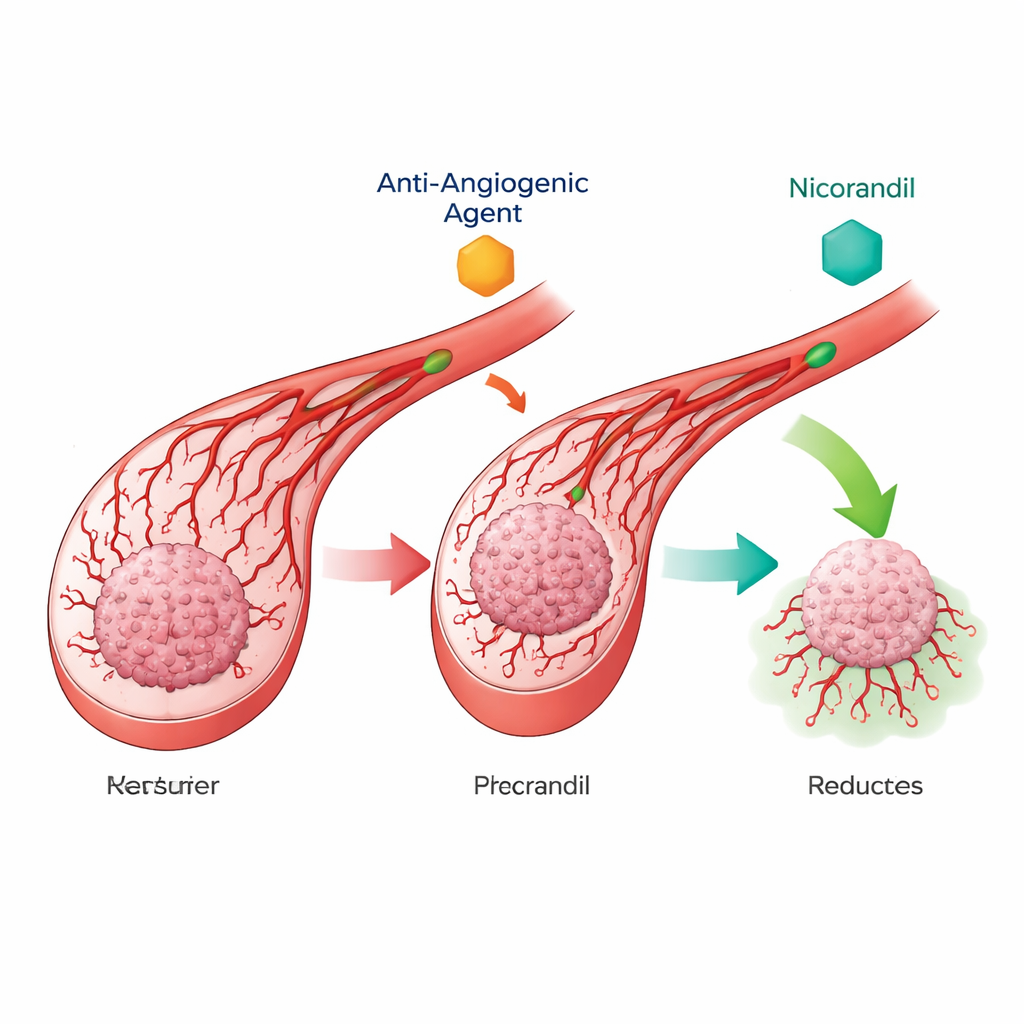
What happened in tumor-bearing mice
Researchers implanted human breast cancer cells into mice and treated them with aflibercept, nicorandil, both drugs, or neither. As expected, aflibercept alone shrank tumors and made the animals’ blood pressure climb over several weeks. Nicorandil alone slightly lowered blood pressure and did not significantly change tumor size. Strikingly, when the two drugs were given together, the rise in blood pressure was much smaller, and the tumors did not shrink as much as with aflibercept alone. Imaging of the tumors confirmed that their activity bounced back toward control levels when nicorandil was added. Even body weight changes fit this picture: aflibercept caused weight loss, while the combination partly reversed it, mirroring weaker anticancer action.
Hints from millions of real-world safety reports
To explore whether similar effects might appear in people, the team examined more than 15 million entries in the U.S. Food and Drug Administration’s Adverse Event Reporting System, focusing on about one million reports involving cancer. As expected, anti-angiogenic drugs were strongly linked to reports of hypertension and protein in the urine. Yet reports that mentioned both bevacizumab and nicorandil were rare—only 28 cases—and no such cases were found for aflibercept plus nicorandil. Within this tiny set, high blood pressure and kidney-related side effects seemed to be reported less often, and a few patients instead had low blood pressure. Because nicorandil is not marketed in the United States and doctors may avoid combining it with clot-promoting cancer drugs, these numbers are too small and biased to draw firm conclusions, but they are consistent with the animal findings.
What this could mean for patients
Taken together, the mouse experiments and the safety-database signals suggest that nicorandil may blunt both the blood pressure rise and the tumor-fighting power of anti-angiogenic cancer drugs. The authors stress that these results are preliminary and that the real-world data cannot prove cause and effect. Still, they raise a caution flag: in people with cancer who also receive chronic blood-vessel–relaxing treatments such as nicorandil, the benefits of anti-angiogenic therapy might be reduced. Carefully designed clinical studies and broader analyses of patient records will be needed to confirm whether this interaction truly affects cancer outcomes and, if so, how best to balance heart protection with effective tumor control.
Citation: Pan, C., Onda, K., Ebina, K. et al. Potential impact of nicorandil on the pharmacodynamics of anti-angiogenic agents. Sci Rep 16, 13877 (2026). https://doi.org/10.1038/s41598-026-37059-z
Keywords: nicorandil, anti-angiogenic therapy, drug–drug interaction, cancer treatment, hypertension