Clear Sky Science · en
Sedentary behavior modifies the effect of balance rehabilitation on balance discordance in Parkinson’s disease
Why sitting still matters for people with Parkinson’s
For many people living with Parkinson’s disease, staying upright and steady is a daily challenge. Just as important as actual balance, however, is how confident a person feels about that balance. When these two do not match, the risk of falling or avoiding activity can rise. This study asks a practical question that matters to patients, families, and clinicians alike: can intensive balance training help people with Parkinson’s better “calibrate” how steady they feel to how steady they really are—and does the amount of time they spend sitting each day change that effect?
When feelings and abilities fall out of step
The researchers focus on “balance discordance,” the gap between a person’s real-world balance performance and their self-confidence in staying upright. Someone may walk quite well but still feel very insecure, or the opposite—move poorly yet feel sure they will not fall. Earlier work shows that these mismatches are linked to falls and to how active people choose to be. Under-confidence can lead to giving up many daily activities, while over-confidence can push people into risky situations. In Parkinson’s disease, mood, thinking skills, and overall health perceptions can all tilt this balance between feeling safe and actually being safe.
A closer look at balance training
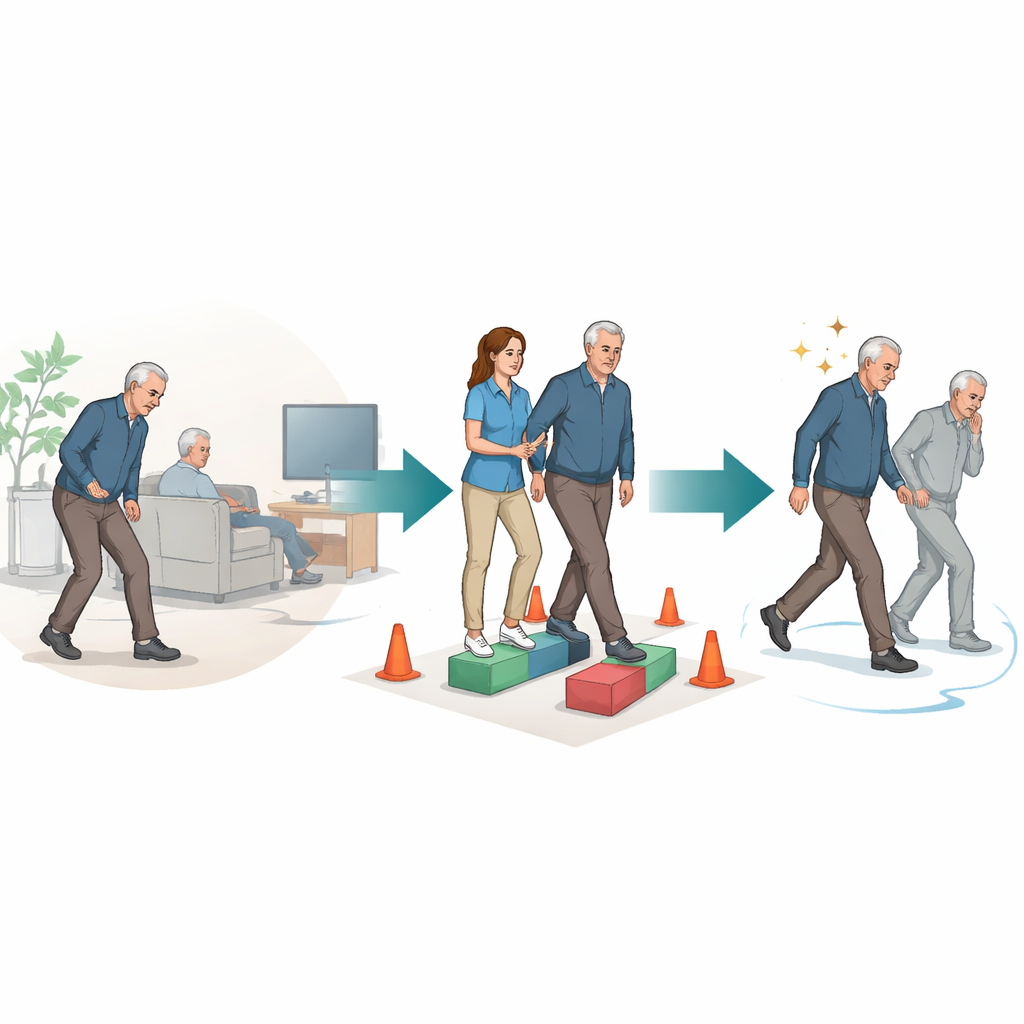
The team combined data from two Swedish clinical trials using the same program, called HiBalance, a demanding ten-week course of balance and walking exercises. Ninety-seven older adults with Parkinson’s took part in group classes twice a week and did extra practice at home. Exercises were carefully progressed—narrower stance, faster steps, turns, and dual tasks such as walking while carrying objects—to challenge the body’s balance systems. Before and after the program, participants completed tests of walking and balance, wore accelerometers for a week to track daily movement and sitting time, and rated their confidence in avoiding falls during everyday tasks.
Sedentary time as a hidden influencer
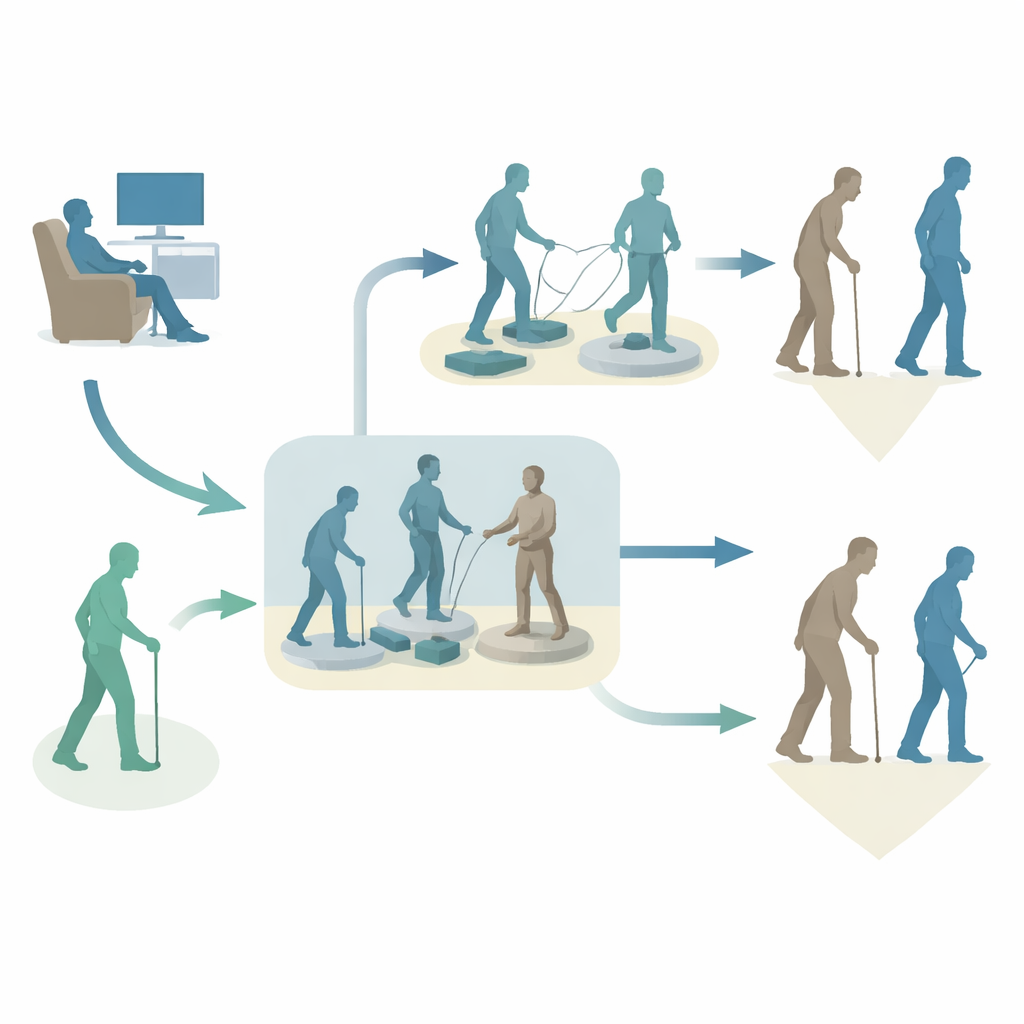
Overall, the program improved physical performance but did not change balance discordance on average. In other words, as a group, participants did not become better aligned in how they felt versus how they actually performed. However, when the researchers dug deeper, they found an important nuance. In a more clinically complex subgroup—people generally more affected by Parkinson’s and less confident at baseline—those who had spent more of their day sitting before training showed larger shifts toward better alignment between perceived and actual balance. In contrast, participants who were already less sedentary tended to show little or no change in this alignment, even though they completed the same exercises.
Why some people adjust more than others
The authors suggest that people who are very sedentary may rarely test their balance in everyday life. For them, the HiBalance sessions provided a strong and fresh stream of “mastery experiences”: repeated opportunities to attempt difficult tasks, receive feedback through success or near-loss of balance, and gradually adapt. This concentrated exposure may have helped them update their internal sense of what they can do. By contrast, individuals who were already on their feet more often may have entered the program with a more settled picture of their abilities, leaving less room for their self-perception to shift during the course.
What this means for everyday life
The study concludes that tough balance and walking exercises alone are not enough to reliably bring feelings of safety in line with actual balance for everyone with Parkinson’s disease. But for people who spend much of the day sitting, such training may be a powerful tool to “re-tune” their sense of balance and reduce risky mismatches. The authors argue that the most effective programs will likely combine physical challenges with psychological strategies, such as approaches drawn from cognitive behavioral therapy, to address fear of falling and build realistic confidence. Tailoring rehabilitation to how active or sedentary a person is at the start may help clinicians better target who stands to gain the most from intensive balance training.
Citation: Albrecht, F., Conklin, S.J., Hooyman, A. et al. Sedentary behavior modifies the effect of balance rehabilitation on balance discordance in Parkinson’s disease. npj Parkinsons Dis. 12, 98 (2026). https://doi.org/10.1038/s41531-026-01357-0
Keywords: Parkinson’s disease, balance confidence, sedentary behavior, fall risk, rehabilitation exercise