Clear Sky Science · en
Regional gene expression and brain atrophy in dementia with Lewy bodies: an imaging transcriptomics study
Why some brains shrink faster than others
Dementia with Lewy bodies is one of the most common forms of dementia in older adults. Yet even among people with the same diagnosis, some brain areas shrink more than others, and the reasons remain puzzling. This study asks a simple but powerful question: could the way our genes are normally switched on across different brain regions help explain why certain areas are hit harder in this disease?
Looking for clues in brain scans
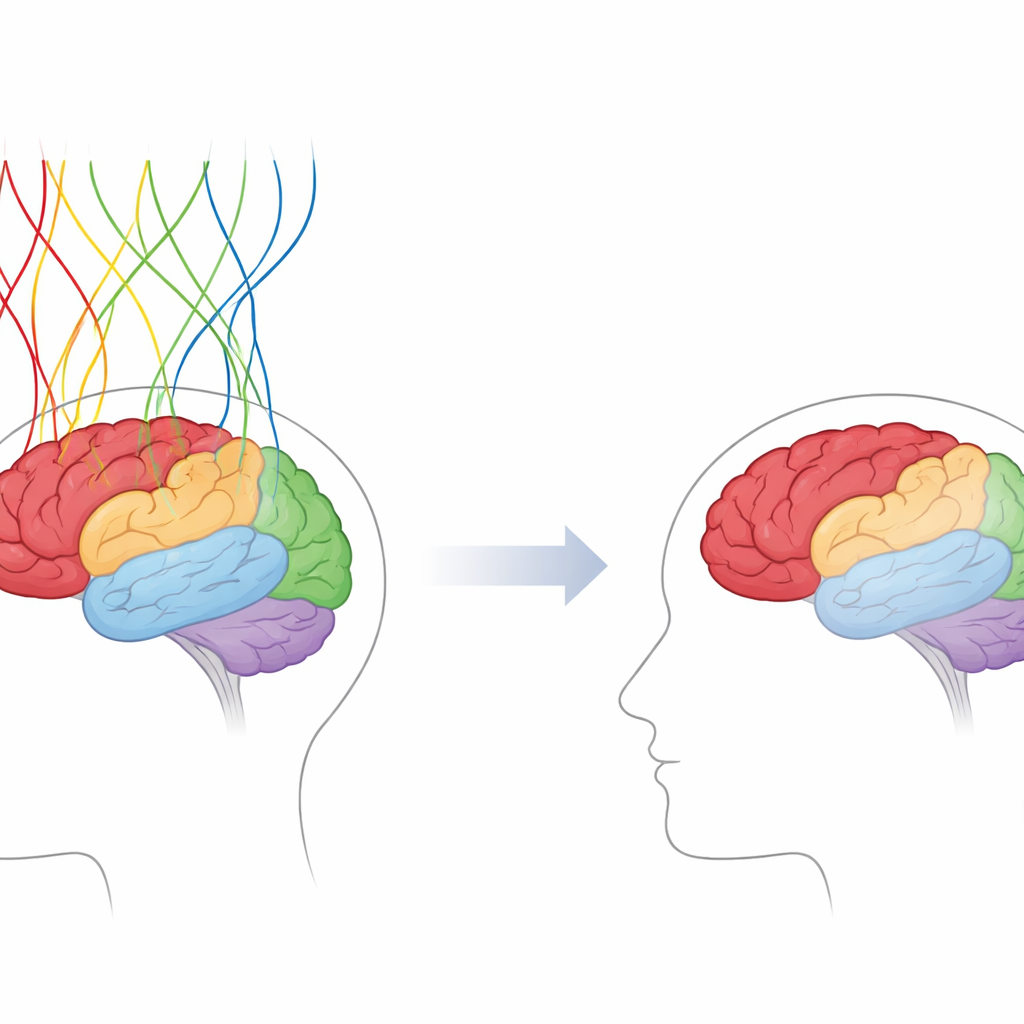
The researchers gathered brain scans from 164 people with dementia with Lewy bodies and 164 healthy peers of similar age and sex, drawn from several European centers and the Mayo Clinic in the United States. Using high‑resolution MRI, they measured the volume of 58 regions in the left side of the brain and brainstem. By comparing patients to healthy volunteers while accounting for age, sex, and head size, they created a map of where tissue loss, or atrophy, was most pronounced. The pattern was surprisingly widespread, involving frontal, temporal, parietal, and occipital lobes, as well as deep structures and the cerebellum.
Genes as a possible roadmap of weakness
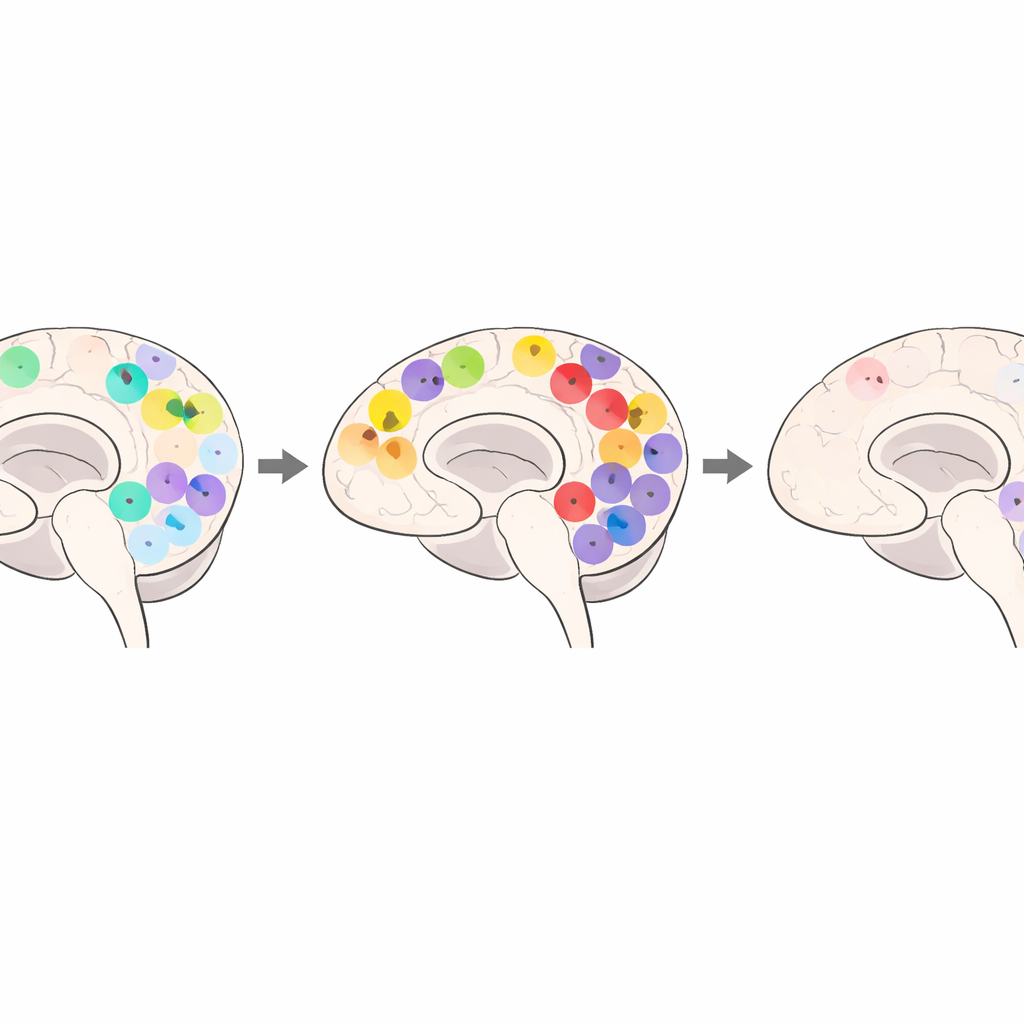
Next, the team turned to a public resource that catalogs how active thousands of genes are in different parts of the healthy human brain. From this atlas, they focused on twelve genes with strong ties to the key proteins involved in dementia with Lewy bodies: alpha‑synuclein, beta‑amyloid, and tau. Some of these genes help make or clear alpha‑synuclein, which clumps into toxic Lewy bodies; others influence the buildup and spread of beta‑amyloid plaques and tau tangles, hallmark features of Alzheimer’s disease that often appear alongside Lewy pathology. For each of the 58 brain regions, the researchers noted the typical activity level of each gene and asked whether regions that naturally express more of a given gene also tended to be more shrunken in patients.
Where gene patterns match brain loss
When they examined the full group of patients, only subtle links emerged: regions with higher normal activity of a few genes, including MAPT, PINK1, and PSEN2, tended to show more atrophy, but these associations were modest. A clearer picture appeared when they focused on the more uniform subgroup scanned at the Mayo Clinic. There, higher baseline activity of several genes tied to alpha‑synuclein (such as SNCA, GBA, PINK1, and TMEM175) and to Alzheimer‑related proteins (APP, BIN1, MAPT) reliably marked regions with greater tissue loss. In other words, brain areas that are, in healthy people, naturally more engaged in handling these disease‑related proteins seemed more vulnerable to damage when dementia with Lewy bodies develops.
Many genes, acting together
Because real biology rarely depends on a single gene, the researchers also used a machine‑learning approach to test how all twelve genes together predicted atrophy. For the entire patient sample, the combined model only weakly outperformed what would be expected by chance, although a few genes involved in clearing alpha‑synuclein and in amyloid buildup (PARK7, PINK1, PSEN2) stood out as especially informative. In the Mayo Clinic subgroup, however, the combined gene pattern explained more than a quarter of the differences in shrinkage from one region to another, with genes such as GBA, LRP1, and PINK1 contributing strongly. This supports the idea that regional vulnerability in dementia with Lewy bodies reflects the interplay of multiple genetic influences rather than any single culprit.
What this means for understanding the disease
Overall, the study suggests that the brain’s built‑in landscape of gene activity helps shape where dementia with Lewy bodies does the most damage. Regions that normally rely heavily on genes linked to alpha‑synuclein, beta‑amyloid, and tau appear to be at special risk of shrinking once these proteins start to misbehave. At the same time, the modest effect sizes show that genes are only part of the story; connections between regions and differences in cell types also matter. For patients and families, this work reinforces that dementia with Lewy bodies is not a single‑pathway illness but a convergence of several harmful processes. Mapping how gene activity, protein buildup, and brain structure interact may eventually guide more precise treatments, including future gene‑targeted therapies aimed at protecting the brain’s most vulnerable areas.
Citation: Habich, A., Baumann, J.M., Schwarz, C.G. et al. Regional gene expression and brain atrophy in dementia with Lewy bodies: an imaging transcriptomics study. npj Parkinsons Dis. 12, 96 (2026). https://doi.org/10.1038/s41531-026-01355-2
Keywords: dementia with Lewy bodies, brain atrophy, gene expression, alpha-synuclein, beta-amyloid and tau