Clear Sky Science · en
Metabolic and inflammatory biomarker trajectories after a cancer diagnosis and the risk of cardiovascular diseases
Why this study matters to cancer survivors
Cancer treatments have helped more people live longer, but many survivors later face heart and blood vessel problems. This study asks a practical question: can simple blood tests, already used in routine care, flag which cancer patients are most likely to develop cardiovascular disease so that doctors can watch them more closely and possibly prevent future heart trouble?
Following patients over decades
The researchers drew on a large Swedish health database called the AMORIS cohort, which has blood test results and medical records for more than 800,000 people followed for up to 35 years. They focused on over 750,000 adults who had no cancer or cardiovascular disease at the start of 1985. Some later developed cancer, while others did not. The team compared how often heart and vessel diseases occurred in these two groups and tracked patterns in common blood markers related to sugar use, fats, and inflammation.
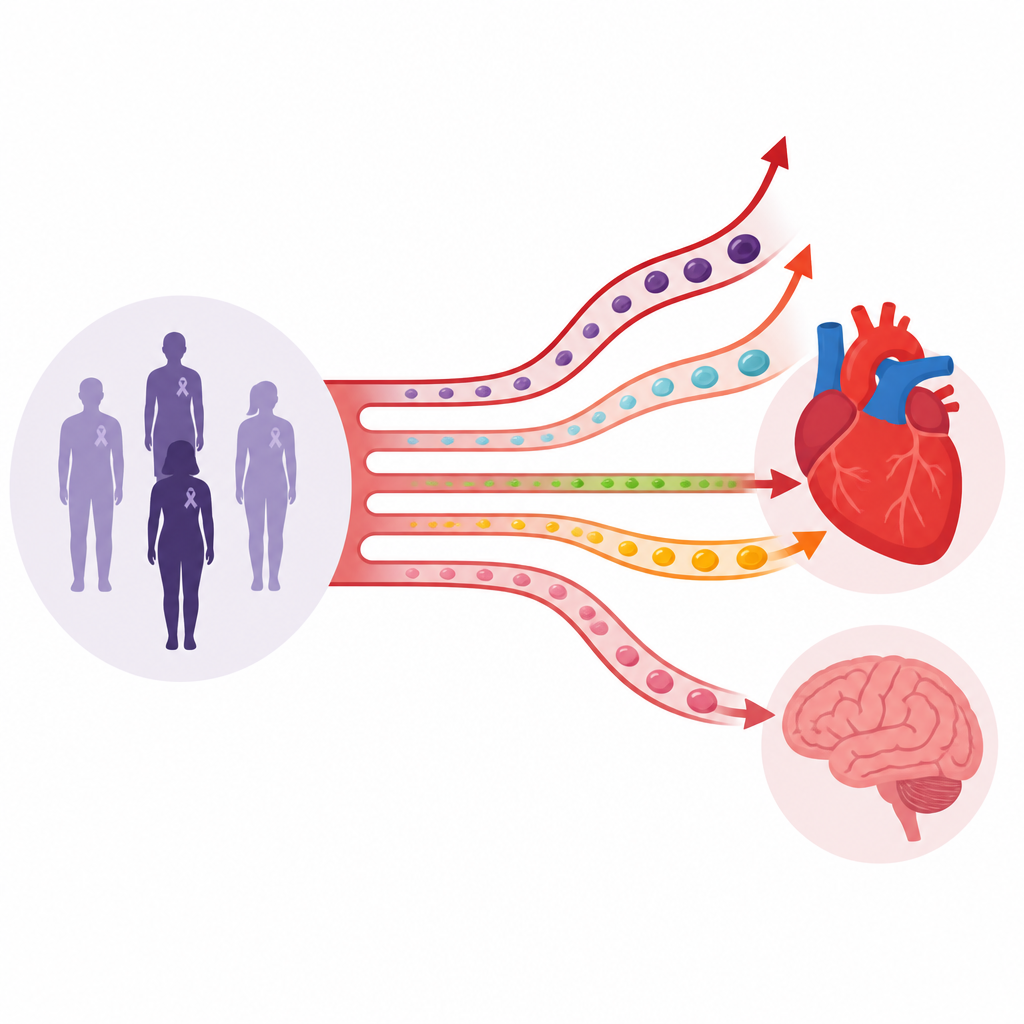
Cancer and the heart: a clear link
People who developed cancer were more likely to later have cardiovascular problems than those who remained cancer free. Overall, cancer patients had about a 60 percent higher rate of conditions such as arrhythmia, heart failure, heart attacks, and strokes. The excess risk was especially high among those diagnosed with cancer in childhood or adolescence and among patients with cancers of the lungs, blood, and digestive system. These patterns held even after accounting for age, sex, income, education, and certain other illnesses.
Blood markers that change after cancer
Next, the investigators compared long term changes in 16 routine blood markers between cancer patients and similar people without cancer. Over the first 12 years after a cancer diagnosis, patients tended to have higher levels of glucose and fructosamine, which reflect blood sugar, as well as higher triglycerides, certain fat carrying proteins, C reactive protein, haptoglobin, and uric acid, all of which can signal altered metabolism or inflammation. At the same time, they had lower levels of “good” HDL cholesterol and a protective protein called apolipoprotein A1. These differences suggest that cancer and its treatments may leave a lasting imprint on how the body handles sugar, fat, and inflammation.
Distinct paths in blood tests and later heart risk
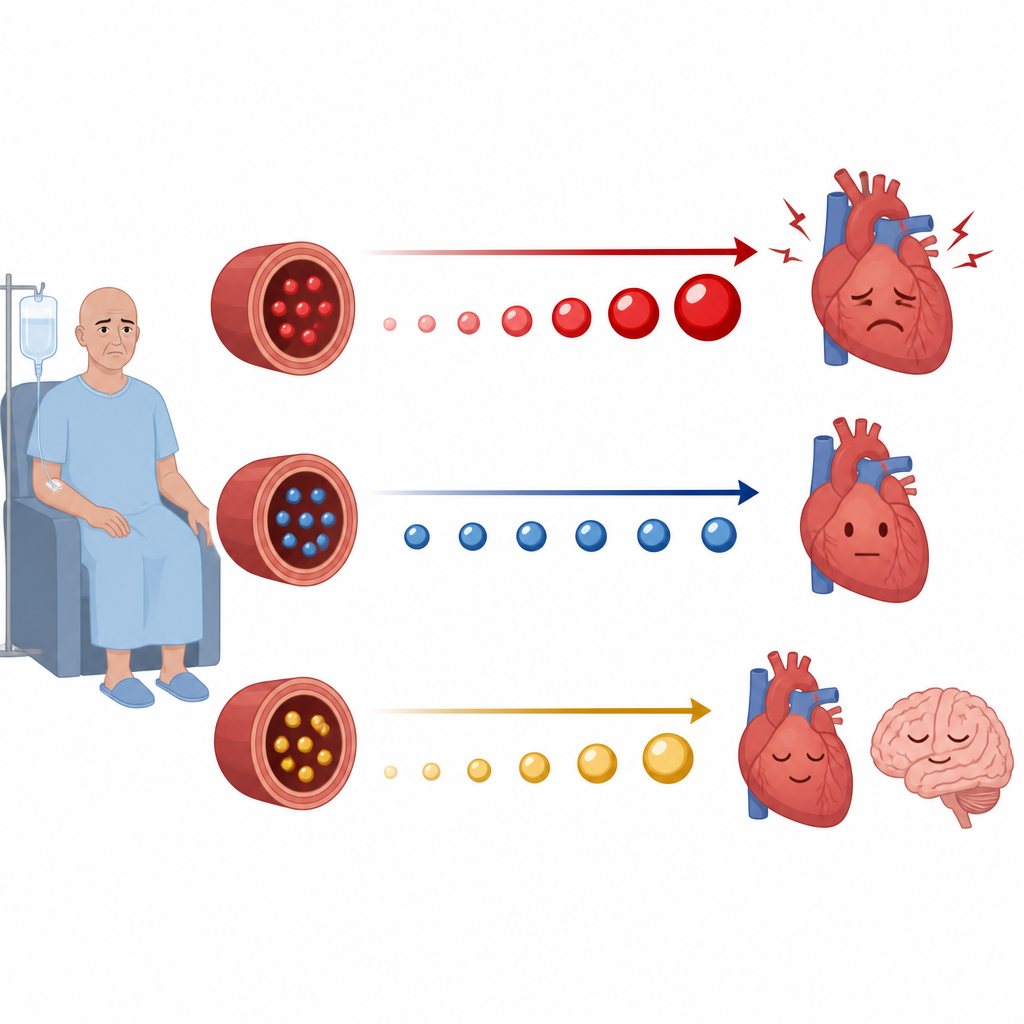
To see whether specific long term patterns in these markers matter for heart health, the team zoomed in on more than 2,200 cancer patients who had at least three blood measurements after diagnosis. Using statistical methods to group people with similar trends, they discovered distinct “trajectories” for 11 markers. For glucose, one group had low and stable levels, while another started high and rose over time. Those in the high rising group had roughly double the risk of later cardiovascular disease compared with the low stable group. For albumin, a protein often linked to nutrition and overall health, patients with persistently low levels faced higher heart risk than those with moderate levels, even though all values lay within the usual normal range. Uric acid showed the opposite pattern: patients whose levels began low and rose modestly had a lower cardiovascular risk than those whose levels stayed high.
What this means for future care
The study does not dictate new treatment rules, but it points to a simple idea: repeated, routine blood tests may help flag cancer survivors whose hearts need extra attention. In particular, patterns of rising blood sugar, unusually low albumin, or high stable uric acid after cancer treatment were linked to greater chances of later cardiovascular disease. With further research to clarify the biology and confirm these results in other groups, doctors may be able to use these familiar tests to better tailor heart monitoring and prevention strategies for people living long after a cancer diagnosis.
Citation: Park, H., Wang, Q., Liu, Q. et al. Metabolic and inflammatory biomarker trajectories after a cancer diagnosis and the risk of cardiovascular diseases. Nat Commun 17, 4643 (2026). https://doi.org/10.1038/s41467-026-73530-1
Keywords: cancer survivorship, cardiovascular disease, blood biomarkers, metabolism and inflammation, glucose levels