Clear Sky Science · en
Maternal age and pregnancy-related cardiovascular complications
Why heart health in pregnancy matters
Pregnancy is often framed as a time of joy, but it also places extra strain on the heart and blood vessels. In recent years, heart-related problems have become a leading cause of death during pregnancy and shortly afterward. At the same time, more people are having children in their 30s and 40s. This study asks a simple but important question for expectant parents and clinicians alike: does getting older make the heart-specific risks of pregnancy itself worse, or does pregnancy simply magnify whatever heart risk a person already has?
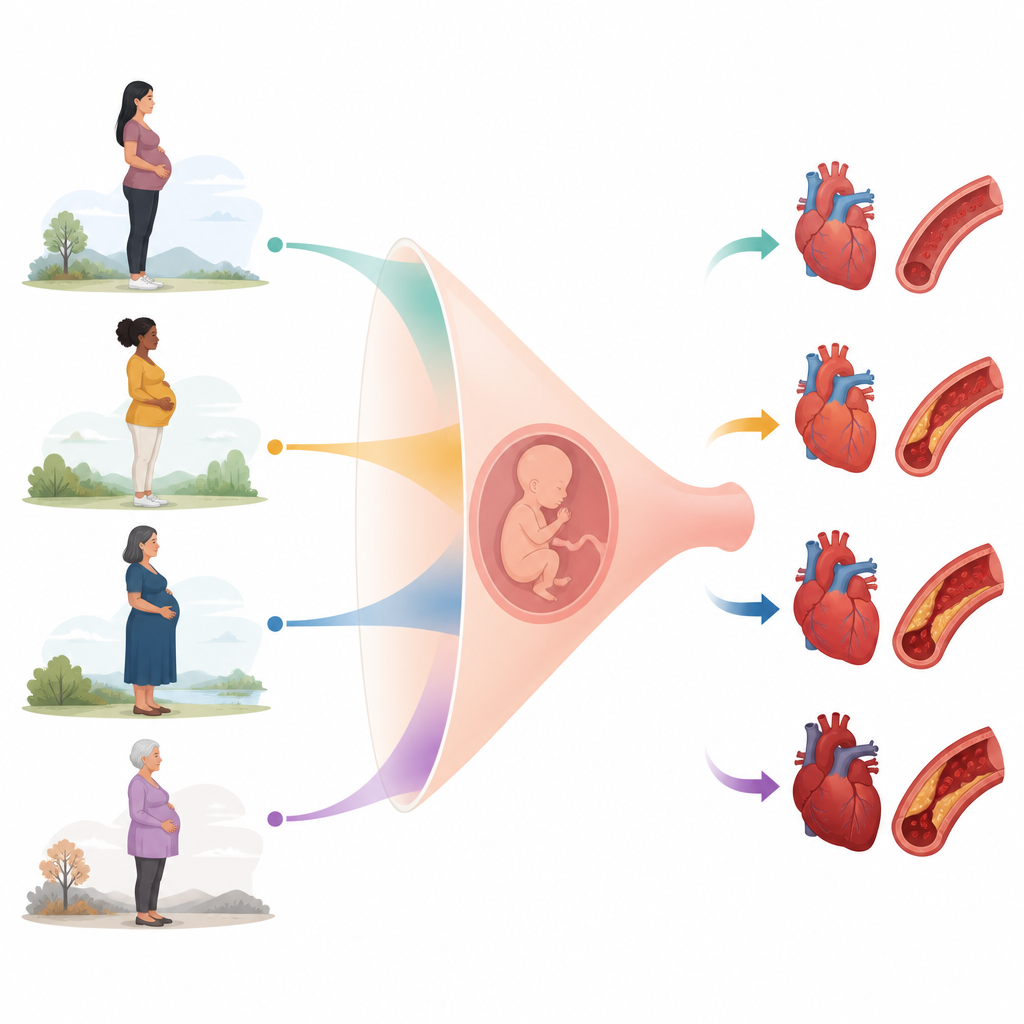
What the researchers set out to learn
The investigators focused on serious heart and circulation problems, such as blood clots, heart attacks, strokes, heart failure, and life-threatening heart rhythm issues. They wanted to separate two things that usually get mixed together: a person’s underlying chance of having such an event, which naturally rises with age, and the extra risk that comes specifically from being pregnant and in the postpartum period. Earlier work tended to put people into broad age buckets and compare different groups of patients to one another, which can blur important patterns and allow hidden differences between groups to creep into the results.
How they followed millions of pregnancies
To tackle this problem, the team used hospital data from 11 U.S. states, covering about 80 million residents. They identified more than 2.7 million people who had a first recorded delivery between 2016 and 2020. Instead of comparing different people, they compared each patient to themselves at two different times. One time window covered late pregnancy through three months after delivery, when the body’s circulation system is under the most strain. The other window was a matching nine-month period exactly one year later, when the patient was not pregnant. This design let the researchers treat each person as their own control, helping strip away many fixed differences such as genetics or childhood environment.
What happened to the heart during pregnancy
Among all pregnancies studied, about 14,000 people had a major heart or circulation event during pregnancy, postpartum, or the comparison period. The rate during pregnancy and postpartum was about seven times higher than during the nonpregnant period. In other words, for the same person, the months around childbirth carried roughly a sevenfold bump in risk compared with a similar span a year later. This sevenfold relative increase was remarkably steady from ages 12 through 45 and did not climb further with age. However, the absolute number of extra events did rise with age: there were about 3 additional events per 1000 pregnancies up to age 31, and this climbed to around 10 extra events per 1000 pregnancies by age 44.
Who was most affected and what kinds of events occurred
The pattern held across many types of heart and circulation problems and across different racial and ethnic groups, regions, insurance types, and income levels. The most frequent problems were blood clots in veins, weakening of the heart muscle, and heart failure. People with other medical conditions, particularly high blood pressure and asthma, faced much higher absolute risks, reaching about 20 extra events per 1000 pregnancies by age 45. Black patients were over-represented among those with serious events, underscoring persistent inequities in health care and social conditions, even though aging itself did not seem to explain these differences. Roughly half of all maternal deaths in the study were linked to these cardiovascular events, and about one in ten survivors required rehabilitation, nursing facility care, or home health services afterward.
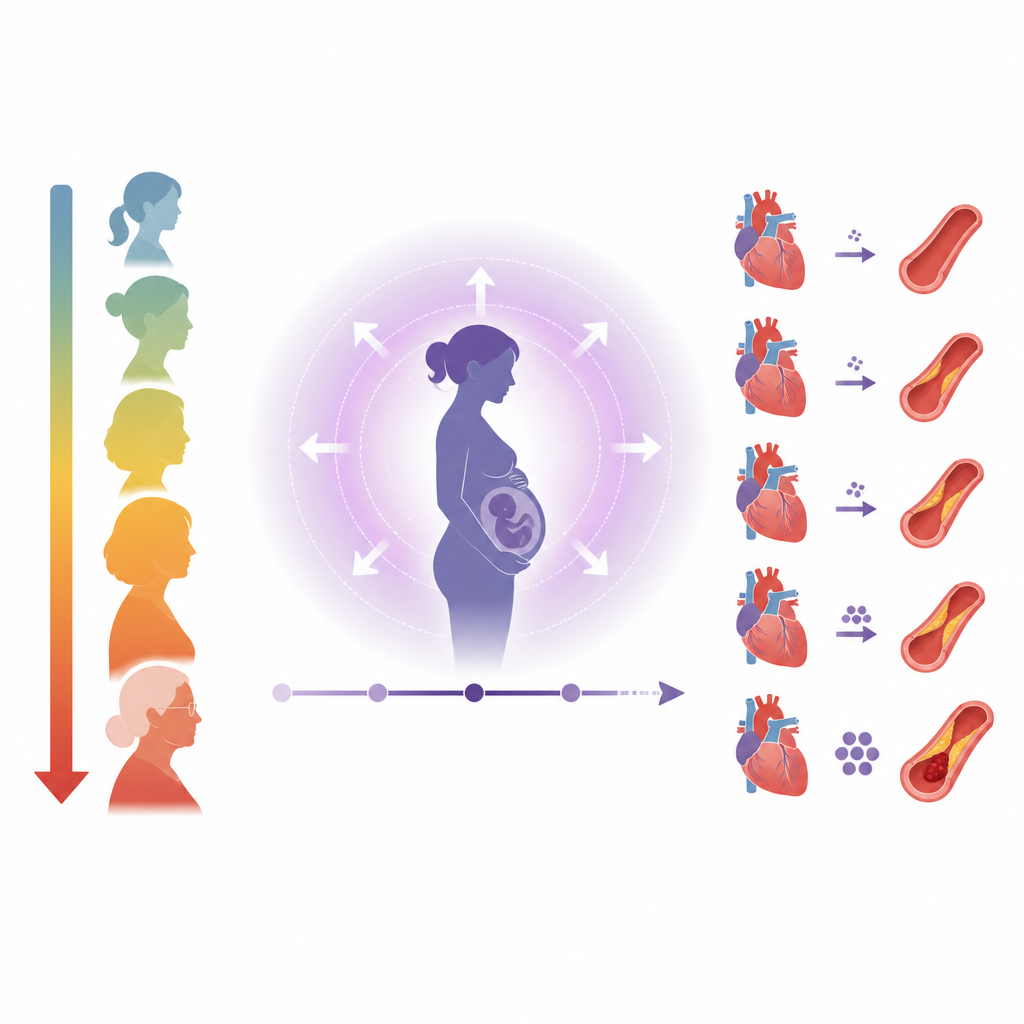
What this means for patients and clinicians
Taken together, the findings suggest that pregnancy acts like a universal amplifier of existing cardiovascular risk, rather than creating much larger pregnancy-specific dangers for older patients than for younger ones. As people age and accumulate more underlying heart and circulation risks, the same sevenfold pregnancy-related boost produces a greater absolute number of complications. This points to two key messages for a general audience: first, even younger pregnant patients can experience serious heart problems, though they remain uncommon; and second, improving heart health before pregnancy and carefully monitoring those with existing conditions, especially after age 31, may be crucial for reducing the toll of cardiovascular complications around childbirth.
Citation: Kamel, H., Riley, L.E., Son, M. et al. Maternal age and pregnancy-related cardiovascular complications. Nat Commun 17, 4066 (2026). https://doi.org/10.1038/s41467-026-72580-9
Keywords: pregnancy heart risk, maternal age, cardiovascular complications, postpartum health, venous thromboembolism