Clear Sky Science · en
Humans with function-disrupting variants in the myostatin gene (MSTN) have increased skeletal muscle mass and strength, and less adiposity
Why some people naturally build more muscle
Most of us know someone who seems to put on muscle easily and stay relatively lean without trying very hard. This study looks at one powerful biological brake on muscle growth, a protein called myostatin, and asks a simple question: what happens over a lifetime if that brake is partially released in real people? By sifting through genetic and imaging data from more than a million volunteers, the researchers show how rare natural changes in the myostatin gene shape muscle, fat, strength, and health, offering a preview of what long-term myostatin-blocking drugs might do.
The body’s muscle brake
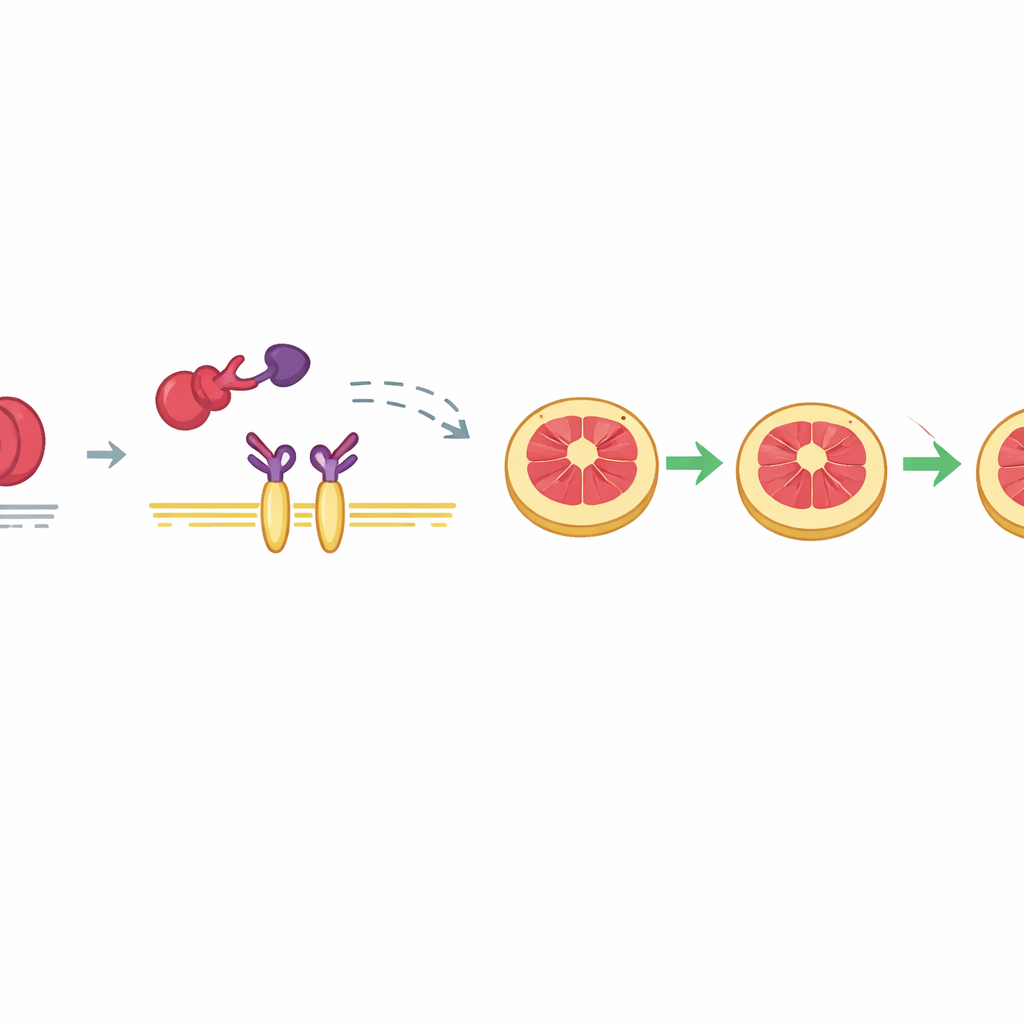
Myostatin is a signal made by muscle that tells muscle cells not to grow too large. In animals, removing this signal entirely creates the famous “double-muscled” cattle and heavily muscled mice and dogs. Drug companies have already tested antibodies that block myostatin or its partner receptors, and these treatments modestly increase muscle in adults. But drugs are usually given for a few months or years. To understand the effects of dialing down this pathway from birth through old age, the team searched for people who carry rare gene variants predicted to weaken or disrupt myostatin.
Reading muscle and fat from genes and scans
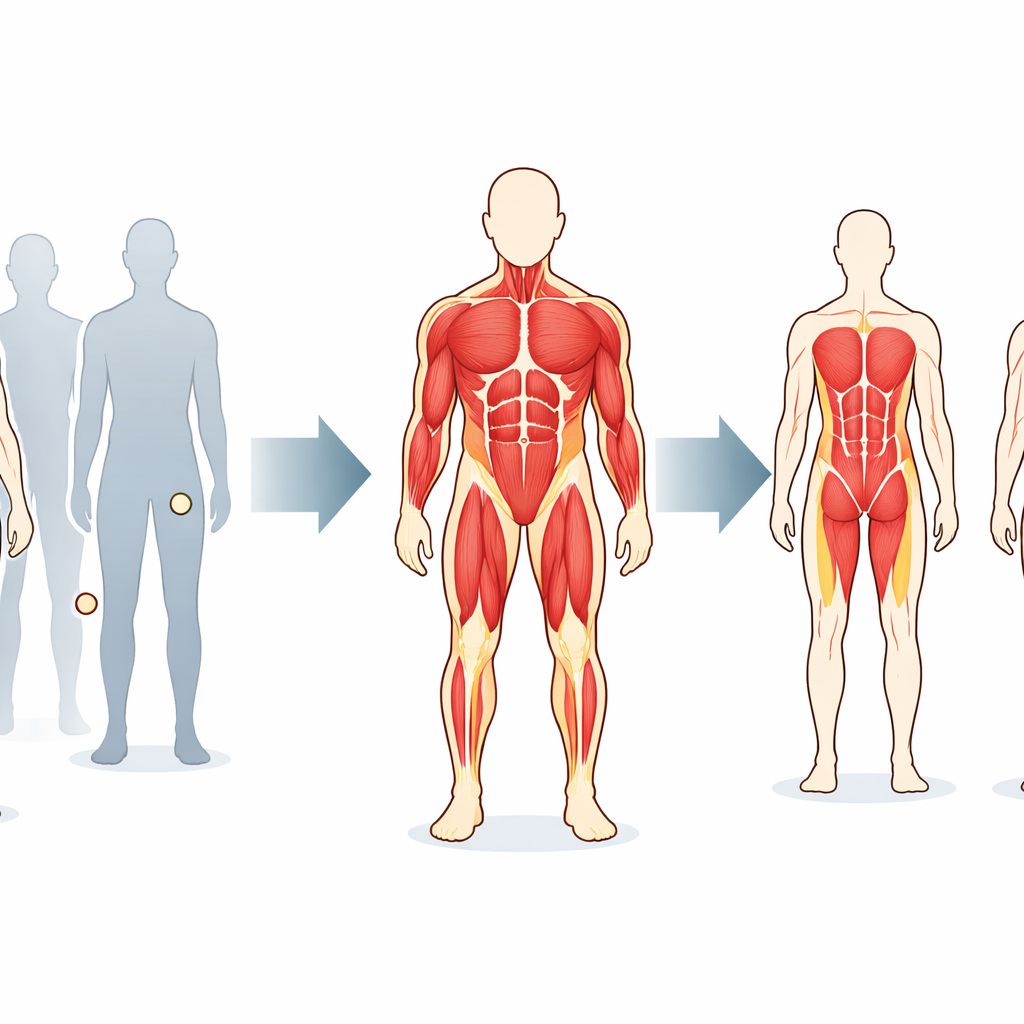
Using exome sequencing data from 1.1 million people across 11 large cohorts, the researchers found over 13,000 carriers of rare changes in the myostatin gene. About 200 of these variants were predicted to strongly damage the protein. They then linked each person’s genetic profile to multiple measures of body composition: inexpensive bioimpedance scales that estimate fat and lean mass; blood markers such as creatinine that reflect muscle bulk; grip strength tests; and, in nearly 78,000 participants from the UK Biobank imaging study, detailed whole-body MRI scans. Deep learning algorithms automatically segmented these scans to calculate the volume of different muscle groups and fat depots throughout the body.
Stronger, more muscular, and leaner bodies
Across the population, people carrying function-disrupting myostatin variants stood out in several ways. They did not weigh more overall, but they had less body fat and more fat-free mass, with MRI confirming that the extra lean tissue was predominantly muscle rather than bone or organs. In some muscle groups, such as the gluteal muscles, muscle volume was more than 10% higher in carriers than expected for their age, sex, and height. Hand grip strength and blood markers of muscle mass were also higher. At the same time, total fat volume and fat infiltration into muscle were lower, indicating both bigger and “cleaner” muscles. These effects appeared in both men and women, and a small number of people who carried two copies of a disruptive variant showed even more pronounced increases in muscle and drops in body fat.
Health risks and possible side benefits
Because any future myostatin-blocking therapy would likely be used long-term, the team also searched for signs of harm in carriers of disruptive variants. They saw no evidence that reduced myostatin function increased the risk of heart failure, thickened heart muscle, infertility, or polycystic ovary syndrome. In fact, carriers showed slightly thinner heart walls and hints of better metabolic health, such as lower waist-to-hip ratio adjusted for body weight and a trend toward lower long-term blood sugar. While these signals were modest, they suggest that building more muscle while trimming fat through myostatin reduction may be metabolically favorable rather than harmful.
What this means for future treatments
To a non-specialist, the key message is that people born with a partially “turned down” myostatin gene end up a bit more muscular, stronger, and leaner, without obvious penalties in heart or reproductive health. The changes are not as dramatic as in laboratory animals, but they are meaningful: several extra percent of muscle mass, less fat, and likely better physical function in later life. These findings support the idea that carefully blocking myostatin, especially in older or obese individuals at risk of losing muscle during weight loss, could help preserve strength while also improving body fat patterns. Drugs will never perfectly copy lifelong genetics, and stronger blockade could have different effects, but nature’s own experiments in these individuals provide cautiously optimistic evidence that long-term myostatin inhibition can shift the body toward more muscle and less fat in a generally safe way.
Citation: Herman, J.L., Dornbos, P., Landheer, K. et al. Humans with function-disrupting variants in the myostatin gene (MSTN) have increased skeletal muscle mass and strength, and less adiposity. Nat Commun 17, 3891 (2026). https://doi.org/10.1038/s41467-026-70422-2
Keywords: myostatin, skeletal muscle, body composition, genetic variants, obesity treatment