Clear Sky Science · en
Integrative functional genomics analysis identifies pleiotropic genes for vascular diseases
Why our blood vessels matter for everyday health
Heart attacks, strokes, high blood pressure, and bulges in the main body artery are leading causes of illness and death worldwide. We know that lifestyle plays an important role, but family history also matters: some people are simply more prone to these conditions because of the genes they inherit. This study set out to uncover which genes are truly responsible for raising the risk of several major vascular diseases at once, and how they act on the cells that build and maintain our blood vessels.
From DNA clues to working gene lists
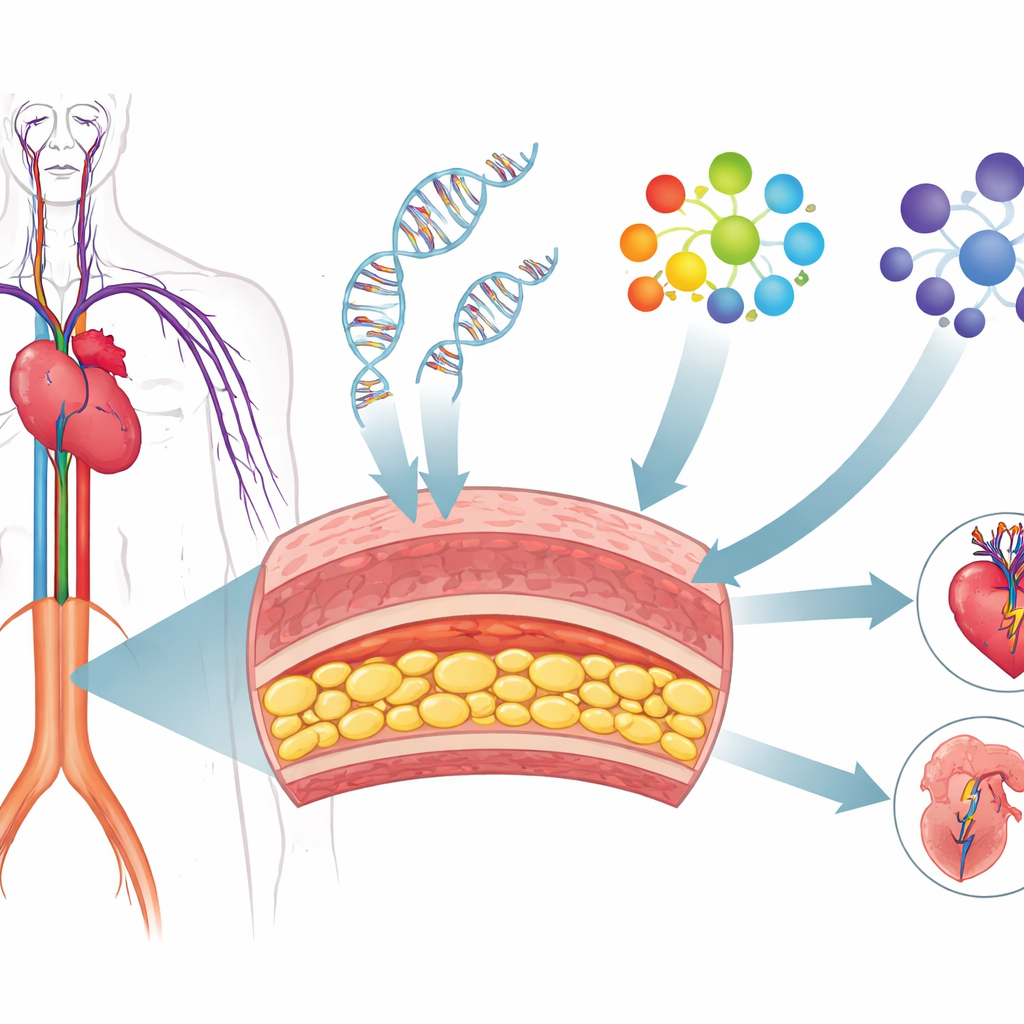
Over the past decade, huge genetic surveys have flagged hundreds of spots in our DNA that are linked to coronary artery disease, high blood pressure, stroke, and abdominal aortic aneurysm. Most of these DNA changes do not fall within the parts of genes that code for proteins; instead, they sit in regulatory regions that influence when and where genes are switched on. That makes it difficult to know which specific genes are to blame and how they act. The researchers tackled this problem by combining these large genetic maps with detailed measurements of gene activity in a key cell type: vascular smooth muscle cells, the contractile cells that form the middle layer of artery walls and help control vessel tone and structure.
Zooming in on blood vessel muscle cells
To see how inherited variants affect these cells, the team built a large "biobank" of smooth muscle cells taken from the umbilical arteries of 1,486 newborns. For each sample, they read the DNA sequence across the genome and measured the activity of thousands of genes. This allowed them to pinpoint variants that consistently raise or lower the activity of nearby genes in these cells. They then asked which of these variants overlapped with known risk regions for vascular diseases, using statistical tools that test whether the same DNA change is likely driving both altered gene activity and disease risk. This integrative approach highlighted more than 130 likely causal genes for coronary artery disease, dozens for high blood pressure and aneurysm, and a smaller set for stroke.
Shared genes across several diseases
Many of the genes flagged were already suspected players in blood vessel biology, lending confidence to the method, but others were entirely new. By comparing gene lists across diseases, the researchers found 18 "pleiotropic" genes—genes that appear to influence more than one vascular disease. These shared genes hint that common defects in smooth muscle behavior, such as excessive growth, movement, or loss of their usual contractile identity, help drive very different conditions from chest pain to aneurysm. The team also checked drug databases and found that several of the likely causal genes, including some of the shared ones, encode proteins that are already targeted by existing medicines or look chemically tractable, opening the door to repurposing or new drug development.
Following one key gene from cells to animals
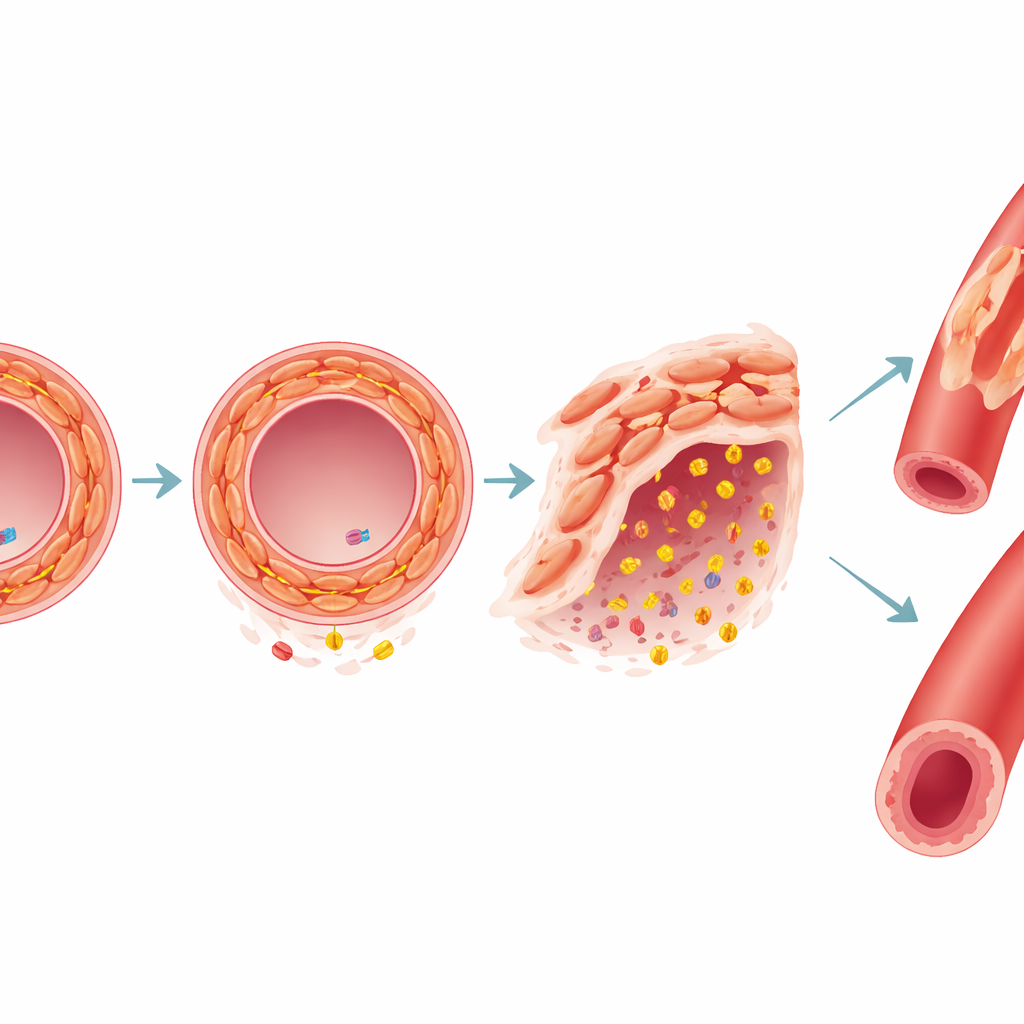
One of the most striking shared genes was FES, which carries variants linked to both coronary artery disease and high blood pressure. In smooth muscle cells grown in the lab, turning down FES made the cells more mobile and shifted them away from a calm, contractile state toward a more aggressive, remodeling state. It also boosted production of enzymes that chew up the supporting matrix around cells, altering the vessel wall. In mice bred to lack the related Fes gene, the animals developed larger fatty plaques in the aorta and had higher blood pressure than their littermates, with an impaired ability of their vessels to relax. Human data from the UK Biobank further showed that rare, damaging changes in FES were associated with increased blood pressure, higher odds of hypertension, and roughly double the risk of heart attack and angina.
What this means for future treatments
Taken together, the work presents a more complete map linking specific genes, especially in smooth muscle cells, to several major vascular diseases. It shows that many risk variants act by subtly rewiring signaling pathways inside these cells, nudging them toward behaviors that thicken vessel walls, encourage plaque growth, or stiffen arteries. By singling out pleiotropic genes like FES and highlighting which ones are potentially druggable, the study offers a focused set of targets that might, in time, help prevent or treat heart attacks, strokes, high blood pressure, and aneurysms together rather than one disease at a time.
Citation: Solomon, C.U., McVey, D.G., Andreadi, C. et al. Integrative functional genomics analysis identifies pleiotropic genes for vascular diseases. Nat Commun 17, 3376 (2026). https://doi.org/10.1038/s41467-026-69273-8
Keywords: vascular genetics, smooth muscle cells, coronary artery disease, hypertension, atherosclerosis