Clear Sky Science · en
Body mass index and activities of daily living impairment: systematic review and meta-analysis
Why body size and daily tasks matter
Getting dressed, washing, or walking across a room seem like simple routines, but for many adults they become hard work. This study looks at how body size, measured by body mass index (BMI), relates to problems with these basic activities of daily living, called ADLs. By pulling together results from many countries and thousands of adults, the researchers ask a practical question that concerns almost everyone: does being underweight, overweight, or obese make it more likely that everyday tasks will become difficult?
What the researchers set out to explore
The team carried out a systematic review and meta-analysis, a method that gathers and combines data from many previous studies following strict rules. They searched six major medical databases up to August 2024 and screened more than twenty five thousand records. In the end, 132 studies met their criteria, most of them involving adults aged 65 and older, but some including people as young as 18. All of these studies looked at BMI alongside people’s ability to carry out basic daily tasks such as bathing, dressing, feeding themselves, and moving around indoors. 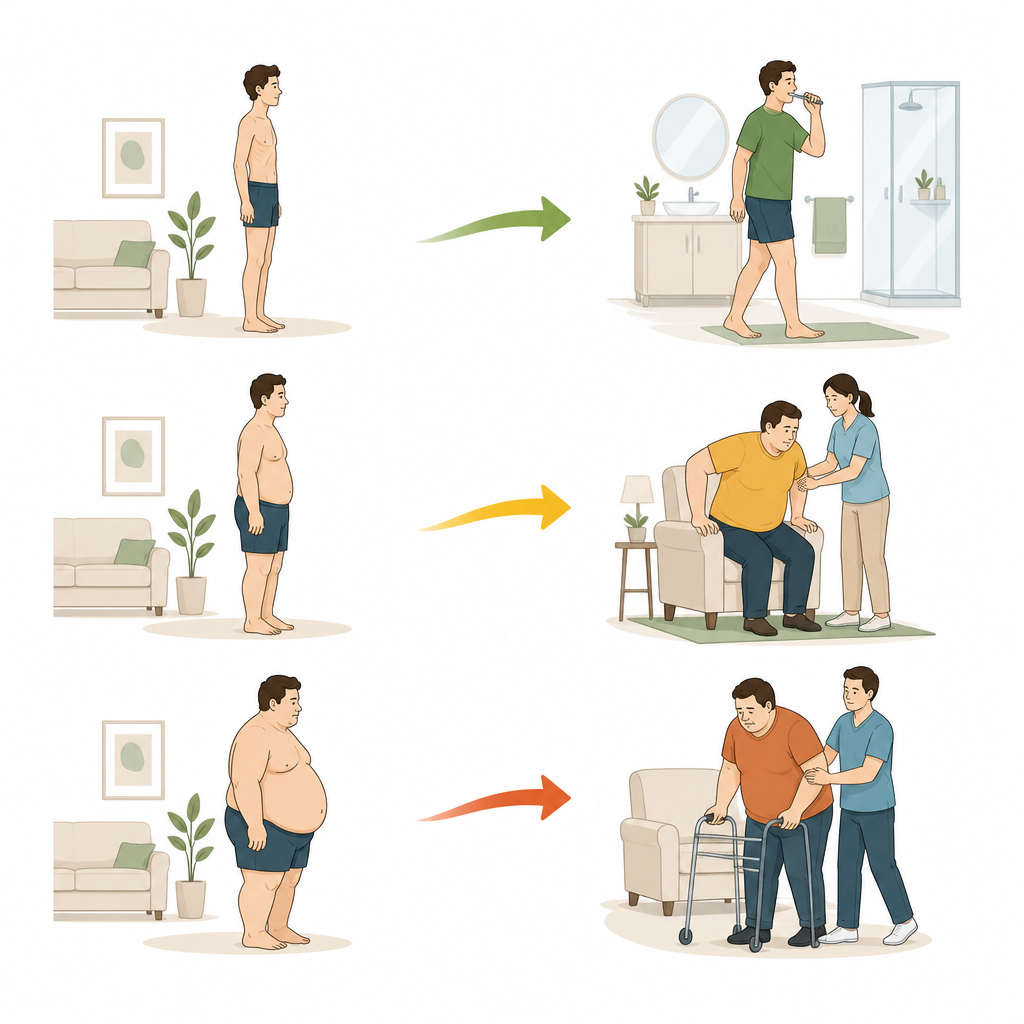
How body size and daily independence were measured
Researchers in the original studies used several checklists to judge whether people had trouble with everyday activities. Some relied on well known scales like the Katz Index or the Barthel Index, while others used national care insurance records or custom question lists. BMI categories were also not identical from study to study, although the review focused on common groups: underweight, normal weight, overweight, and obese. Because of these differences in tools and cutoffs, the authors carefully separated results by BMI group, study design, and type of ADL measurement, and used statistical methods that account for variation between studies.
What the combined results revealed
Across the studies that could be pooled, obesity stood out as clearly linked with a higher chance of ADL problems. Compared with adults in the normal BMI range, people with obesity were more likely to report or develop difficulties with daily tasks, both in one time snapshots and in studies that followed people for years. Overweight adults showed a smaller but still noticeable rise in risk, especially when researchers tracked them over time. 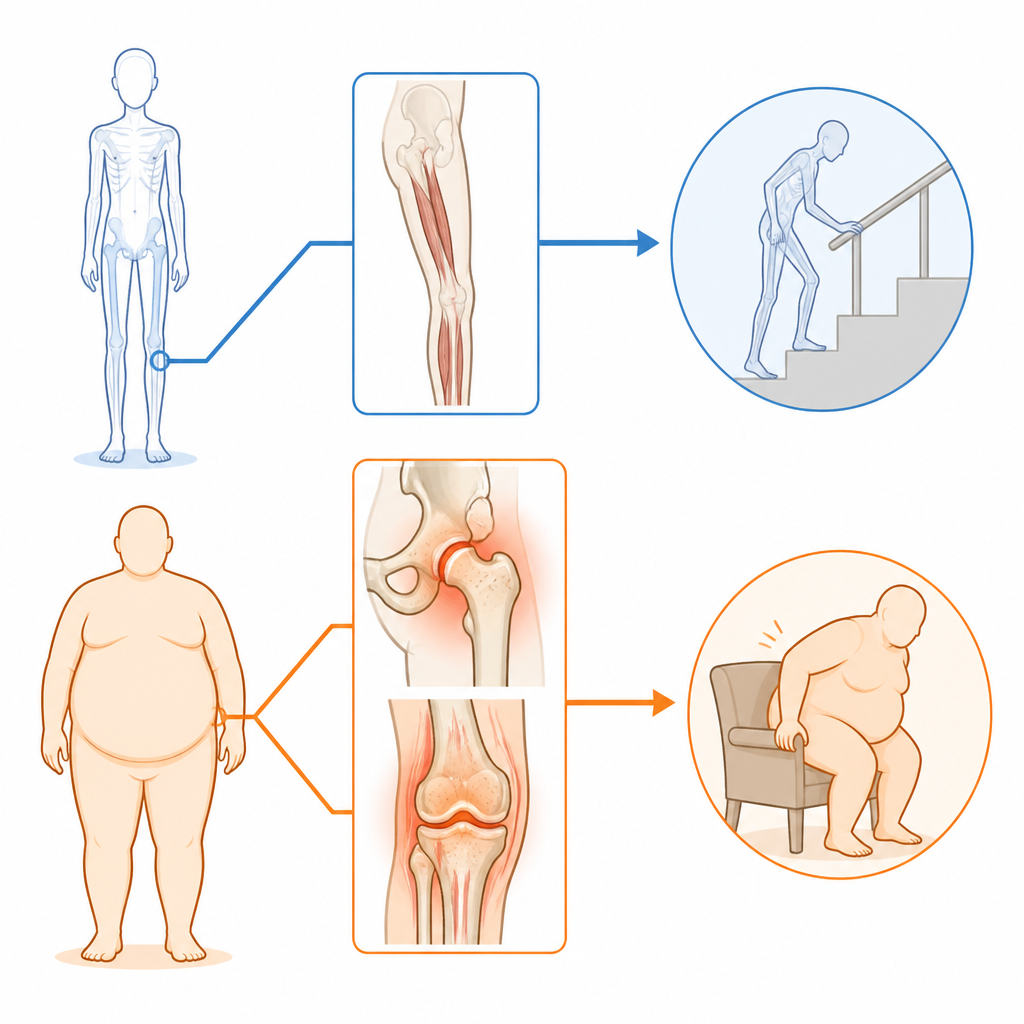
Why being too thin is also a concern
The findings did not only point toward higher body weight. Adults who were underweight also faced a raised risk of losing independence, particularly when a broad mix of ADL tests was considered or when long term care records were used. The authors note that very low body weight is often tied to loss of muscle and strength, which can make standing up, walking, or managing self care harder. On the other side, carrying excess weight can strain hips and knees and contribute to joint disease, also limiting movement. Together, these patterns suggest that both extremes of body size can undermine physical reserves needed for daily life.
What this means for everyday health
In simple terms, the study finds that adults who are either very thin or have a high BMI are more likely to struggle with basic daily activities as they age. While BMI is an imperfect measure of body fat and muscle, the overall picture supports efforts to avoid both undernutrition and obesity, and to maintain strength and mobility across adulthood. For individuals, communities, and health systems, the message is that protecting independence in daily life is not only about living longer, but also about staying in a healthy weight range and preserving muscle and joint health throughout the lifespan.
Citation: Mamun, M.R., Nuamah, H.G., Hong, YJ. et al. Body mass index and activities of daily living impairment: systematic review and meta-analysis. Eur J Clin Nutr 80, 449–457 (2026). https://doi.org/10.1038/s41430-026-01707-4
Keywords: body mass index, activities of daily living, disability risk, older adults, functional independence