Clear Sky Science · en
Misregulated alternative splicing in endometriosis: a role for aberrant mRNA variants in endometriotic cell growth
Why hidden gene messages matter for women’s health
Endometriosis affects roughly one in ten women of reproductive age, yet it often takes years to diagnose and can cause debilitating pain and infertility. This study looks beneath the surface of the disease to a subtle layer of genetic control called RNA splicing—how cells edit their gene messages before turning them into proteins. By uncovering how this editing process goes awry in endometriosis, the researchers reveal a hidden driver of lesion growth and point toward new ways to detect and possibly treat the disease in the future.
When tissue grows where it shouldn’t
In endometriosis, tissue that resembles the uterine lining appears on the ovaries, pelvic wall, and other nearby organs. These misplaced patches, or lesions, respond to hormones, spark inflammation, and can invade surrounding tissue, leading to chronic pain and fertility problems. But not everyone with menstrual backflow into the pelvis develops endometriosis, which suggests that extra molecular changes inside cells help determine who gets the disease and how severe it becomes. Scientists have already cataloged many genes whose overall activity is altered in endometriotic lesions. What has been missing is a closer look at how those gene messages are edited inside cells before they are used.
Editing gene messages: a crucial extra step
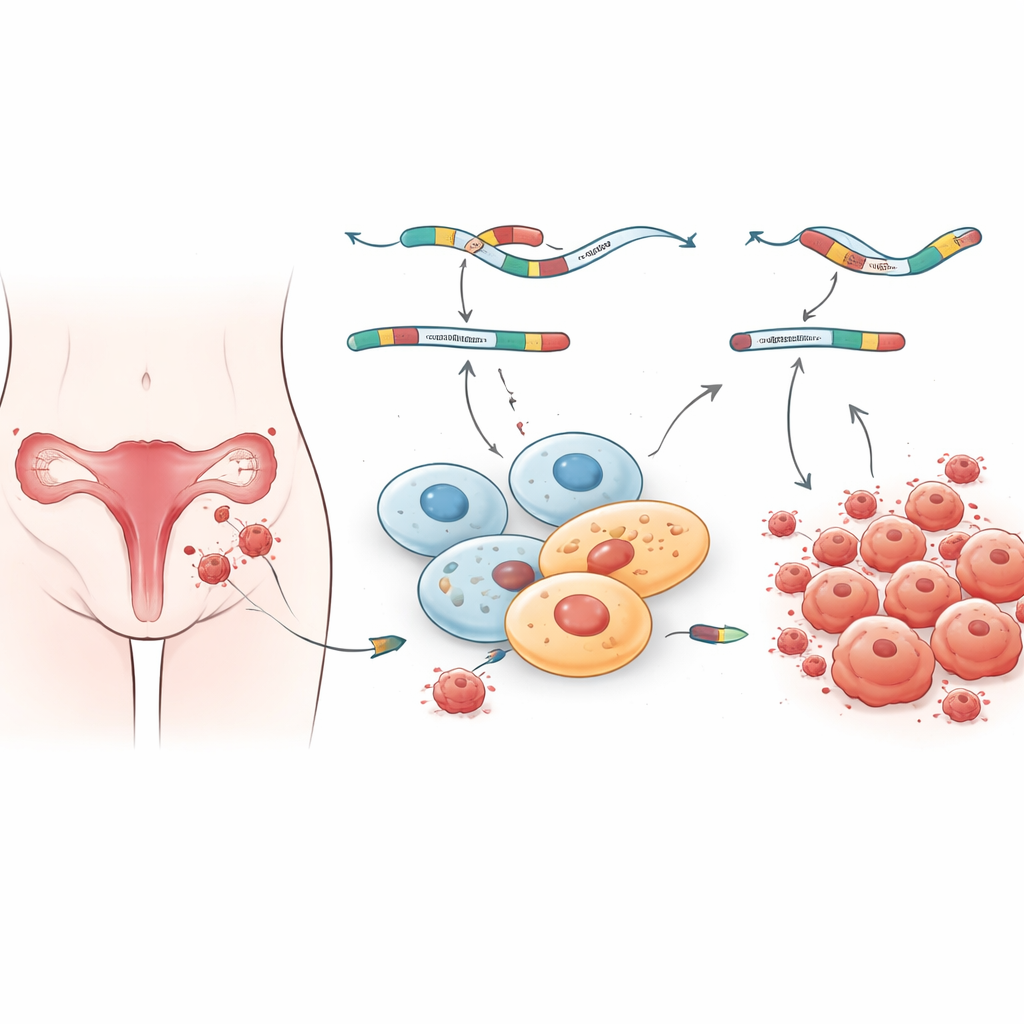
Genes are first copied into long RNA strands that must be cut and rejoined—a process known as splicing—before they can serve as instructions for building proteins. Cells can splice the same gene in different ways, creating multiple versions of a protein with distinct functions. This flexibility lets tissues fine-tune their behavior, but it also creates opportunities for error. The authors analyzed RNA sequencing data from women with ovarian and peritoneal endometriosis and from women without the disease. Using powerful computational tools, they examined five major types of splicing events and found hundreds of differences in how gene messages are edited in lesions compared with healthy uterine lining. Two types of changes stood out: skipped exons, in which an important segment is left out, and retained introns, in which extra material that should be removed is mistakenly kept in the message.
Distinct molecular fingerprints in different lesion sites
The team then asked what kinds of genes were most affected by these altered editing patterns. Their enrichment analysis showed that both overall gene activity and abnormal splicing in lesions clustered in pathways related to protein binding, cell signaling, and the structural scaffold surrounding cells. These pathways help control how cells sense their environment, stick to each other, and respond to hormones and inflammatory signals—all processes known to be disrupted in endometriosis. Interestingly, ovarian and peritoneal lesions shared some splicing changes but also showed many unique ones, suggesting that lesions in different locations carry distinct molecular fingerprints. This may help explain why patients can have very different symptom patterns and responses to treatment, even when the disease appears similar under the microscope.
Two protective genes that help hold growth in check
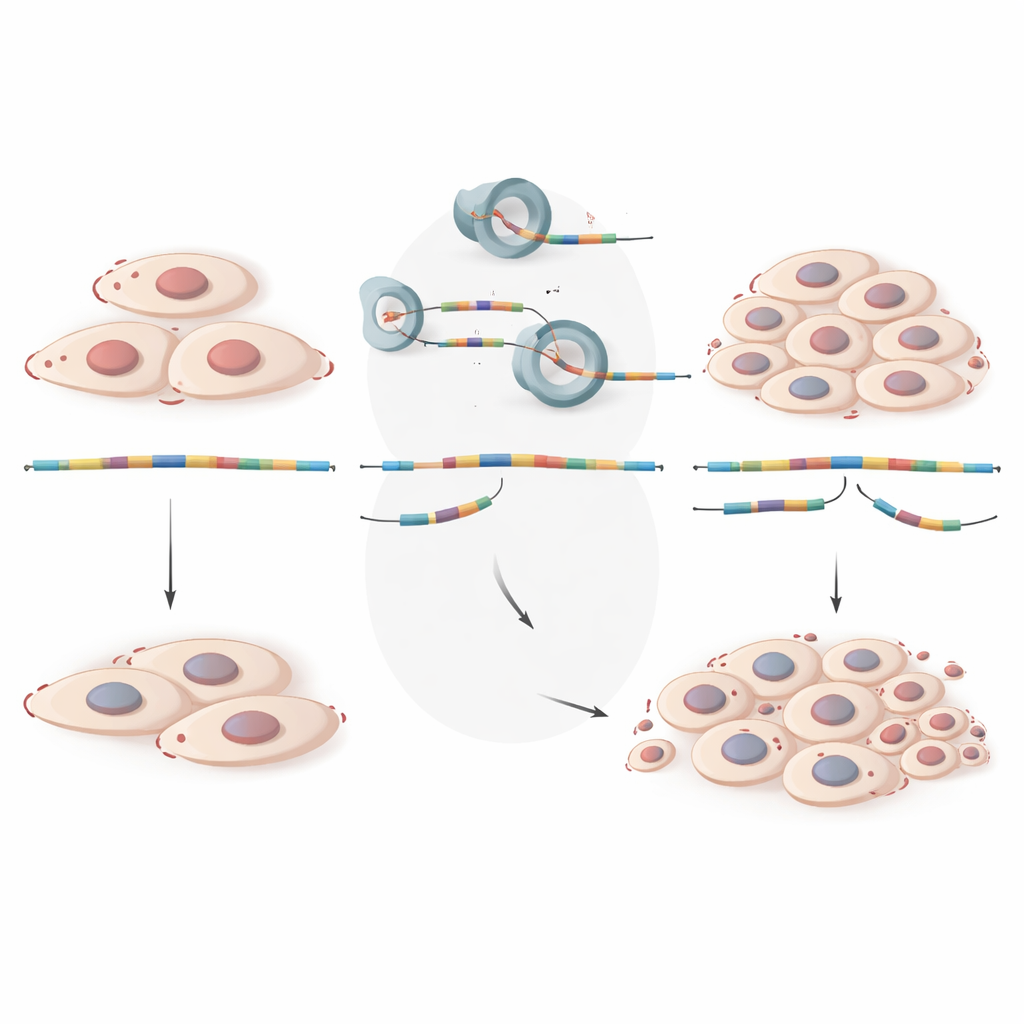
To move from patterns to mechanisms, the researchers zoomed in on two genes, GALNT7 and ZNF28, whose RNA messages showed consistent loss of key segments in lesions. Using laboratory-grown human endometrial epithelial cells, they experimentally reduced the levels of these genes or removed the specific exons that were skipped in patients. In both cases, the cells began to multiply faster and formed more colonies over time, mimicking the uncontrolled growth seen in endometriotic tissue. Additional single-cell data showed that in healthy tissue, these genes are especially active in epithelial cells—the very cells that make up the glands in endometrial lesions—but their expression drops sharply in lesions. Together, these results suggest that properly spliced GALNT7 and ZNF28 normally act as brakes on cell growth, and that faulty editing of their RNA weakens those brakes.
From mis-edited messages to growing lesions
Seen through a non-technical lens, this work shows that endometriosis is not just about tissue growing in the wrong place; it is also about cells using distorted genetic instructions. When the cell’s editing machinery misprocesses certain RNA messages, growth-controlling genes like GALNT7 and ZNF28 are effectively turned down, allowing cells in lesions to multiply more readily. By mapping this hidden layer of misregulated splicing, the study highlights new molecular signatures that could eventually aid earlier diagnosis and identify women at higher risk. It also raises the possibility that future therapies might work not only by blocking hormones or removing tissue surgically, but by correcting or bypassing faulty RNA editing to restore the cell’s natural growth controls.
Citation: Davuluri, V.N.G., Dias, M., Llinas, R. et al. Misregulated alternative splicing in endometriosis: a role for aberrant mRNA variants in endometriotic cell growth. Cell Death Discov. 12, 149 (2026). https://doi.org/10.1038/s41420-026-03015-z
Keywords: endometriosis, alternative splicing, RNA regulation, cell proliferation, women’s health