Clear Sky Science · en
Clinical performance of low-shrinkage giomer compared to nanohybrid resin composite in proximal restorations after one year: a randomized clinical trial
Why the material in your fillings matters
When a dentist repairs a cavity in a back tooth, they are not just plugging a hole—they are rebuilding the way your teeth fit and chew together, often for many years. This study looked at two modern tooth-colored filling materials used for side cavities between back teeth and asked a simple, patient-focused question: after a year in the mouth, do they both hold up equally well in everyday use?
Two modern options for fixing back teeth
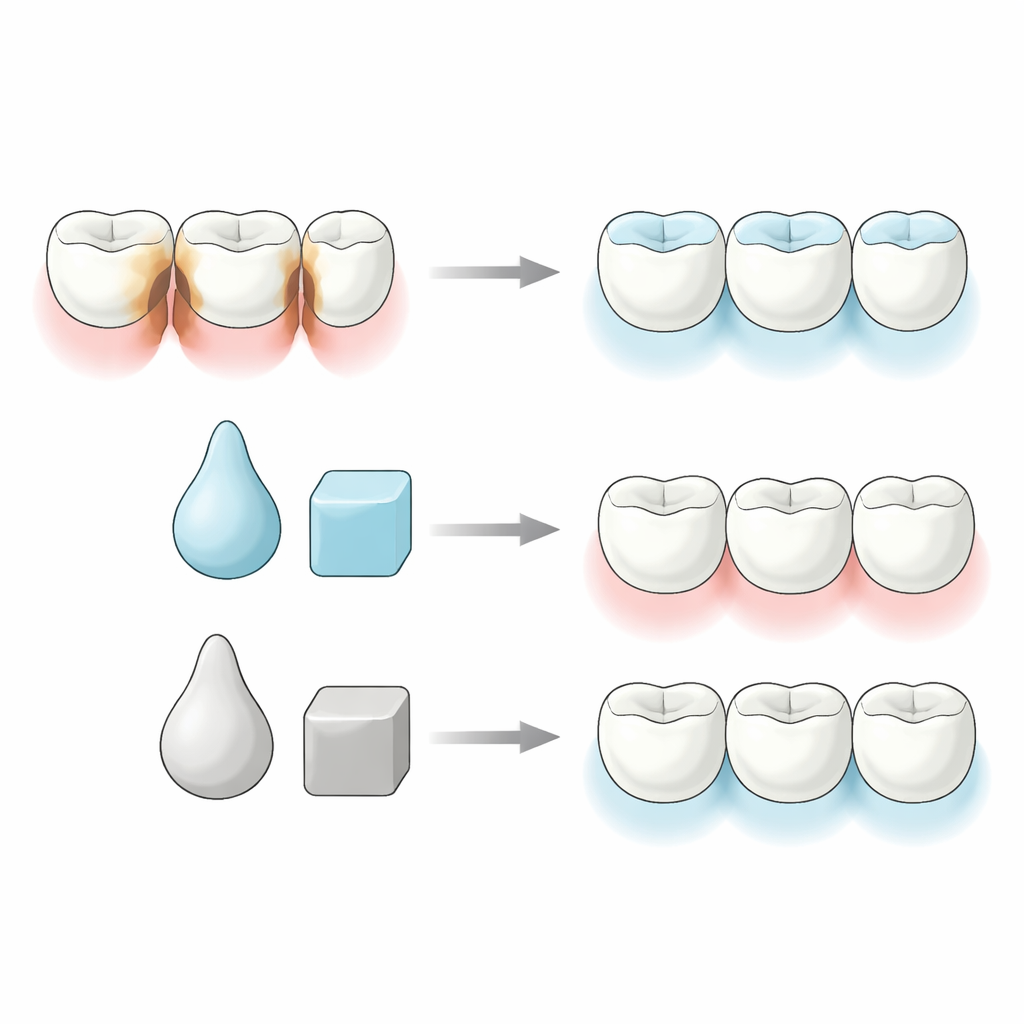
Today’s white fillings are very different from the silver fillings of the past. They are designed to match tooth color, feel smooth, and withstand the heavy forces of chewing. But they can still shrink slightly as they harden, which may open tiny gaps and allow staining or new decay to form. One of the materials tested, a nanohybrid composite, is a well-established “standard” white filling. The other, called a low-shrinkage giomer, is a newer option that combines features of traditional tooth-colored fillings with glass-ionomer technology to release helpful minerals like fluoride, which may support the tooth and nearby enamel.
How the study was carried out
Fifty young adult patients with side cavities in their back teeth took part in a carefully controlled clinical trial at Cairo University. Each patient received either the nanohybrid composite or the low-shrinkage giomer to restore a moderately sized cavity between molars or premolars. Dentists followed strict, standardized steps for cleaning the decay, isolating the tooth, placing the filling in layers, and polishing the final surface. Independent examiners who did not know which material was used checked the fillings right after placement, then again after six months and one year, using an international rating system that grades function, comfort, and appearance.
Judging everyday performance in the mouth
The team evaluated how well the fillings stayed in place, how smoothly they blended with the tooth, whether they matched the tooth color, and whether patients experienced sensitivity or signs of new decay at the edges. After one year, both materials performed very well. All of the giomer fillings were still in place and judged clinically successful. In the nanohybrid group, just one filling failed and had to be replaced, giving a success rate of 96 percent. Minor issues, such as slight loss of surface shine, faint edge staining, or small chips, were seen occasionally—more so in the nanohybrid group—but these changes were rated as still “good” and did not require repair.
Measuring how much the fillings wear down
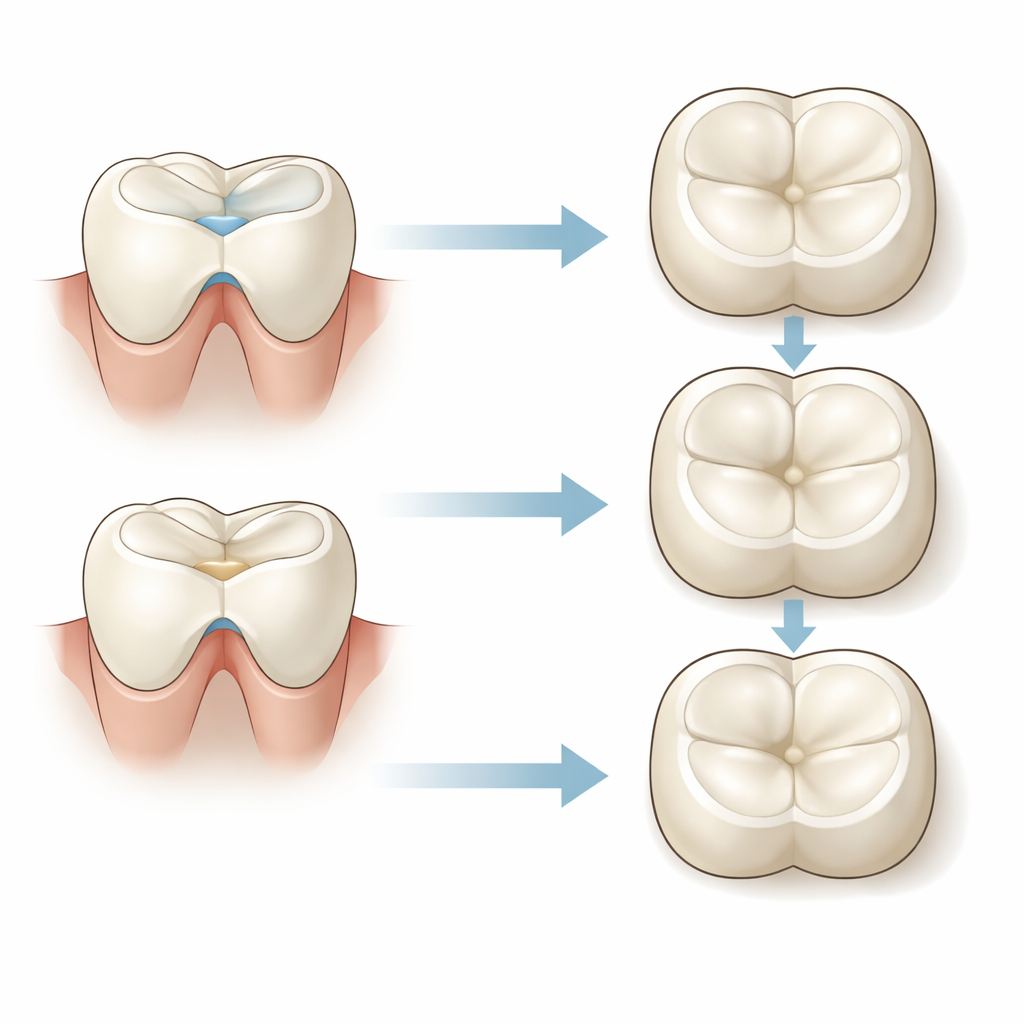
Because back teeth do the hard work of chewing, the researchers also focused on how much the fillings wore down over time. Instead of relying on simple visual checks, they used digital 3D scans of the teeth taken at the start and again after a year. Special software overlaid these scans and measured tiny height changes across the chewing surface. Both materials lost only a very small amount of height—about four hundredths of a millimeter on average—an amount comparable to the normal wear seen in natural enamel. The difference in wear between the two materials was so small that it was not considered meaningful.
What this means for patients and dentists
From a patient’s point of view, the take‑home message is reassuring: both the low‑shrinkage giomer and the nanohybrid composite proved to be reliable, natural‑looking options for repairing side cavities in back teeth over the first year. The newer giomer material did not outperform the standard composite in a dramatic way, but it matched it in strength, comfort, and wear, while also offering the potential benefits of fluoride and other helpful ions. According to widely accepted standards from the American Dental Association, both materials are considered clinically acceptable. Longer and larger studies are still needed, but for now, this trial suggests that dentists and patients can confidently choose either material for these common types of fillings.
Citation: AbdelHafez, M.I., Shaalan, O. & Hamza, H. Clinical performance of low-shrinkage giomer compared to nanohybrid resin composite in proximal restorations after one year: a randomized clinical trial. BDJ Open 12, 36 (2026). https://doi.org/10.1038/s41405-026-00423-2
Keywords: tooth-colored fillings, dental composites, giomer, occlusal wear, posterior restorations