Clear Sky Science · en
Impact of nosocomial infections on neurodevelopmental outcome and rehospitalization rate in preterm infants with birth weight below 1500 g (NINO study)
Why infections in tiny newborns matter
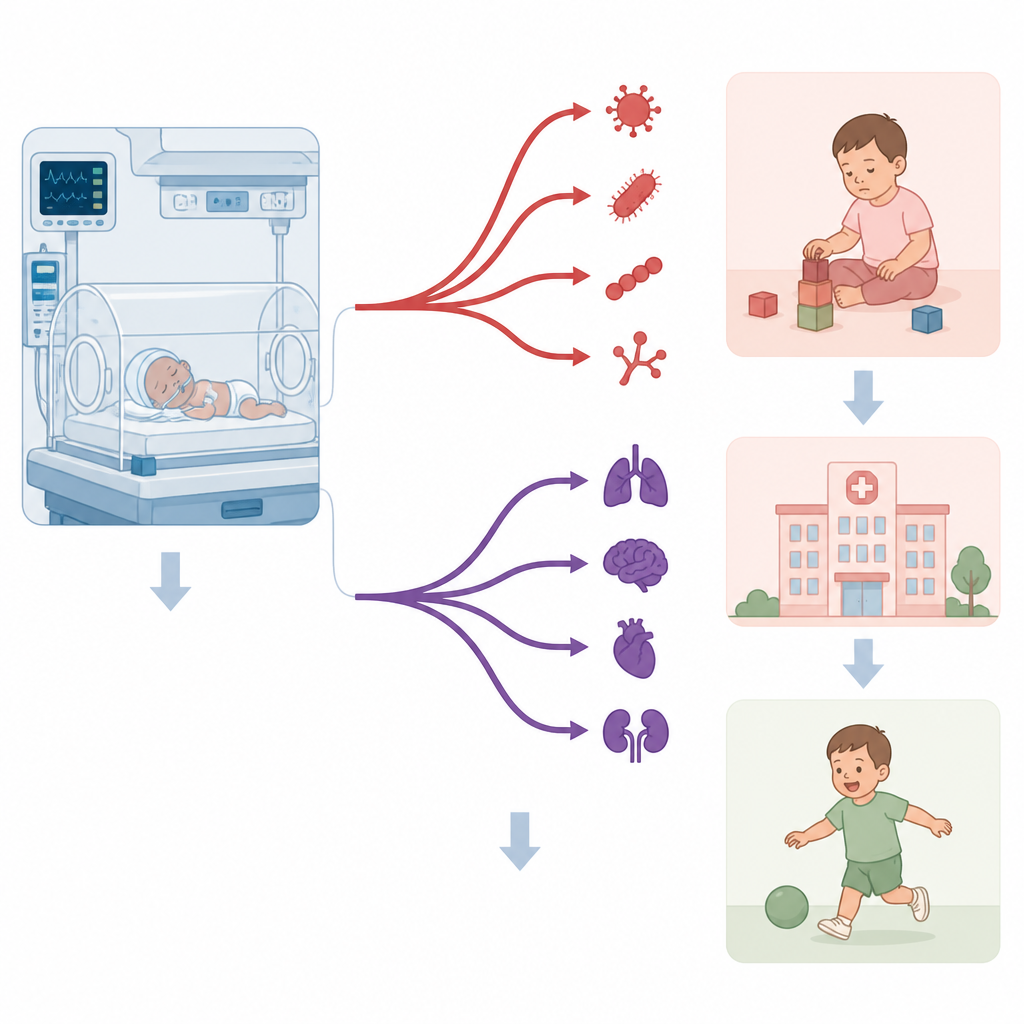
When babies are born far too early and weighing less than a bag of sugar, every infection is frightening for families and doctors. These fragile infants often spend weeks in intensive care, where germs can spread despite careful hygiene. Parents naturally fear that such hospital-acquired infections might leave lasting marks on their child’s brain or lead to repeated illnesses later in childhood. This study followed a large group of very small preterm babies to find out whether those worries are justified, and which early health problems really shape later development.
Who the babies were and how they were studied
The research team looked back at medical records from one major hospital in Austria. They included 620 preterm infants born between 2010 and 2018 who all weighed less than 1500 grams at birth and survived to age two. The babies’ time in the neonatal intensive care unit was carefully documented, including whether they developed bacterial blood infections or viral gut or breathing infections while still in the hospital. At two years of age, corrected for prematurity, the children’s movement, thinking skills, vision, and hearing were evaluated with standardized tests and clinical exams. The researchers also tracked every hospital readmission caused by infections during the first two years of life.
What counted as infection and what counted as delay
Not every feverish spell was treated the same. A late-onset bacterial infection needed both clear signs of illness and laboratory changes, and often a positive blood culture, plus at least a week of antibiotics. Viral infections were defined as gut or breathing illnesses that started during the first hospital stay and were confirmed with swabs or stool tests when babies had symptoms. Developmental problems at age two were grouped under the term neurodevelopmental impairment. This included clear movement disorders such as cerebral palsy, very low scores on thinking tests, and serious hearing or vision loss that required aids. The team could therefore compare children with and without hospital-acquired infections in a structured way.
What the study found about brain development
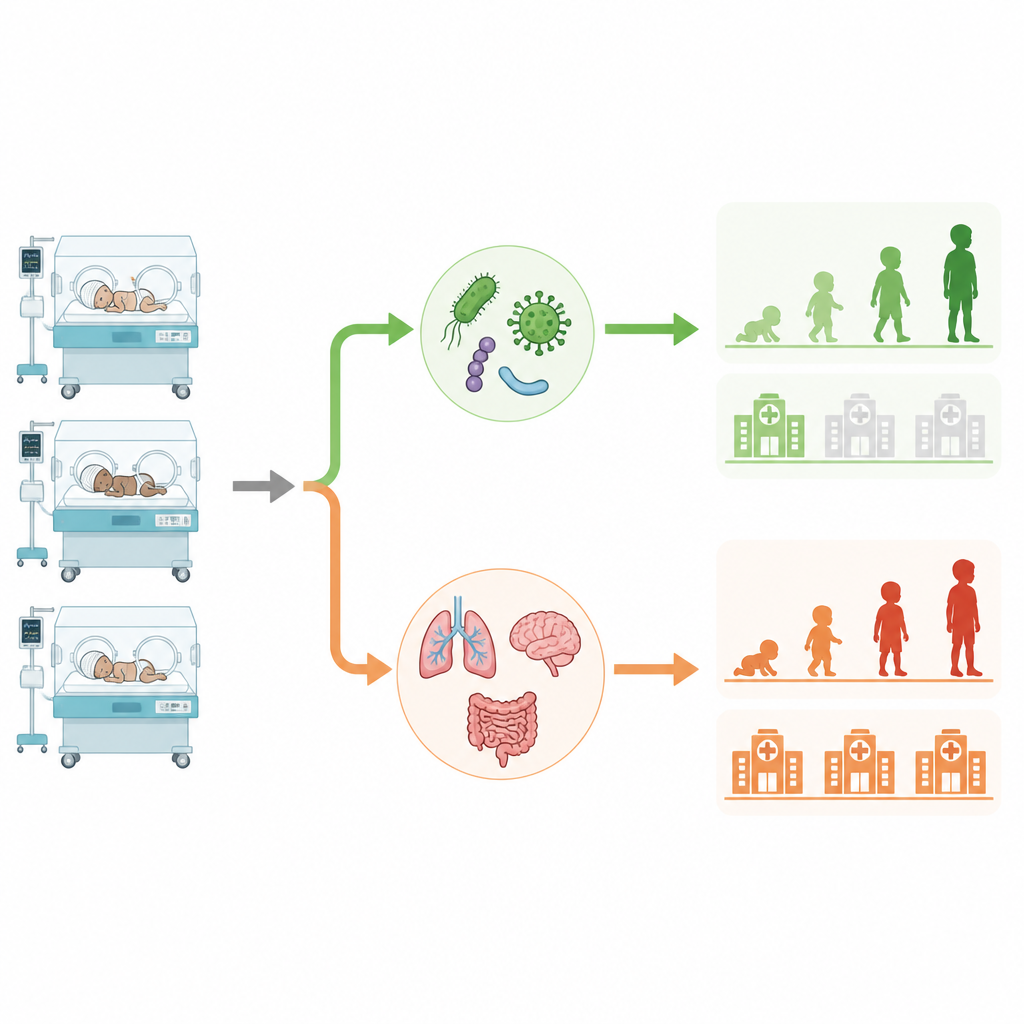
About one in three children in the study showed some form of developmental impairment at age two. At first glance, these children seemed more likely to have had hospital-acquired infections. However, once the researchers took into account how early the babies were born and which major complications they had faced, a different picture emerged. After this more careful analysis, neither single nor multiple hospital-acquired infections stood out as an independent risk factor for poor development. Instead, babies who had serious brain findings on ultrasound, such as bleeding near the brain’s fluid spaces or areas of softening in the white matter, as well as those with bowel blockage or certain chronic lung problems, were much more likely to have delays.
What the study found about later illnesses
One third of the children had to be admitted to hospital at least once for infections during their first two years, most often for breathing or gut illnesses. Those who had experienced hospital-acquired infections as newborns had slightly more infectious episodes and tended to be older at the time of later admissions. Yet when the researchers again adjusted for how premature the babies were and other health issues, hospital-acquired infections did not clearly predict who would be rehospitalized. The strongest factor was simply being born at a very low number of weeks of pregnancy, which brings with it a generally more fragile immune and organ system.
What this means for families and care teams
For parents of very small preterm babies, the findings offer a measure of reassurance. In this large single-center group, hospital-acquired infections alone did not appear to drive long-term developmental problems or repeated infectious hospital stays up to age two. Instead, the main influences on later outcome were extreme prematurity itself and classic complications such as brain injury, severe lung disease, and serious bowel problems. The results highlight that preventing and carefully managing these conditions may matter more for a child’s future than any single infectious episode, while infection control remains vital to protect these highly vulnerable newborns.
Citation: Resch-Poteralski, E., Maurer-Fellbaum, U., Eichberger, J. et al. Impact of nosocomial infections on neurodevelopmental outcome and rehospitalization rate in preterm infants with birth weight below 1500 g (NINO study). J Perinatol 46, 761–767 (2026). https://doi.org/10.1038/s41372-026-02681-2
Keywords: preterm infants, hospital infections, neurodevelopment, very low birth weight, rehospitalization