Clear Sky Science · en
Characterization of jejunal enteroids in human obesity; a model for studying GLP-1 cells
Why tiny gut models matter for weight and blood sugar
Obesity and type 2 diabetes are often thought of as problems of fat tissue or the pancreas, but the gut also plays a quiet starring role. Cells in the small intestine release hormones that help control appetite and blood sugar. One of the most important is GLP-1, the hormone mimicked by today’s powerful weight‑loss drugs. This study builds miniature, lab‑grown versions of part of the human intestine from people with severe obesity, with and without diabetes, to watch how their GLP‑1‑producing cells behave outside the body.
Building mini-intestines from patients
During gastric bypass operations in people with severe obesity, surgeons can safely remove tiny samples of the jejunum, the mid‑section of the small intestine where many nutrients are absorbed. From these fragments, the researchers isolated stem cells nestled in the intestinal crypts and grew them into three‑dimensional structures called human jejunal enteroids. These spherical cell clusters recreate the main types of cells normally found in the gut lining. The team created enteroids from three patient groups: people with obesity but normal blood sugar, people with obesity and prediabetes, and people with obesity and established type 2 diabetes.
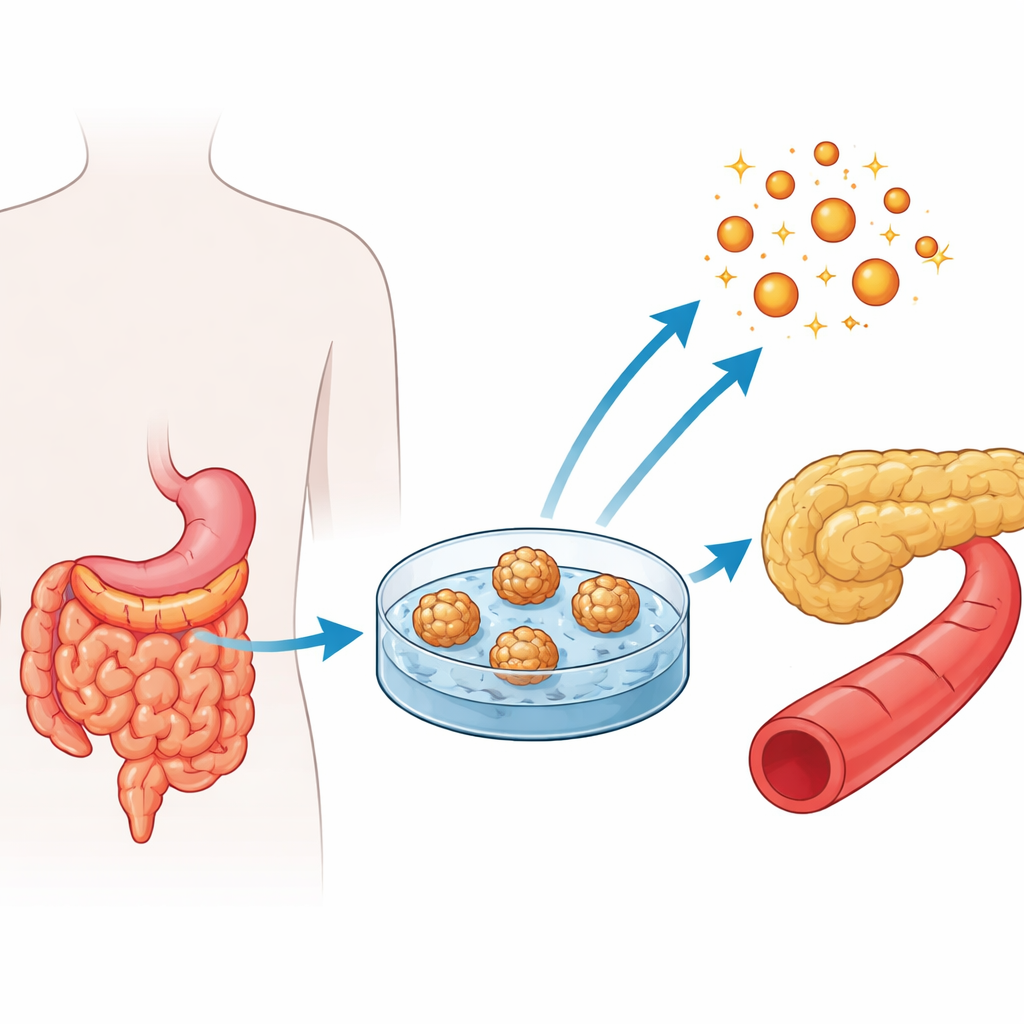
Checking that the gut models look and act like the real thing
To be useful, the mini‑intestines had to resemble natural tissue. Using fluorescent markers and protein measurements, the researchers confirmed that the enteroids contained dividing cells and the expected mix of specialized gut cells, including absorptive cells, mucus‑secreting cells, Paneth cells (which support stem cells and host defense), and rare hormone‑producing enteroendocrine cells. Key markers of these different cell types were present at similar levels across all three patient groups, suggesting that obesity, prediabetes, and diabetes did not prevent the basic gut architecture from forming in culture.
Focusing on the hormone-making cells
The team then zoomed in on the cells that produce GLP‑1 and other gut hormones. They looked for gene switches that drive immature gut cells to become hormone‑producing cells and for the hormones themselves. The enteroids expressed these switches and made several hormones, including GLP‑1, GIP, and PYY, in patterns that mirrored those seen in the human jejunum. Importantly, the density of GLP‑1‑producing cells and the molecular machinery needed to turn a larger precursor protein into active GLP‑1 were similar regardless of whether the donor had normal blood sugar, prediabetes, or type 2 diabetes. This means the basic capacity to form GLP‑1 cells appears preserved in the lab‑grown tissue, even when donors have serious metabolic disease.
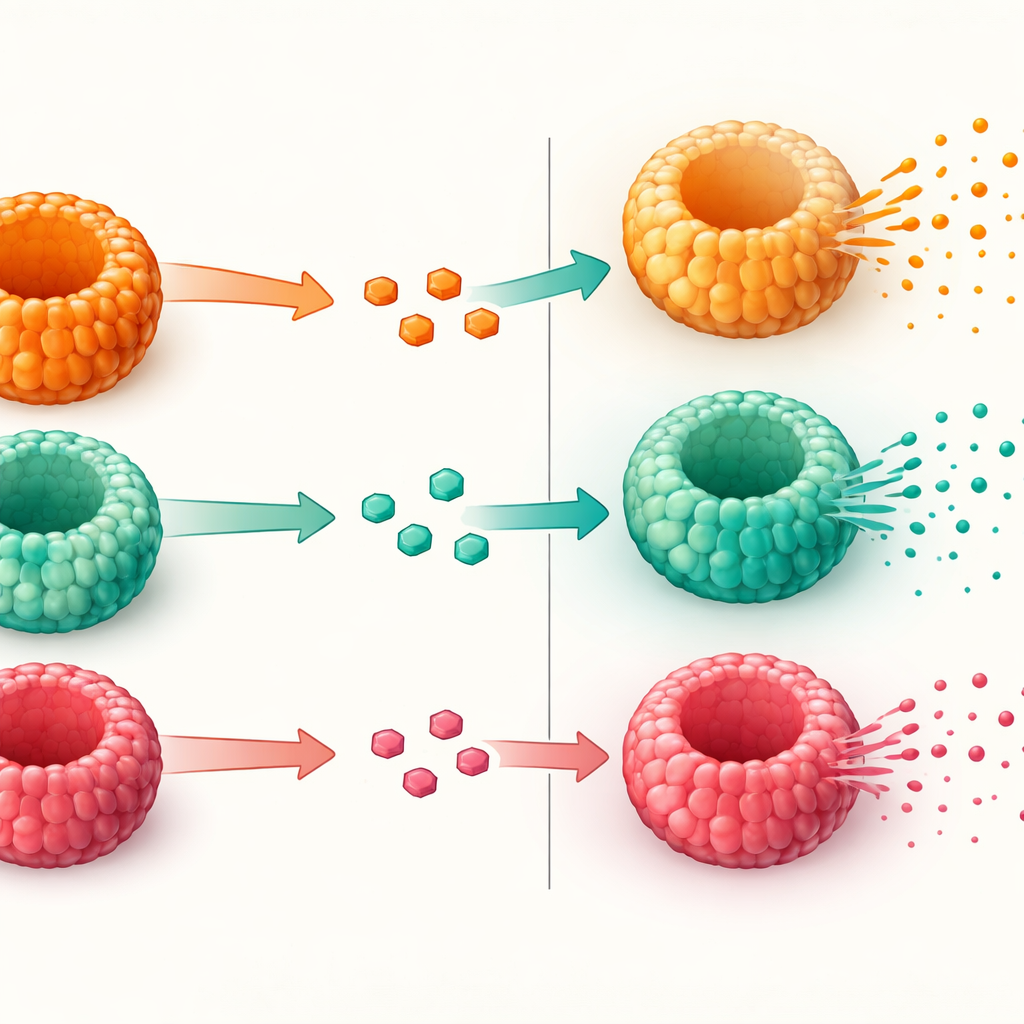
Testing how well the cells release GLP-1
Having confirmed that the mini‑intestines contained proper GLP‑1 cells, the researchers tested how well these cells released the hormone when exposed to sugar. They first enhanced the proportion of hormone‑producing cells using a compound that nudges stem cells toward secretory fates. Then they bathed the enteroids in solutions containing either a modest or a very high glucose concentration, similar to what might be found in the intestine after a meal. All enteroids, no matter the donor’s metabolic status, released active GLP‑1 in response to higher glucose. However, those derived from patients with obesity and type 2 diabetes showed a weaker boost in GLP‑1 release than those from people with obesity but normal blood sugar. The genes involved in sugar sensing and hormone release were largely present, suggesting that the problem lies not in making GLP‑1 or forming the cells, but in the final steps of secretion.
What this means for future treatments
This work shows that human jejunal enteroids are a robust, patient‑derived model for studying how gut hormone cells function in obesity and diabetes. Even though GLP‑1‑producing cells are rare, they can be examined in detail in this simplified setting. The study reveals that in type 2 diabetes, these cells can still form and make GLP‑1, but they are less able to release it when faced with a sugar challenge. That distinction matters: it suggests that boosting the secretory performance of existing gut hormone cells, rather than just increasing their number, could be a promising strategy for new therapies aimed at improving blood sugar control and supporting weight loss.
Citation: Osinski, C., Martinez-Oca, P., Moret, D. et al. Characterization of jejunal enteroids in human obesity; a model for studying GLP-1 cells. Int J Obes 50, 916–927 (2026). https://doi.org/10.1038/s41366-026-02024-3
Keywords: GLP-1, enteroids, obesity, type 2 diabetes, gut hormones