Clear Sky Science · en
Genetic and pharmaceutical manipulation of H3K9 methyltransferase Suv39h1 promotes liver regeneration by unleashing HMGB2 transcription
Why this matters for liver health
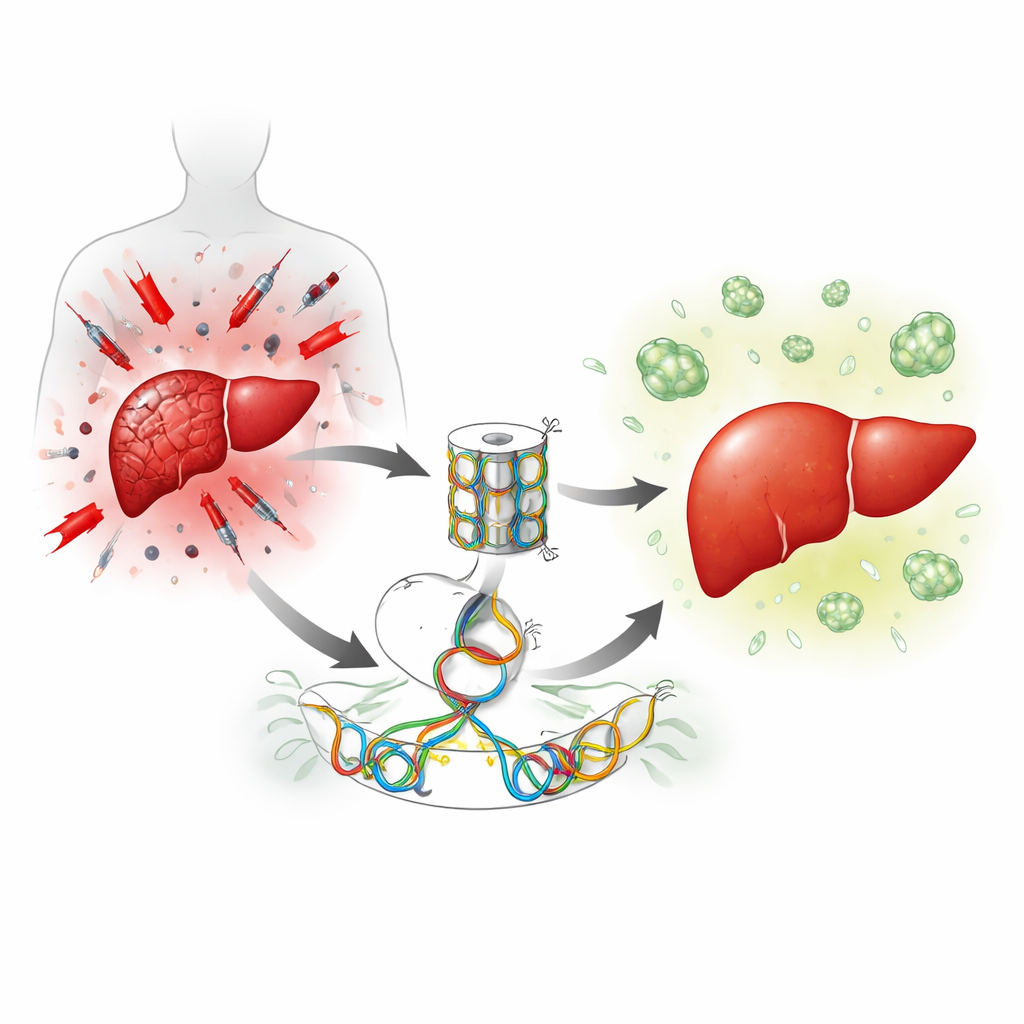
Our livers have a remarkable ability to grow back after injury, but in many patients this natural repair process is too weak to prevent liver failure. This study asks a simple question with big implications: is there a molecular “brake” that holds liver regrowth back, and if so, can we safely ease off that brake to help damaged livers recover?
A built in brake on liver regrowth
The liver repairs itself mainly by asking resting liver cells to start dividing again. The authors focused on an enzyme called Suv39h1 that helps keep genes turned off by tightening the way DNA is packaged. After liver surgery in mice, Suv39h1 levels in liver cells briefly drop, controlled by another enzyme that adds chemical marks to DNA. This suggested Suv39h1 might normally act as a brake on genes needed for liver cells to multiply, and that releasing this brake could speed regeneration.
Removing the brake in mice
To test this idea, the team used mice in which the Suv39h1 gene was removed either throughout the body or only in liver cells. Under normal conditions these animals looked like their healthy littermates. But when most of the liver was surgically removed or damaged with a toxin, mice lacking Suv39h1 regrew liver tissue faster, had more dividing liver cells, and survived severe surgery better. These benefits appeared specifically when Suv39h1 was lost, since deleting its close relative Suv39h2 did not improve liver recovery.
A hidden helper gene is released
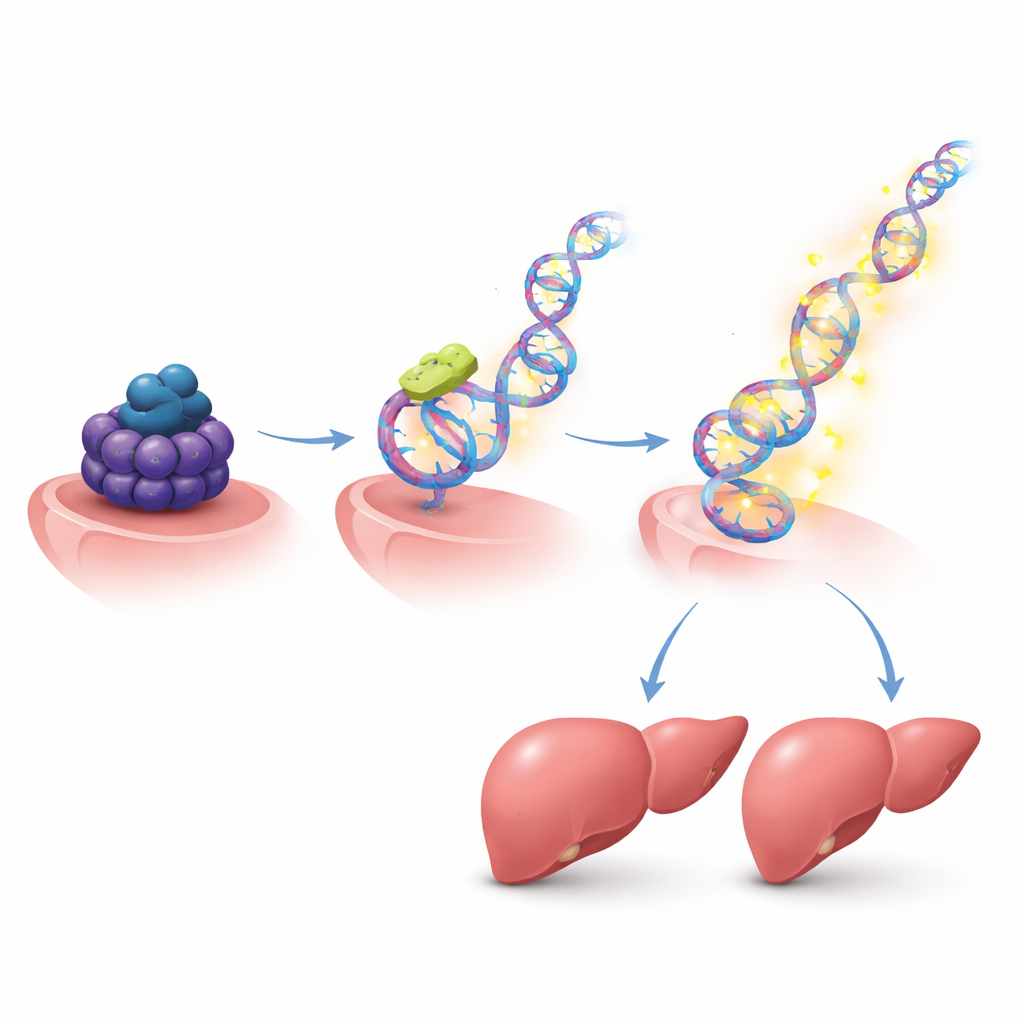
By examining which genes turned on and off in regenerating liver cells, the researchers found one standout player: HMGB2, a protein that helps shape DNA and control many other genes. When Suv39h1 was missing, HMGB2 levels rose strongly in response to known growth signals. Additional experiments showed that Suv39h1 normally sits on the HMGB2 control region together with a chemical mark linked to gene silence. When Suv39h1 and this mark were removed, another factor could bind and activate HMGB2. Blocking HMGB2 erased the growth advantage of Suv39h1 deficient liver cells, and lowering HMGB2 in mice slowed liver regrowth, showing that HMGB2 is a crucial helper once the brake is released.
Rewiring growth circuits across many genes
Because HMGB2 itself controls a wide network of genes, the authors mapped its activity across the genome. In liver cells stimulated to divide, HMGB2 flocked to control regions of many genes linked to cell cycle and regeneration. When HMGB2 was reduced, a large collection of these growth related genes changed their activity, and liver cells divided less. Among the targets were well known players in liver repair, including signaling molecules, receptors on the cell surface, and factors that drive the cell cycle. This suggests that once Suv39h1 lets HMGB2 rise, HMGB2 in turn tunes an entire pro growth program.
A drug hint and signs in human livers
The team then explored whether a drug could temporarily weaken Suv39h1. Mice treated with chaetocin, a compound that lowers the specific chemical mark Suv39h1 creates, showed stronger liver regrowth, more dividing cells, and better survival after extensive surgery or toxin injury. Finally, in liver samples from people with acute liver failure, higher SUV39H1 levels went together with more tissue damage and fewer dividing cells, while higher HMGB2 and several of its partner genes linked to better signs of regeneration and less injury.
What this means for future treatment
In plain terms, the study reveals a chain of control in which Suv39h1 keeps a powerful growth helper, HMGB2, under tight lock. When this lock is eased, HMGB2 can switch on many genes that help liver cells multiply and replace damaged tissue. Carefully targeting Suv39h1, likely with safer and more precise drugs than those used here, might one day support liver recovery in patients whose own regenerative power is failing, though much work remains before such an approach can be tested in the clinic.
Citation: Lu, Y., Zhou, J., Miao, X. et al. Genetic and pharmaceutical manipulation of H3K9 methyltransferase Suv39h1 promotes liver regeneration by unleashing HMGB2 transcription. Exp Mol Med 58, 1158–1171 (2026). https://doi.org/10.1038/s12276-026-01677-4
Keywords: liver regeneration, epigenetics, Suv39h1, HMGB2, chaetocin