Clear Sky Science · en
The dialectics of good and evil in state power: a model of master-slave asymmetry
Why Power Can Feel Both Helpful and Harmful
We rely on governments to build schools, keep order, and protect basic rights. Yet the same state can also surveil, exclude, or quietly favor the powerful. This article explores that tension by asking: why does state power seem capable of both genuine public good and deep injustice at the same time? Drawing on classic thinkers such as Hegel and Marx, as well as contemporary debates about democracy and capitalism, the authors develop a model of “master–slave asymmetry” to explain how modern states swing between moments of apparent fairness and stubborn domination—and what it would take to break out of that loop.
How Order Is Built on Unequal Ground
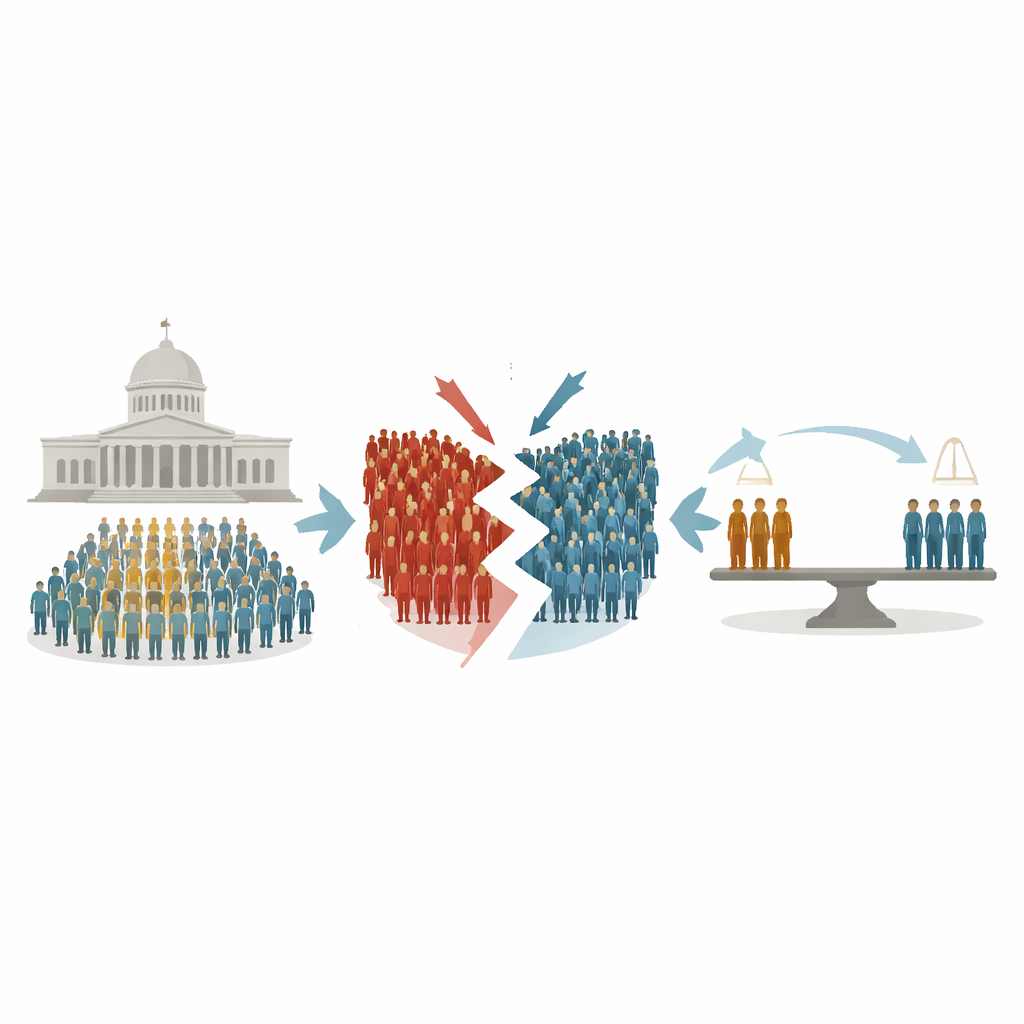
The first step in the model looks at how states create a sense of social harmony. Through law, schooling, and cultural traditions, governments present themselves as guardians of the common good. Historical examples range from ancient legal codes and Roman law to China’s imperial exams and modern merit-based education. These systems promise fairness and opportunity but often disguise deep inequalities. People learn to see existing hierarchies as natural, even moral. The authors call this stage a “substantive good”: it feels like shared benefit, but it rests on acceptance of an unequal power relationship in which rulers quietly set the rules and the ruled absorb them as common sense.
When Hidden Tensions Boil Over
Over time, cracks appear in this polished surface of harmony. Those at the bottom begin to sense that the promise of equality does not match their lived experience—whether through labor exploitation, blocked mobility, or political exclusion. The article describes this second stage as “base consciousness,” a mood in which people outwardly comply but inwardly resist. Contemporary theories of radical democracy, which embrace permanent conflict and shifting alliances among groups, capture this reality of constant struggle. Yet the authors argue that treating conflict as endless fate traps politics in what Hegel called a “bad infinite”: a cycle of anger, stalemate, and transactional deal-making that never really changes the underlying structure of domination.
Looking for Fairness Without Illusions
The third step, “noble consciousness,” explores whether there is a way to make conflict productive instead of endless. Here, the focus shifts to institutions that openly recognize disagreement and channel it into shared rules—such as democratic procedures that give opposing groups a visible public stage. Rather than dreaming of perfect harmony or glorifying permanent war, this perspective treats conflict as a normal part of social life that can be managed and partly tamed. In theory, such arrangements allow rulers and ruled to see each other as mutual partners, not just as dominators and victims. The authors emphasize that this ideal marks the highest point of purely ethical and legal reasoning about a “good” state.
Why Ideas Alone Cannot Fix Unequal Systems
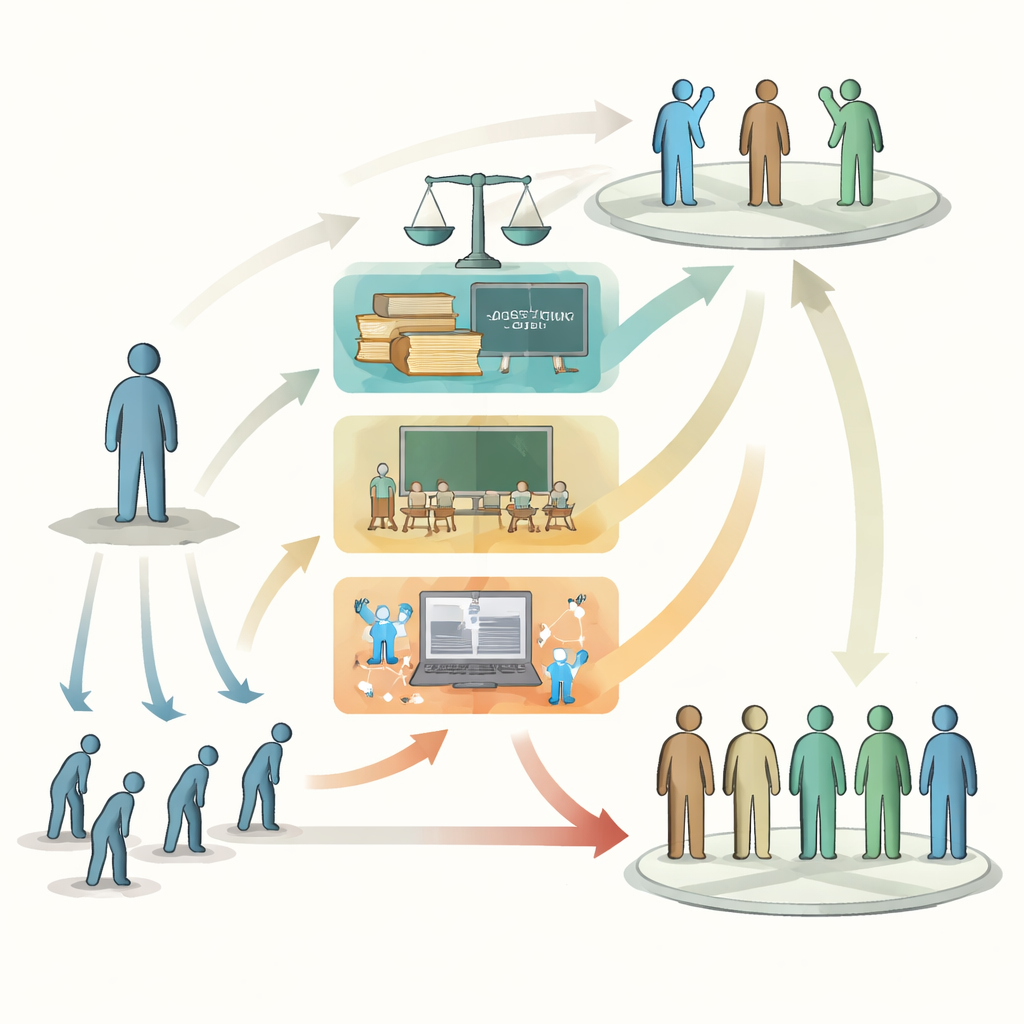
However, the article stresses that ethical ideals and fair-sounding procedures are not enough on their own. Using the example of the platform economy and gig work, the authors show how what looks like win–win cooperation—flexible work, temporary subsidies, or “freedom” for contractors—can mask new forms of dependence once powerful companies control data, algorithms, and markets. Even when workers are formally recognized as free participants, they may still lack real power over the conditions that shape their lives. For the authors, this reveals the limit of purely moral or legal solutions: without changing how economic power and production are organized, recognition risks becoming another layer of false harmony.
What a Truly “Good” State Would Require
In the end, the paper argues that escaping the cycle of good and evil in state power requires more than better speeches, fairer debates, or nicer laws. It demands that recognition—treating people as equal partners—be anchored in the material structure of society, especially in how work, resources, and technology are controlled. Only when the rules of the economy themselves embody a more equal standing can political recognition cease to be a fragile illusion. In plain terms, a genuinely “good” state is one where everyday institutions, from workplaces to digital platforms, give people not only a voice but also a real share in the power that shapes their futures.
Citation: Zhu, D., Zhao, H. The dialectics of good and evil in state power: a model of master-slave asymmetry. Humanit Soc Sci Commun 13, 579 (2026). https://doi.org/10.1057/s41599-026-07294-w
Keywords: state power, political inequality, democracy and conflict, capitalism and recognition, platform economy