Clear Sky Science · en
Group psychology shapes health conspiracies and conspiracy mentality in three countries
Why some health rumors catch on
Why do some people readily accept health advice while others turn to dramatic stories about secret plots and harmful vaccines? This study looks at how our feelings about other groups and our dislike of being told what to do help shape belief in health conspiracies and general suspicion about hidden plots, using survey data from the UK, the US, and Turkey. 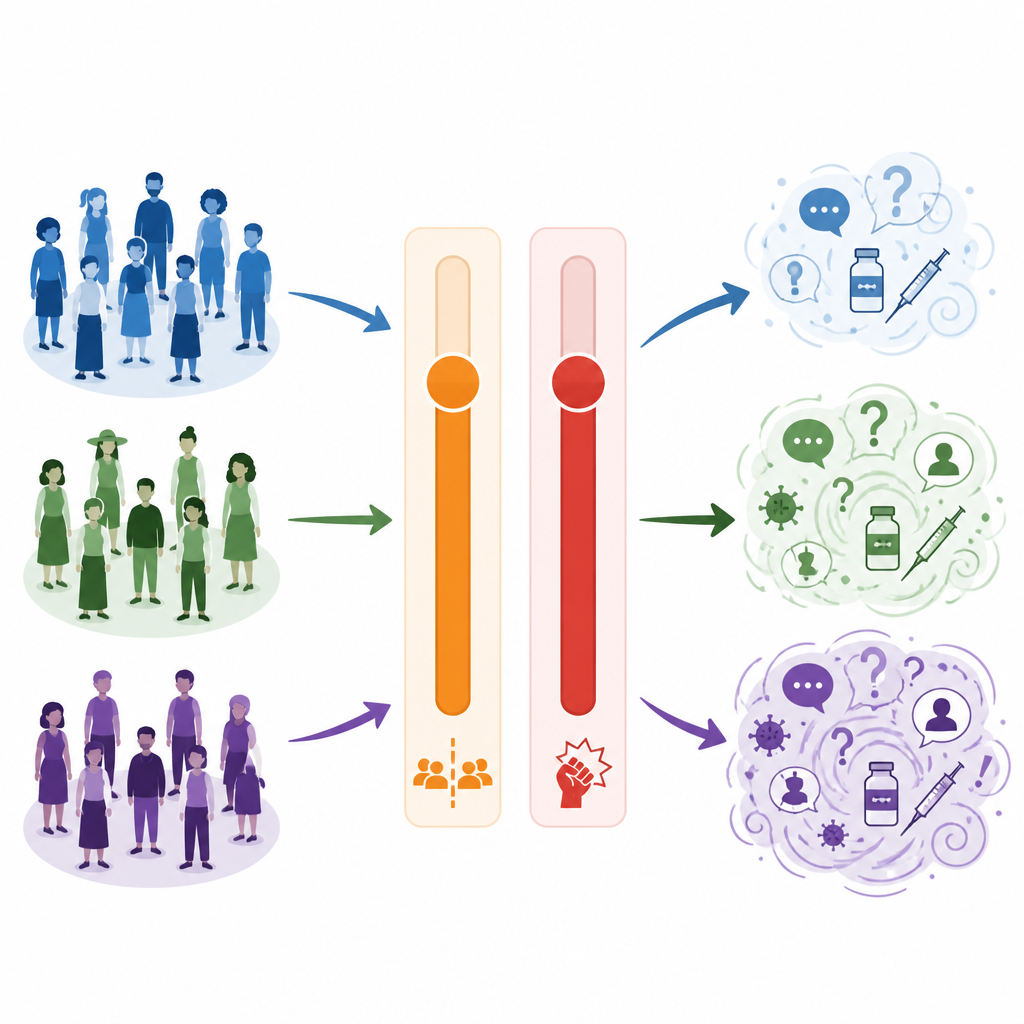
Groups, distrust, and the pull of secret plots
The researchers focus on two group-based tendencies. The first is mistrust of outsiders, meaning a general suspicion of people from other countries or immigrant backgrounds. The second is psychological reactance, a strong urge to protect personal freedom and resist social pressure. Both traits are tied to how we see our own group versus others, and they may make stories about secret, harmful plans by powerful outsiders feel more believable and emotionally satisfying.
How the study was carried out
More than 4500 adults in the UK, US, and Turkey completed online surveys in early 2021. Participants answered questions that measured their agreement with COVID related conspiracy statements, their general tendency to believe that powerful groups hide important truths, their mistrust of outsiders, and their reactance. The survey also included standard measures of vaccine hesitancy, belief in science, trust in other people, political leaning, religiosity, education, and financial satisfaction. Using statistical models that compared people within and across countries, the authors examined which factors best predicted conspiracy beliefs. 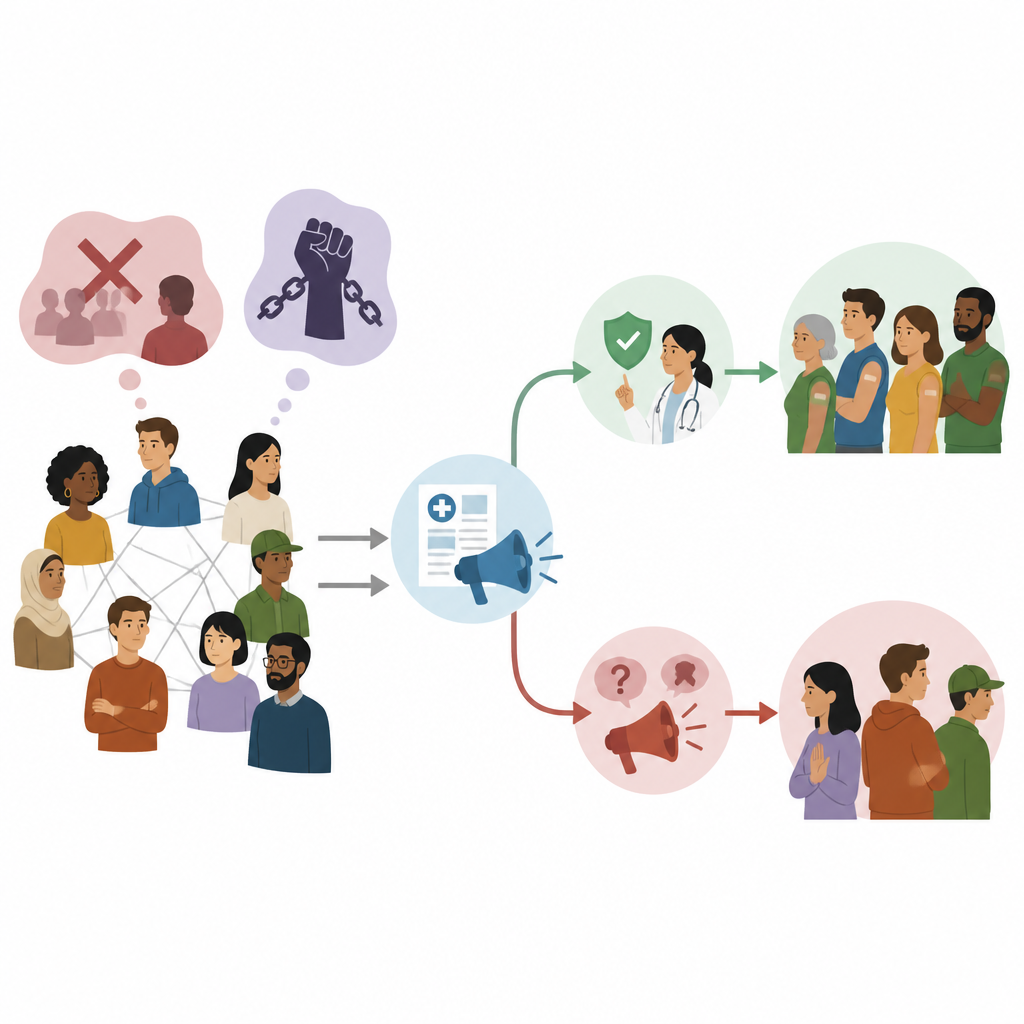
What the researchers found
Across all three countries, mistrust of outsiders and reactance stood out as the strongest predictors of both health conspiracy beliefs and a general conspiracy mindset. People who were more suspicious of foreigners and immigrants, and those who strongly disliked being influenced by others, were much more likely to endorse ideas such as COVID being manmade for control or profit. These same people were also more hesitant about vaccines. Other factors like belief in science, political orientation, religiosity, age, sex, and income played a smaller role, and differences between countries explained only a small share of the overall variation.
Different patterns across countries
Although the basic patterns held everywhere, the strength of the links differed by country. Participants in Turkey showed the highest levels of outgroup mistrust, reactance, conspiracy thinking, and vaccine hesitancy, with the UK consistently lowest and the US in between. In Turkey, mistrust of outsiders was especially powerful in predicting belief in COVID health conspiracies. In the UK and US, reactance played a relatively larger role, suggesting that resisting social pressure and valuing nonconformity may be particularly important in these more individualistic settings. The authors connect these findings to historical and political contexts, such as long standing geopolitical tensions and current political rhetoric in Turkey that may nourish suspicion of foreign actors.
Why it matters for vaccines and public discussion
Health conspiracy beliefs and general conspiracy mentality were both strongly tied to vaccine hesitancy, suggesting that they can undermine public health efforts. The authors argue that simply providing more information is unlikely to be enough. Instead, strategies that reduce mistrust between groups, support respectful contact with outsiders, and frame health messages in ways that do not threaten people who value independence may be more effective. From a lay perspective, the study suggests that conspiracy beliefs are less about gullibility and more about how we relate to other groups and to social rules, and that addressing these deeper group feelings may be key to building trust in vaccines and health guidance.
Citation: Salali, G.D., Uysal, M.S. Group psychology shapes health conspiracies and conspiracy mentality in three countries. Humanit Soc Sci Commun 13, 749 (2026). https://doi.org/10.1057/s41599-026-07069-3
Keywords: conspiracy beliefs, vaccine hesitancy, group psychology, outgroup mistrust, psychological reactance