Clear Sky Science · en
Does postgraduate education expansion narrow income gap?—Evidence from Chinese provincial panel data
Why this question matters for everyday life
As more young people in China pursue master’s and doctoral degrees, many families hope higher education will unlock better jobs and a fairer society. This study asks a simple but vital question: when postgraduate education grows quickly, does it help narrow the income gap between rich and poor, or does it unintentionally make that gap wider?
Rising incomes and a stubborn divide
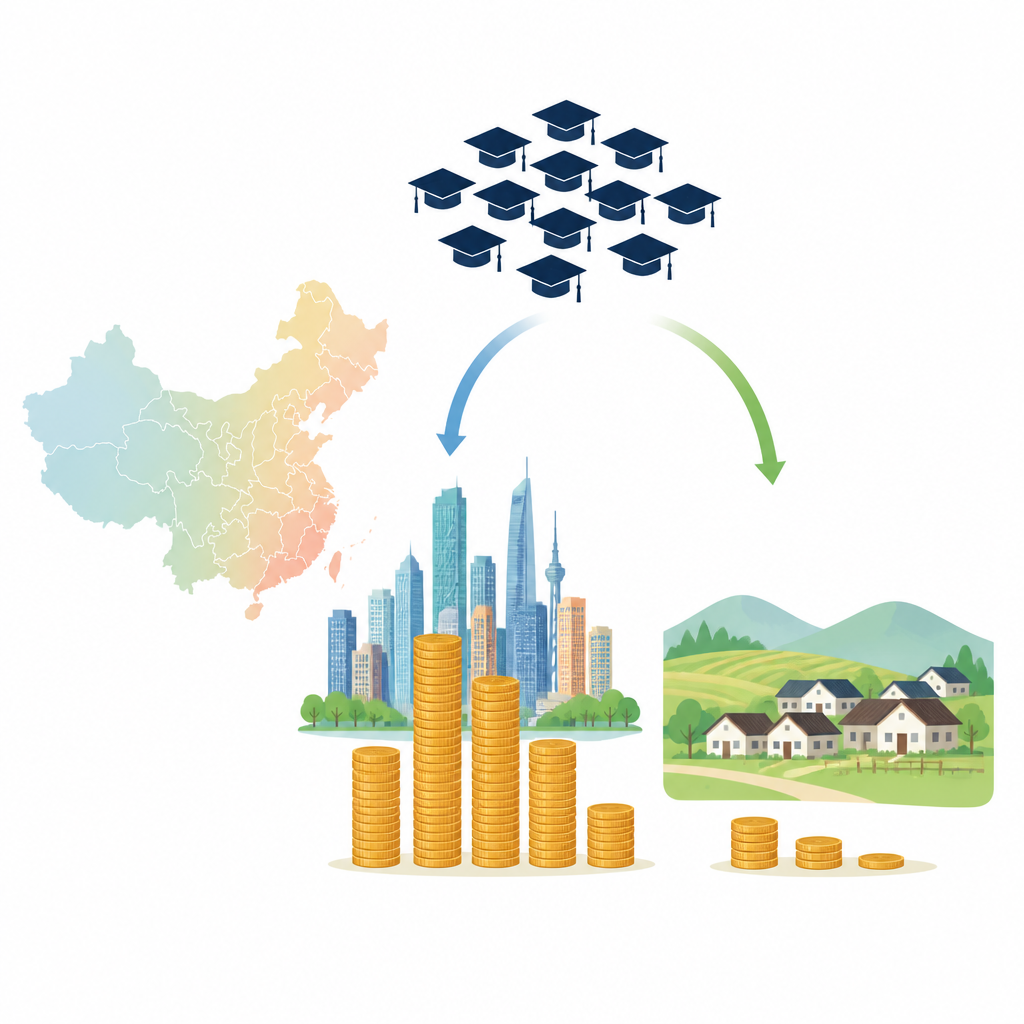
China’s economy has expanded dramatically since the 1980s, but the benefits have not been shared evenly. Gaps between city and countryside incomes remain large, and the country’s overall inequality level is high by global standards. At the same time, postgraduate education has grown from a small elite system into a mass pathway, with the number of graduate students increasing nearly fifteen-fold since 1999. Because postgraduate education is the highest rung in the education ladder and often leads to the best jobs, its rapid expansion could either spread opportunity or concentrate advantages further among those already ahead.
How the researchers studied the problem
The authors analyzed data from 30 Chinese provinces spanning 2003 to 2022. They measured the income gap using the Theil index, which captures differences between urban and rural residents, and tracked the expansion of postgraduate education by enrollment rates per thousand people. Using a range of statistical tools, including regression models, threshold analysis, and checks for regional and education-level differences, they examined how changes in postgraduate enrollment were linked to changes in income inequality over time.
When more schooling leads to wider gaps
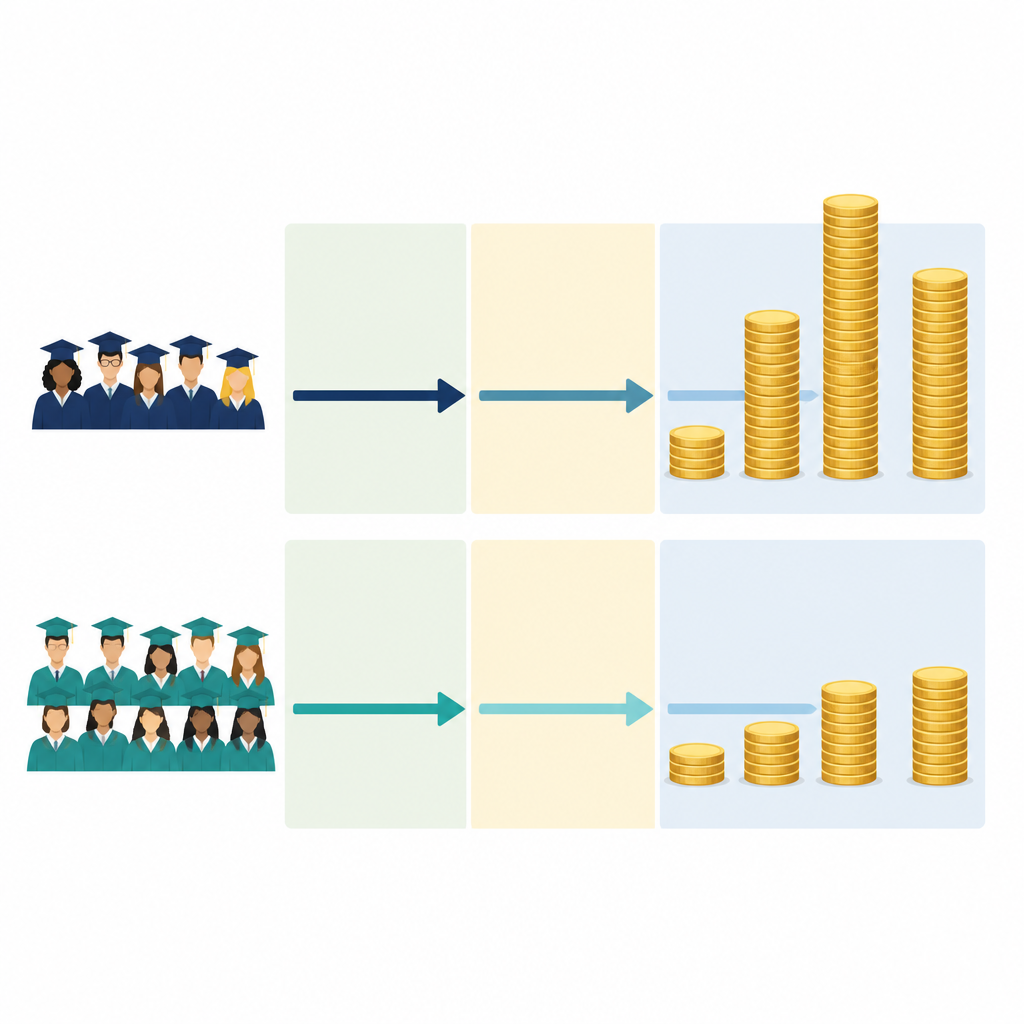
The core finding is counterintuitive for many: expanding postgraduate education is associated with a wider income gap, not a narrower one. In provinces at lower levels of economic development, an increase in postgraduate enrollment clearly goes hand in hand with higher inequality. The reason, the authors argue, is that families with better income, schooling, and social connections are much more likely to capture new graduate-school places. These students later obtain the highest paying jobs, while people from poorer or rural backgrounds struggle to gain similar access. Instead of leveling the playing field, added postgraduate seats often strengthen existing advantages.
How economic strength changes the picture
The study also shows that the impact of postgraduate expansion depends on how wealthy a region already is. The researchers found an economic “threshold”: below a certain level of per-person output, more postgraduate spots strongly increase inequality. Once a province’s economy passes that level, the inequality effect shrinks and eventually becomes statistically weak. In richer regions there are more high-skill jobs, better public services, and stronger labor markets, so a larger pool of graduates faces more competition and a smaller wage premium. At the same time, higher family incomes help more students from modest backgrounds reach postgraduate study, softening the divide.
Different effects of master’s and doctoral degrees
Not all postgraduate degrees have the same impact. The authors distinguish between master’s and doctoral programs and find that both tend to widen the income gap, but doctorates do so more strongly. Doctoral graduates are scarce and often move into universities, research institutes, and leading firms with very high salaries and stable benefits. This “scarcity premium” lifts their earnings far above those of workers with lower education and even above many master’s graduates. Economic development can weaken this effect somewhat, especially for master’s degrees, but the inequality impact of growing doctoral education remains sizable in both poorer and richer regions.
What this means for policy and ordinary citizens
For policymakers and families alike, the message is sobering but useful. Simply adding more postgraduate places does not automatically bring about fairer incomes. In less developed regions, large expansions of master’s and especially doctoral programs may worsen local income divides if they are not paired with better schools, targeted financial aid, and growth in suitable jobs. In wealthier provinces, expanding graduate education can be less harmful, especially when accompanied by efforts to improve basic schooling, upgrade industries, and design fairer tax and income systems. In plain terms, higher degrees can still be valuable, but they are not a shortcut to social fairness without broader economic and social reforms.
Citation: Zhang, K., Zeng, N. & Zhang, K. Does postgraduate education expansion narrow income gap?—Evidence from Chinese provincial panel data. Humanit Soc Sci Commun 13, 693 (2026). https://doi.org/10.1057/s41599-026-07048-8
Keywords: postgraduate education, income inequality, urban rural gap, China economy, higher education expansion