Clear Sky Science · en
Jiao as cultural heritage shaping embedded knowledge, identity and ethnomedical functions among the Hokchew Chinese in Nabon, Thailand
A Hidden Story in the Kitchen
In a small district in southern Thailand, a deep red cooking ingredient quietly carries centuries of memory, medicine, and migration. This study looks at Jiao, the red dregs left over from brewing rice wine, and shows how what many people would call “food waste” actually helps one Chinese diaspora community keep its identity alive, care for health, and pass on hard‑to‑put‑into‑words knowledge between generations.
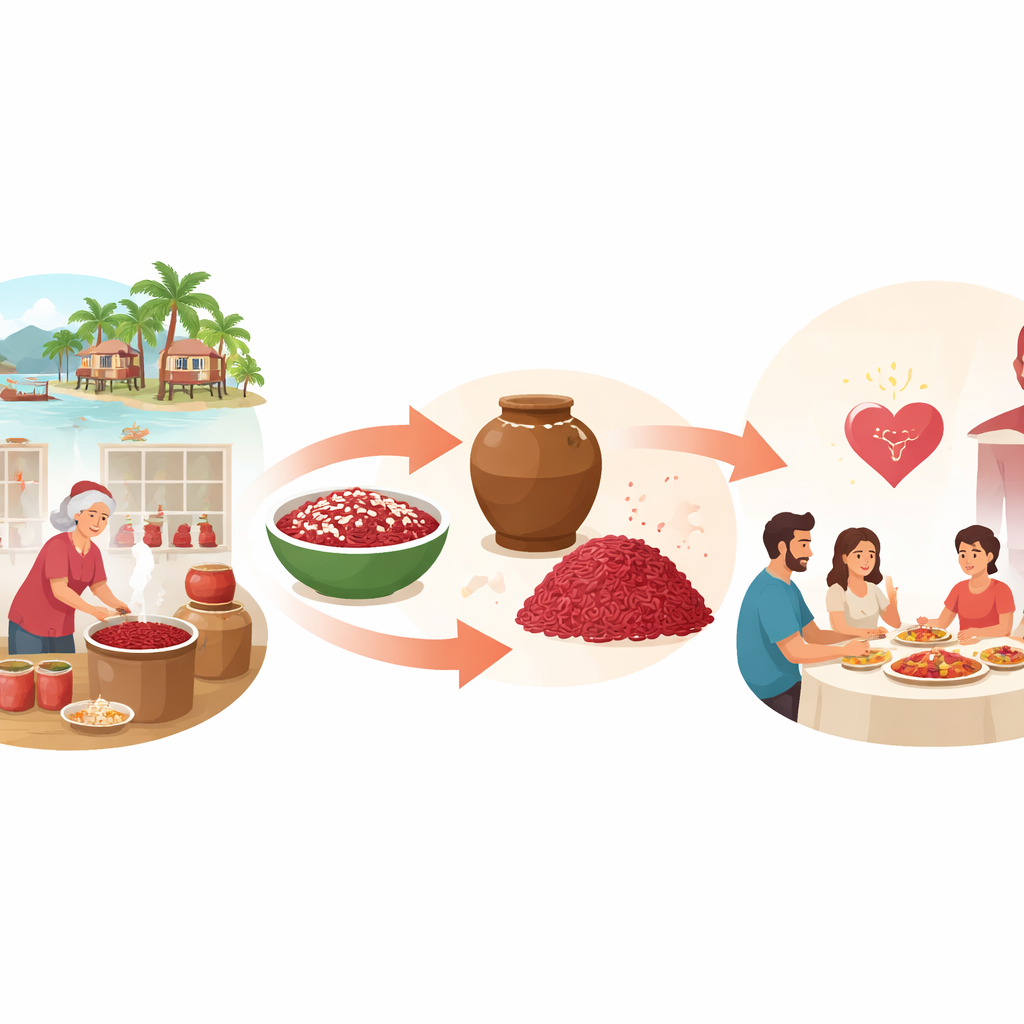
From Leftover Wine to Family Treasure
For the Hokchew Chinese community in Nabon, Jiao begins as the sediment from making red rice liquor but ends up at the center of daily dishes and important ceremonies. Families use its ruby color and savory aroma to flavor stir‑fries, soups, and festival foods. More than a cooking aid, these red dregs turn up at life‑shaping events: weddings, funerals, birthdays, and the month of rest after childbirth. Serving Jiao‑based dishes at such times reminds people of their roots in Fujian, China, turning an ordinary ingredient into what the authors call “memory food” and “ritual food” that ties the past to the present.
Food as a Line Between Us and Them
Because Nabon is home to many ethnic groups, food helps mark who belongs to which community. The Hokchew use the intense red of Jiao as a quiet signal of “who we are,” setting themselves apart from other Chinese dialect groups whose versions are paler. Carrying Jiao to new homes and insisting on its presence in special meals lets families keep a “mobile identity”: even when they move, they take the taste of home with them. In this way, Jiao becomes a social boundary marker, helping the Hokchew avoid being culturally absorbed while still living alongside many other groups.
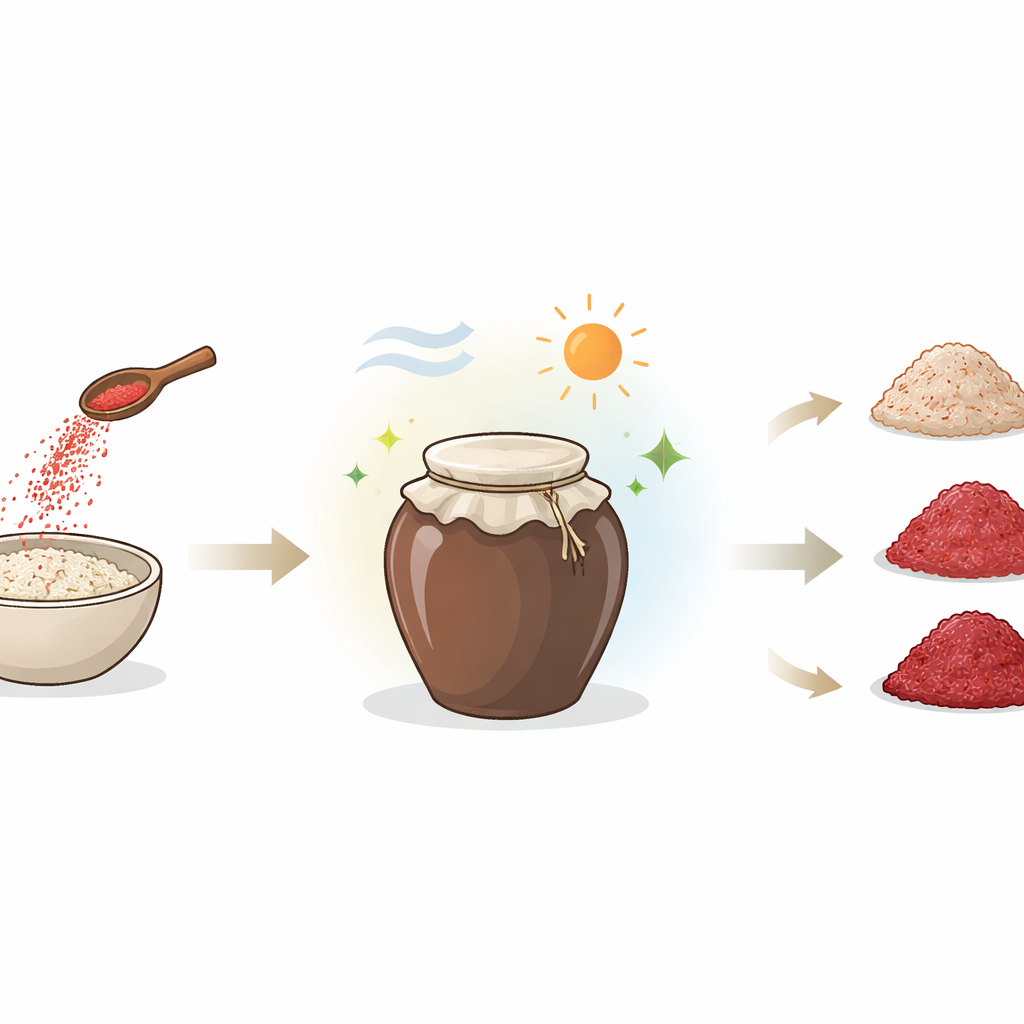
Healing, Senses, and Unwritten Rules
Jiao is also valued as medicine. Long before modern lab tests, Hokchew families used it in dishes for new mothers, for easing menstrual pain, and for “nourishing the blood.” Today we know that red yeast rice contains compounds similar to cholesterol‑lowering drugs, which can help support blood circulation. Yet the community’s way of keeping Jiao safe and effective still relies on the senses and on taboos rather than instruments. Experienced makers judge color, smell, taste, and texture to decide if a batch is good enough—preferring dark red, dry, and smooth dregs. Cultural rules, such as keeping people returning from funerals or menstruating women away from the fermentation jars, act as hygiene measures in disguise, aiming to protect the delicate process from contamination even if the explanation is framed in spiritual terms.
Balancing Tradition and Modern Change
The study shows that Jiao is now moving from household kitchens into commercial products sold in plastic bags or jars, sometimes through online platforms. This shift brings new challenges: dependence on imported red yeast rice, uneven quality, and the need to meet food‑safety standards, including controlling toxins produced during fermentation. Rather than freezing tradition in place, the community is constantly negotiating what must stay “authentic”—such as using glutinous rice, inherited methods, and domestic teaching—and what can adapt, such as packaging, branding, and wider distribution. This balancing act, which the authors call “negotiated authenticity,” lets Jiao survive and even thrive in a modern market without losing its cultural soul.
Why This Red Ingredient Matters
To a casual observer, Jiao may look like a colorful byproduct at the bottom of a wine jar. This research shows it is far more: a living strand of heritage that connects grandparents and grandchildren, village kitchens and global health debates, old beliefs and new science. By listening closely to makers, cooks, and diners, the authors reveal how one humble ingredient can carry identity, care for the body, and adapt to new economic pressures all at once. For non‑specialists, the story of Jiao is a reminder that the most meaningful technologies we rely on every day—like fermentation and home cooking—often live not in manuals or factories, but in people’s hands, memories, and shared meals.
Citation: Chumsri, P., Kitsanarom, N., Kaewsuwan, W. et al. Jiao as cultural heritage shaping embedded knowledge, identity and ethnomedical functions among the Hokchew Chinese in Nabon, Thailand. Humanit Soc Sci Commun 13, 591 (2026). https://doi.org/10.1057/s41599-026-06985-8
Keywords: food heritage, Chinese diaspora, fermentation, traditional medicine, cultural identity