Clear Sky Science · en
Multi-criteria decision-making in soccer: a bibliometric analysis
Why smarter choices matter in modern soccer
Behind every transfer rumor, starting lineup, and long-term club plan lies a maze of choices that go far beyond spotting a talented player with the naked eye. This article looks at how researchers use structured decision tools to help clubs juggle many factors at once, from fitness and skills to injury risk and team needs. By mapping the small but fast-growing field of such studies, the authors show how data-driven decision support is reshaping the way the game is managed off the pitch.
How decision tools step onto the pitch
Modern soccer generates a flood of information, yet coaches and analysts still need to turn all that data into clear choices: who to sign, who to start, how to shape a squad for a long season. The paper focuses on multi-criteria decision-making, a family of methods that combine many measures into an overall ranking or score. These tools help compare players, teams, or strategies by weighing different criteria rather than relying on a single statistic or gut feeling. The authors use the term MCDM for this broad toolbox and show how it has been used to support questions such as choosing a national team lineup, comparing clubs at a World Cup, or judging young players’ potential.
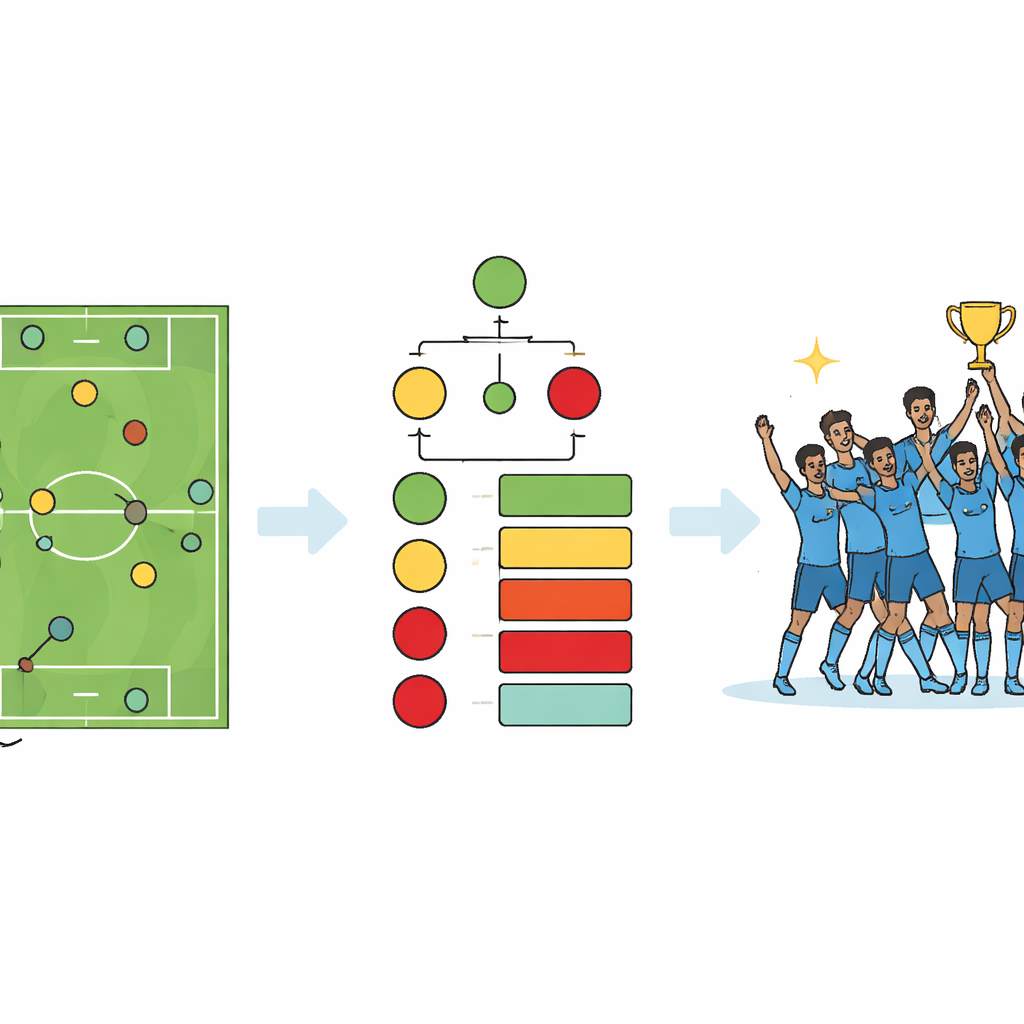
How the study maps the research field
Instead of testing a new tactic or analyzing match play, the authors step back and examine the research itself. They search the Web of Science database for peer-reviewed articles that apply specific decision tools, such as ranking methods and pairwise comparisons, directly to soccer problems. After screening almost two hundred records and removing work outside football or without real use of these methods, they end up with just 26 relevant papers published between 2000 and 2025. Using specialized software, they track who publishes with whom, which journals are most active, how often the work is cited, and which key words tend to appear together. This approach lets them reveal hidden patterns in a small but scattered body of work.
Who is doing the work and what they study
The analysis shows that this type of research has moved from isolated efforts to a noticeable uptick in recent years, with publications and citations both rising and peaking in 2024. Certain universities, especially in Turkey, stand out for producing several studies, while work from Australia, Malaysia, and the United States gathers the most citations. Common topics include player selection, team performance evaluation, and comparisons between clubs or national teams. A handful of decision techniques dominate, particularly those that rank options by closeness to an ideal profile or organize criteria in a hierarchy. Many studies also bring in fuzzy variants of these tools, which are meant to handle the uncertainty and subjectivity that come with judging human performance.
Emerging themes and the role of artificial intelligence
By examining how key words cluster together, the authors identify several main themes. One core cluster links selection, performance, and ranking methods, marking it as the heart of the field. Another group centers on broader ideas such as decision models and systems, while a further group deals with risk, health, and injury management. A newer cluster connects terms related to artificial intelligence, football players, and selection, pointing to a growing interest in combining classic decision tools with machine learning and tracking data. International collaboration networks show that countries like Spain, the United Kingdom, the United States, and Australia act as bridges between different research groups, helping methods and ideas spread across borders.
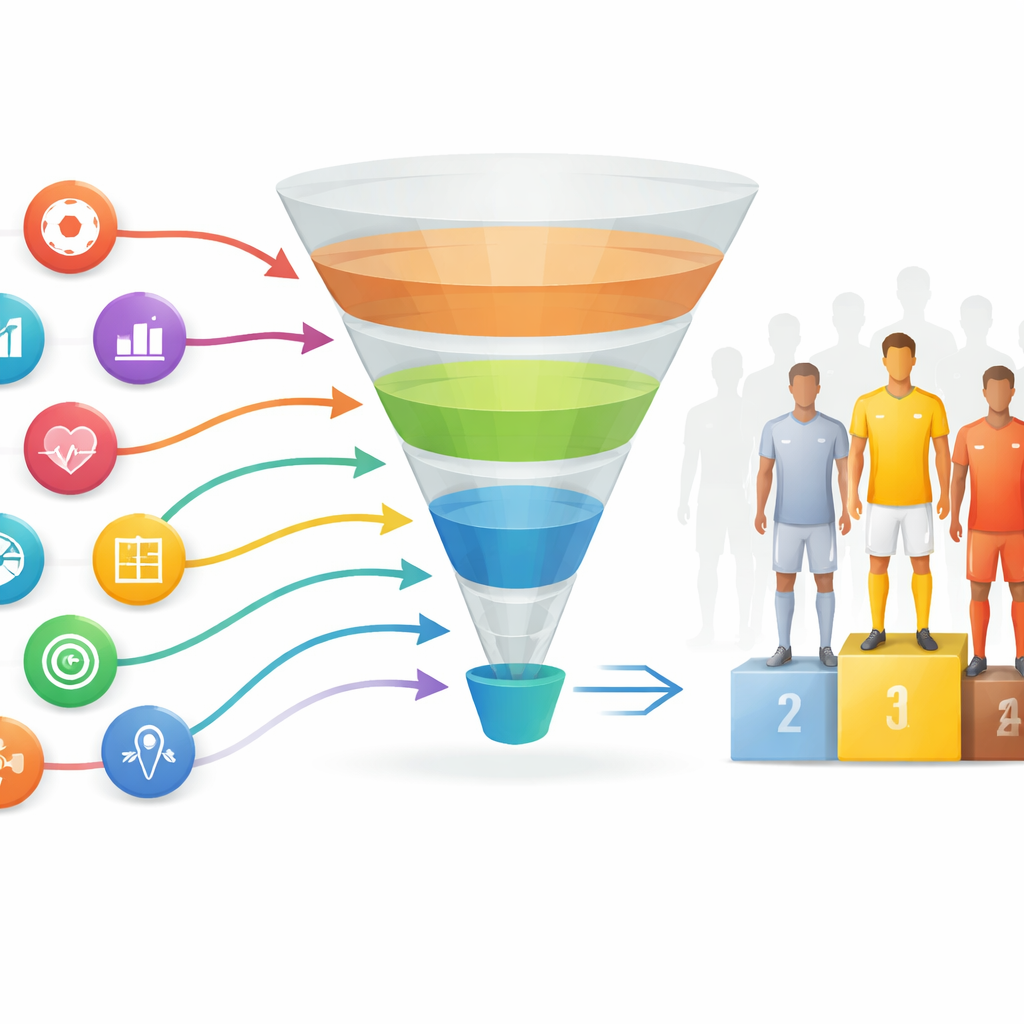
What this means for the future of the game
For readers who care about how clubs make smarter choices, the article’s conclusion is clear: structured decision tools are becoming an important part of soccer’s backstage work, but the field is still young. The authors call for more careful testing of how sensitive results are to the weights and methods used, richer data that capture context and tactics rather than just raw numbers, and real-world trials inside clubs to see how well these tools support staff decisions. As more teams seek an edge in recruitment, lineup planning, and long-term strategy, the careful blending of human judgment with transparent, multi-criteria analysis may help turn mountains of data into decisions that are easier to explain and more likely to hold up under pressure.
Citation: Belhouchet, H., Dergaa, I., Zoudji, B. et al. Multi-criteria decision-making in soccer: a bibliometric analysis. Humanit Soc Sci Commun 13, 595 (2026). https://doi.org/10.1057/s41599-026-06968-9
Keywords: soccer analytics, player selection, decision-making, sports data, team performance