Clear Sky Science · en
Who will retweet? Employees’ voluntary retweeting behavior of crisis information -A perspective from the group engagement model
Why This Matters to Everyday Social Media Users
When a school or company faces an online crisis, what employees choose to share on their personal social media accounts can calm fears or fuel confusion. This study looks at why some staff members voluntarily retweet their organization’s crisis messages, focusing on kindergartens in China where public concern about child safety is intense. Understanding what drives employees to stand up for their workplace online helps explain how trust is repaired when bad news travels fast.
Work Crises in the Age of Instant Sharing
Today, news of a crisis can race across social media in minutes, especially when children are involved and the public has a zero-tolerance mindset. For kindergartens and parent–child centers, even a small incident can quickly become a national story as posts are liked, shared, and retweeted. In this setting, employees are not just staff; they are also trusted insiders whose online behavior sends powerful signals. When they choose to retweet official explanations or clarifications, they help spread accurate information and make those messages seem more believable to anxious parents and the wider community.

Feeling Valued Inside and Proud Outside
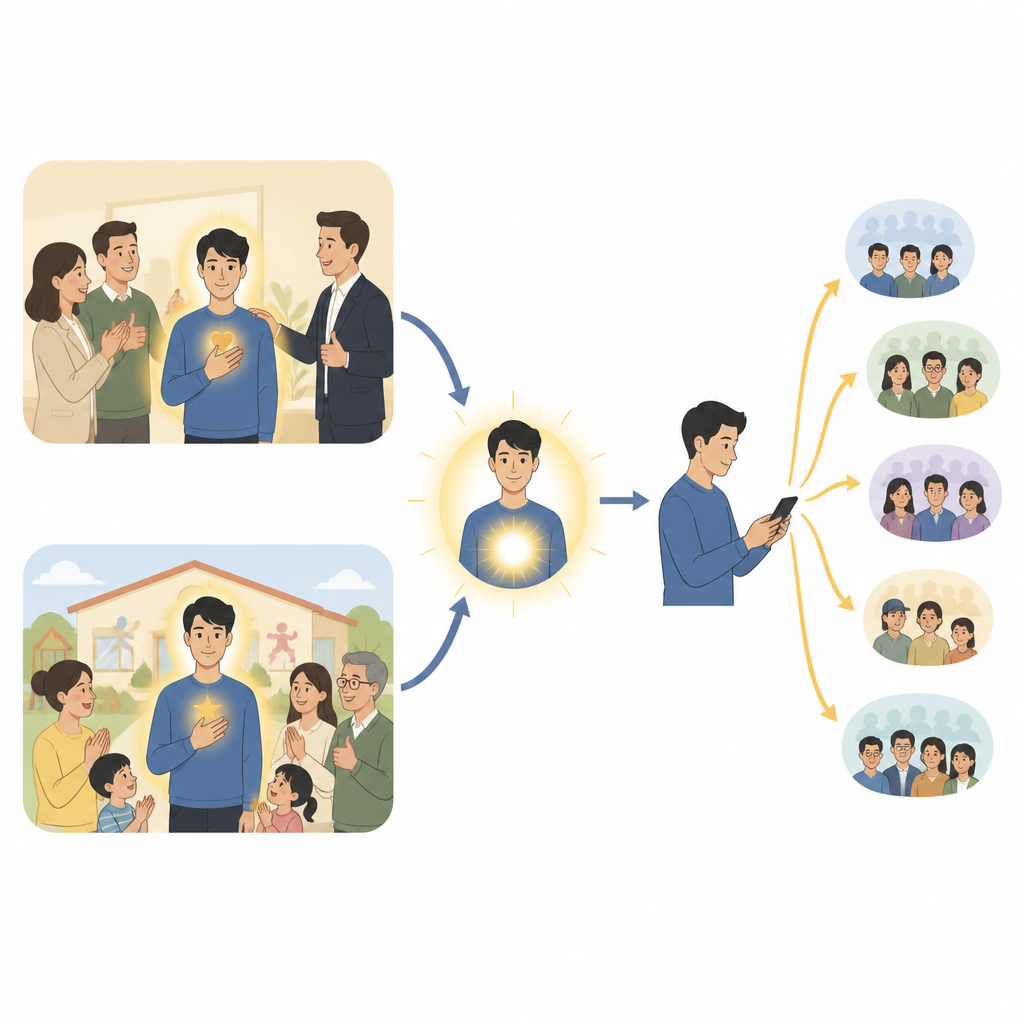
The researchers drew on a framework called the group engagement model, which explains how people’s sense of belonging shapes their willingness to go beyond basic job duties. Two feelings are central. The first is respect: whether employees believe their supervisors and coworkers value them, treat them fairly, and include them. The second is prestige: whether employees believe outsiders view their organization as reputable and high standing. Surveying 321 employees from 13 kindergartens, the study found that both feeling respected at work and seeing the kindergarten as well regarded in society were strongly linked to how deeply employees identified with their organization.
Different Mindsets, Different Motivations
Not all employees view their work world in the same way. Some have a “local” mindset, drawing their sense of self mainly from their own workplace and its internal relationships. Others are more “cosmopolitan,” caring more about how their profession or organization is seen by the broader public and external professional groups. The study shows that these mindsets change what matters most. For local staff, such as many teachers and support workers, feeling personally respected by leaders and colleagues was the strongest driver of identification with the kindergarten. For more cosmopolitan staff, such as finance or medical professionals, the key factor was the school’s prestige and reputation beyond its walls.
From Identification to Hitting the Retweet Button
Once employees felt a strong sense of “we” with their kindergarten, they were much more likely to say they would voluntarily retweet crisis clarifications on social media without being asked or paid. Statistical tests showed that respect and prestige did not push staff directly toward retweeting; instead, they worked through organizational identification. In other words, feeling valued internally or proud of an organization’s standing first deepened employees’ sense of belonging, and that stronger bond then encouraged them to share crisis messages as a form of extra effort to protect the school’s image.
What This Means for Building Trust in a Crisis
For a layperson, the takeaway is simple: when employees feel respected at work and proud of where they work, they are more likely to speak up for their organization during hard times online. In high-pressure settings like kindergartens, leaders can encourage this by nurturing a culture of everyday respect and by investing in a solid public reputation. Because different staff care about different things, strategies need to be tailored: boosting internal appreciation for local-minded employees and raising external standing for cosmopolitan-minded ones. Together, these efforts strengthen employees’ connection to their workplace and, when a crisis hits, make it more likely that trusted insiders will help spread accurate information through their own social networks.
Citation: Zhang, N., Zhao, L. Who will retweet? Employees’ voluntary retweeting behavior of crisis information -A perspective from the group engagement model. Humanit Soc Sci Commun 13, 674 (2026). https://doi.org/10.1057/s41599-026-06896-8
Keywords: organizational identification, crisis communication, social media, employee advocacy, kindergartens